Photo: Raysonho @ Open Grid Scheduler / Scalable Grid Engine via Wikimedia Commons (CC0)
At about 8:46 a.m. on Friday, Nov. 20, a white Kia Sorento on a rideshare trip in the 1700 block of North MacDill Avenue in Tampa, Florida, swerved into a Toyota Highlander and then hit a utility pole. Tampa police say the swerve started in the back seat, where Tennessee Titans defensive end Jaylen Harrell, 24, was riding. According to a department statement reported by the Associated Press, Harrell was a passenger “when he reportedly assaulted the driver while the vehicle was in motion.”
Harrell got the worst of the crash. Police told FOX 13 Tampa Bay that he was thrown forward, struck the windshield and lost consciousness, and that he was taken to a hospital with serious injuries. The driver, a man in his mid-30s, had minor injuries and was treated at the scene. The woman in her early 50s driving the Highlander was not hurt. North MacDill stayed closed between West Spruce Street and West Main Street until 12:40 p.m.
No charges had been announced as of Monday afternoon. The department calls the case an active investigation and has not released a crash report, an arrest affidavit or any video, so the public account of what happened inside the Sorento consists of a few sentences from police. Harrell grew up in Tampa, played at Michigan and was a seventh-round pick of the Titans in 2024. He has been on injured reserve since hurting his knee in an August preseason game. No statement from Harrell or a lawyer representing him has been made public.
Lyft bans the rider’s account, and the Titans ask for privacy
A Lyft spokesperson told the AP on Sunday that the allegations “are unacceptable and have no place in the Lyft community,” and said the company had permanently banned the rider’s account and reached out to the driver. Lyft’s statement did not name Harrell. The Titans said they have been in constant communication with his family, and in a statement FOX 13 published, the team said, “At this time, Jaylen remains in the hospital and continues to receive care.” The team asked that Harrell’s and his family’s privacy be respected.
Florida’s battery law protects bus drivers, but not rideshare drivers
Nobody has been charged, and an allegation in a police statement is not a finding. But if prosecutors in Hillsborough County do file a battery charge, how serious it starts out depends on what job the victim was doing at the time.
Under section 784.03 of Florida law, battery means intentionally touching or striking someone against their will, or intentionally causing them bodily harm. On its own, it is a first-degree misdemeanor, which carries up to a year in jail under section 775.082 and a fine of up to $1,000 under section 775.083.
Section 784.07 turns the same battery into a third-degree felony, punishable by up to five years in prison and a $5,000 fine, when the victim belongs to a list of protected workers and is on the job. The list covers police officers, firefighters, emergency medical providers, hospital personnel, utility workers and public transit employees or agents, a category the statute ties to transit agencies. That puts the operator of a city bus on the list. A driver carrying a passenger booked through an app, on a city street, for pay, is not. The statute never mentions transportation network companies.
Lawmakers add to that list one occupation at a time. Utility workers joined it in 2025 through CS/CS/SB 1386, which became Chapter 2025-73. Rideshare drivers have operated under their own state law since 2017 and still aren’t on it. Fights between riders and drivers with a famous name attached aren’t new, either; in January, Backfire News covered Kiefer Sutherland’s arrest after a rideshare altercation in Los Angeles.
Florida has two other paths to a felony battery charge: a prior battery conviction, under section 784.03(2), and the separate crime of felony battery, which requires great bodily harm, permanent disability or permanent disfigurement. Police described the driver’s injuries as minor.
Who pays when police say a passenger caused the crash
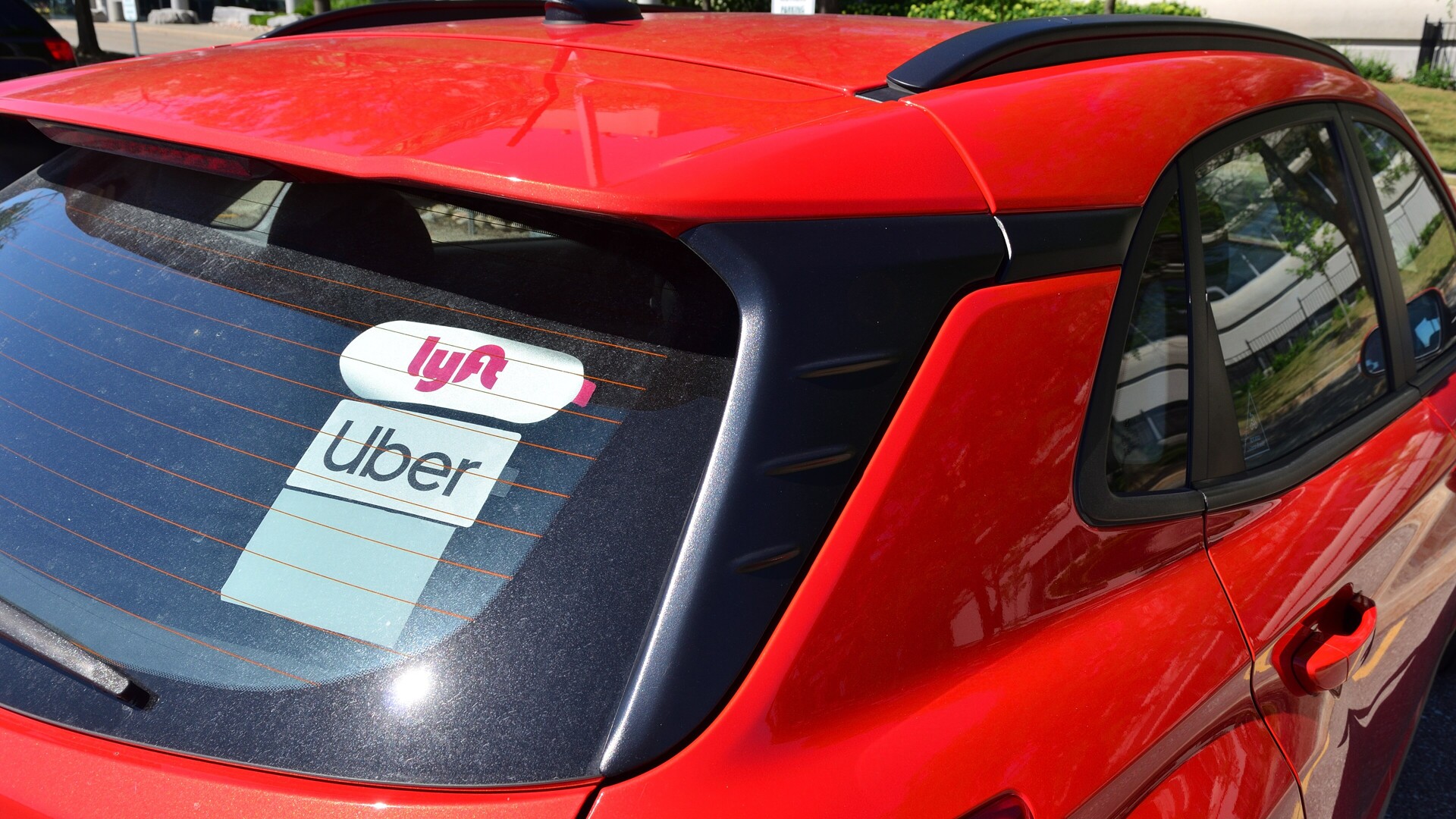
The insurance side runs through section 627.748, the 2017 law that set the rules for Lyft and Uber in Florida. Once a driver accepts a ride, the statute requires primary liability coverage of at least $1 million for death, bodily injury and property damage, along with personal injury protection and uninsured-motorist coverage. The driver’s policy, the company’s policy or a combination can meet that requirement, and if the driver’s coverage has lapsed or falls short, the company’s insurer has to pay from the first dollar of a claim.
That $1 million covers the rideshare driver’s liability. If the crash traces to a passenger’s blow and not to the driver’s driving, the Highlander’s owner could end up with a claim against the passenger instead of the driver, a question adjusters, and possibly a court, would sort out. The statute’s required coverages also stop at liability, PIP and uninsured-motorist protection, so nothing in it requires anyone to pay for the driver’s own Sorento. Under subsection (9), a driver who meets the law’s conditions is an independent contractor, not a Lyft employee, which means no employer’s workers’ compensation policy stands behind him.
Harrell’s medical bills go through Florida’s no-fault system. Under section 627.736, personal injury protection pays 80% of reasonable medical expenses, up to $10,000, no matter who caused the crash. The same section lets an insurer refuse benefits to someone injured “while committing a felony,” and when that person is charged with a felony, payment is held until the case is decided at trial. Because battery on a rideshare driver starts as a misdemeanor, that exclusion comes into play only if a felony charge is filed. The misdemeanor-or-felony line that sets a possible sentence also decides whether a no-fault insurer can refuse to pay.
What happens next in the Harrell investigation
Tampa police have not said when they will finish the investigation or whether they will send the case to prosecutors. The crash report runs on its own clock. Under section 316.066, the names, addresses and phone numbers in a Florida crash report stay confidential for 60 days after it is filed, though the people involved, their lawyers and their insurers can get it immediately, and licensed broadcasters and qualifying newspapers can get a redacted copy. That report is where the details missing from the police statement are most likely to show up first.
The driver has options that don’t depend on prosecutors. Under section 95.11, a civil claim for battery can be filed within four years, while a negligence claim has two. Nothing in the public record shows he has filed anything. Harrell, meanwhile, remains hospitalized, and his recovery, the investigation and any charging decision will move on separate schedules.
Florida makes hitting a bus driver on the job a felony. Punch a rideshare driver mid-ride and it’s a misdemeanor unless someone’s badly hurt. Rideshare drivers: has a passenger ever put hands on you, and what happened next?
About the Author