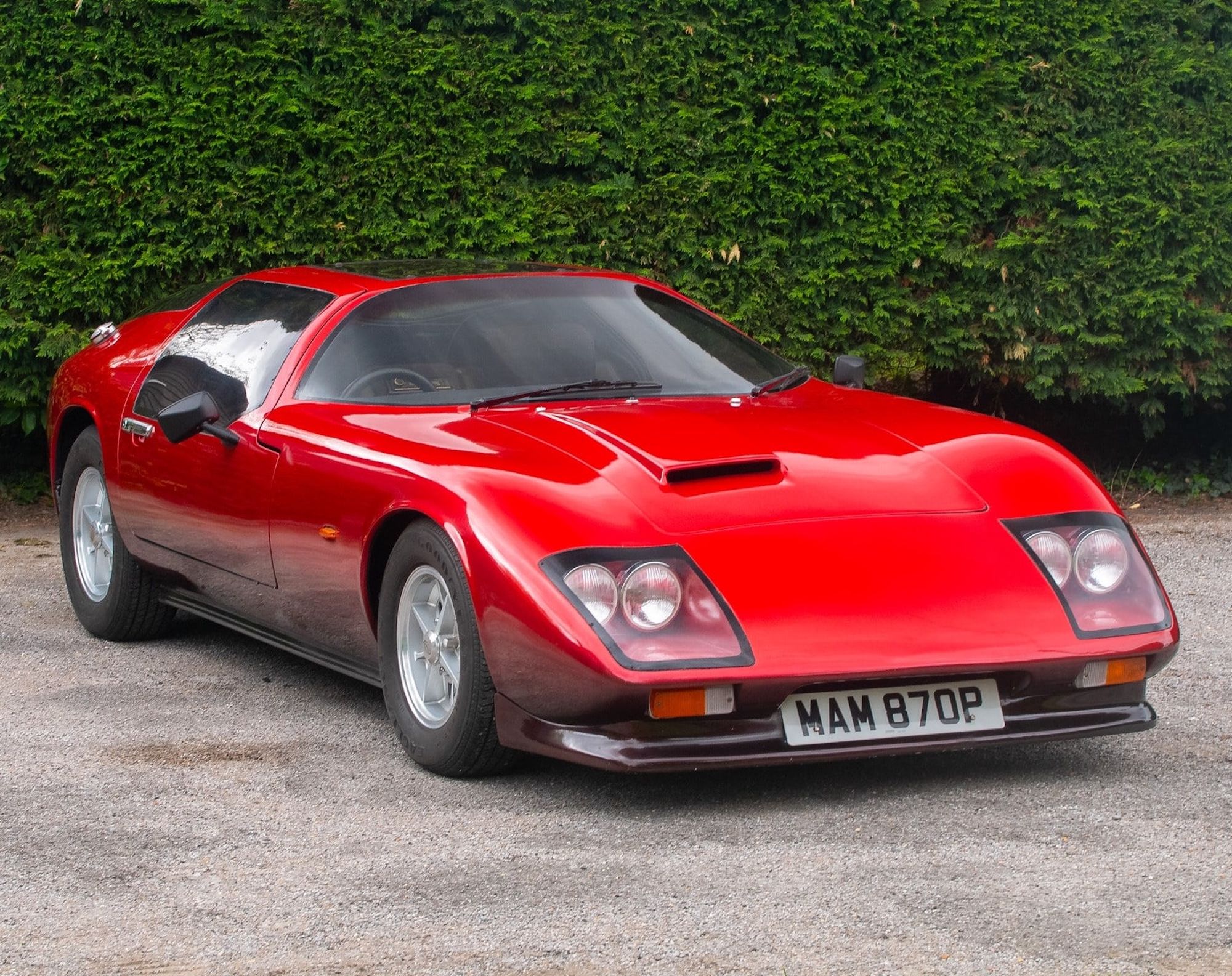
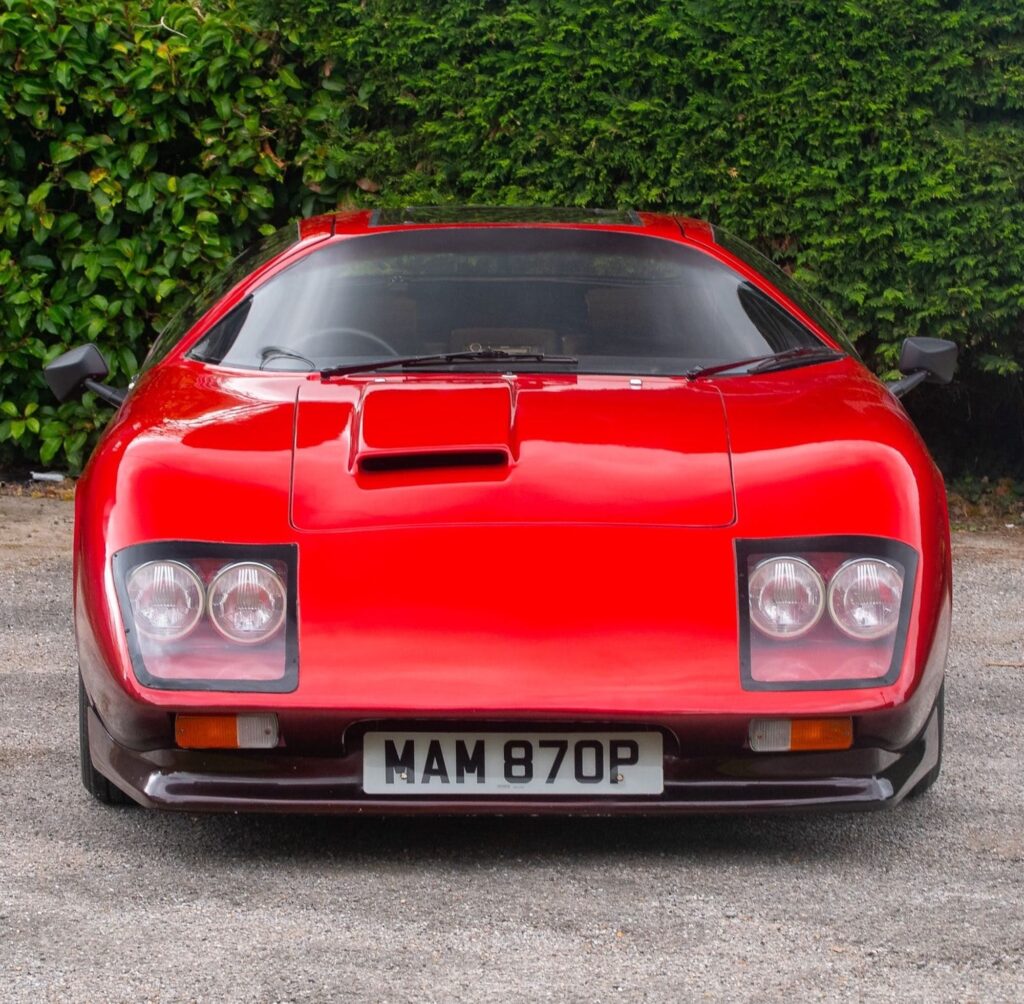
A forgotten British sports car with serious Le Mans-adjacent styling has quietly surfaced for sale, and it’s priced far lower than its rarity would suggest. This is a 1976 Piper P2, one of just 98 ever built, now listed publicly after spending nearly half a century with the same owner. Cars this scarce usually vanish into private collections and stay there. Instead, this one is sitting on a marketplace listing at a price well under $20,000, the kind of money that puts an ultra-rare piece of British motoring history within reach of buyers who’d normally never consider something this obscure.
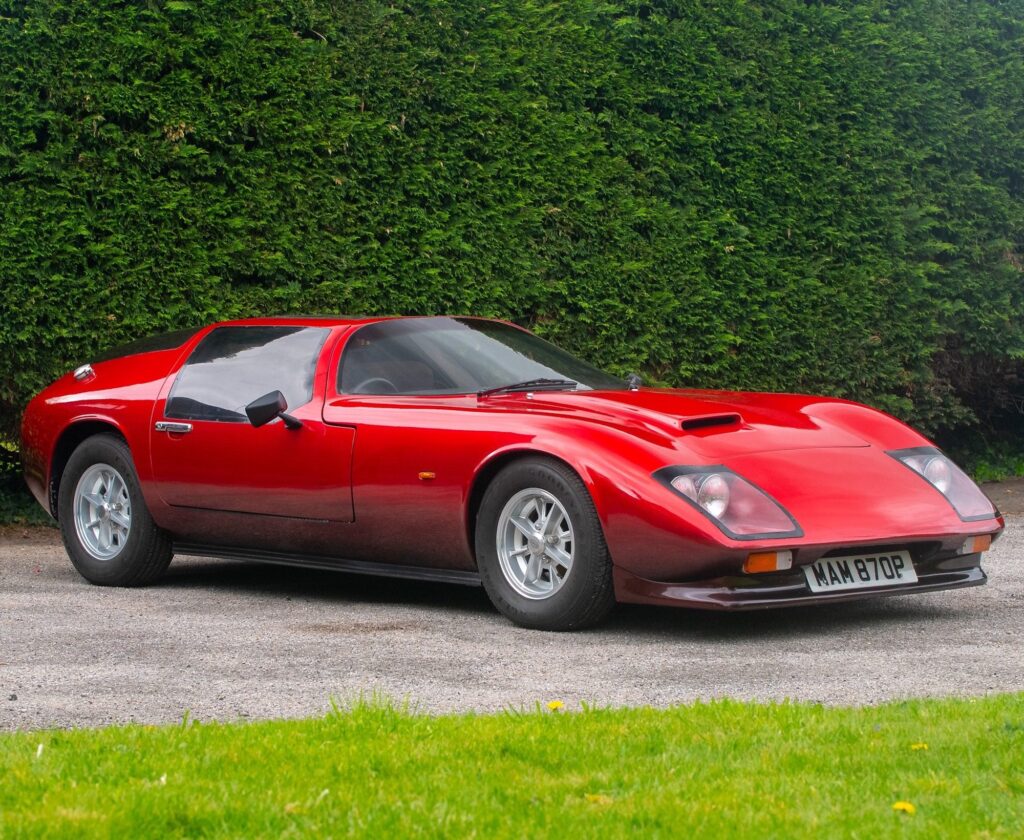
This particular car isn’t some neglected barn find, either. It’s been owned by the same person since December 1979, 46 years of continuous ownership, which almost never happens with a niche, low-volume car like this. Before that, it had only two prior owners, giving it an unusually clean chain of custody. The paper trail backs it up too, with the seller retaining records of major work and purchases over the decades, all of which go with the sale. The car has been garage-kept its entire life rather than left outside to slowly deteriorate the way so many low-volume classics did.
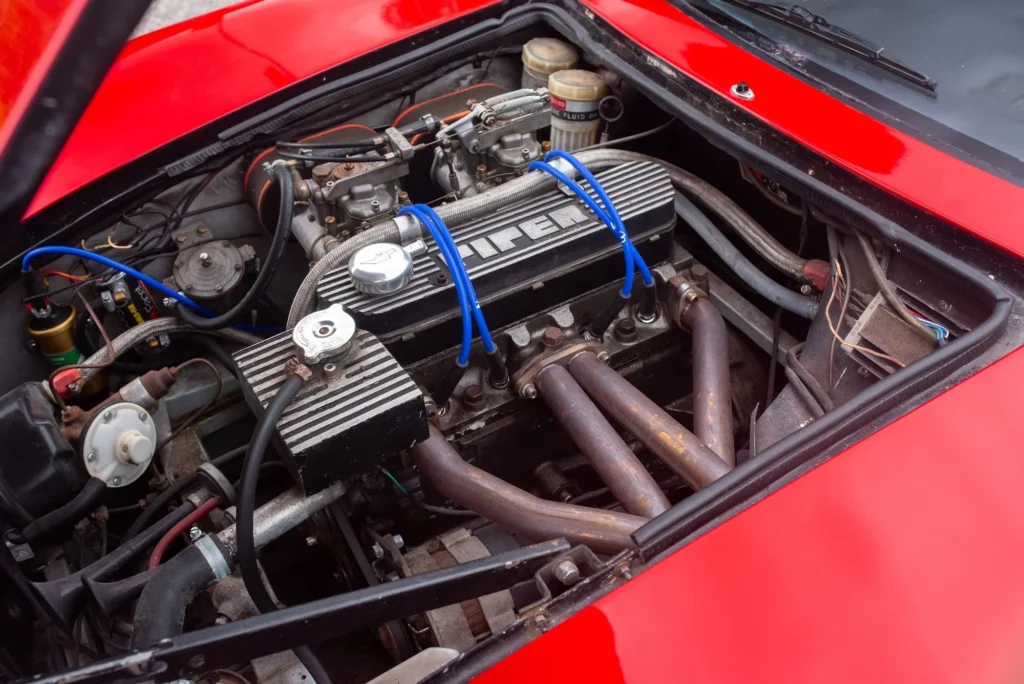
Mechanically, it’s about as straightforward as a classic sports car gets, which is a big part of its appeal. Under the hood sits a 1.7-liter Ford Crossflow inline-four running twin Weber carburetors, paired with a Ford 2000E four-speed gearbox and a rear axle sourced from a 3.0-liter Capri. Nothing exotic, nothing difficult to source parts for. Rather than being built around some fragile, impossible-to-find drivetrain, the P2 was designed around components any Ford specialist could actually track down, which was always core to Piper’s approach: keep it simple, keep it light, and lean on proven parts. That same formula is what helped other small British manufacturers of the era survive at all.
Even so, this car didn’t coast through life untouched. In 1997, it underwent a full body-off restoration, not a quick cosmetic refresh. The chassis was stripped down, the subframe strengthened and galvanized, and a roll cage was added. The interior was redone in cloth, replacing the original materials. That same year, the engine received attention too, with a Stage 2 Ford Crossflow build installed by Anglian Engines along with a performance camshaft and upgraded valvetrain components. This was a car built to be driven properly, not parked as a static display piece, and the car received a repaint in 2023, with the goal of matching the original color as closely as possible after accounting for decades of fading rather than reinventing its look.
Despite all that attention, it remains a usable classic rather than a fragile showpiece. The engine reportedly runs well, though it requires a leaded fuel additive, and there are a couple of minor oil leaks noted from the gearbox and rear axle, unsurprising for a car of this age and nothing the seller appears to be hiding. The odometer shows just under 7,000 miles, though both it and the tachometer were recalibrated at some point, so that figure should be treated as approximate rather than a confirmed original mileage count.
Step back and the bigger picture of how this car came to exist starts to make more sense. Piper Cars was never a large operation. It started in the 1960s as a small British outfit building lightweight sports cars with fiberglass bodies and tubular frames, the same general formula as Lotus, TVR, or Ginetta, just without the scale or name recognition those brands eventually built. The company found early success with its racing cars before shifting toward road-going coupes, and while demand was initially strong, growth brought quality problems that forced redesigns and constant adaptation just to keep the business afloat.
Then came a serious setback: in 1969, company owner Brian Sherwood was killed in a car accident, the kind of loss that could have ended the company outright. Instead, two employees stepped in, kept the business alive under a new name, and continued development, with the Piper P2 eventually emerging from that effort as a refined evolution of earlier models. External pressures caught up with the company anyway. Changes in tax law removed key advantages for kit car manufacturers, and new regulations made compliance increasingly difficult for small builders to manage. By the mid-1970s, production had stopped for good, leaving the P2 as the final chapter of a small, determined British manufacturer that never got the chance to grow into what it might have become.
With only 98 P2s ever built, most people have never seen one in person, let alone had the chance to buy one. That scarcity is exactly what makes this specific car worth a second look: it isn’t just rare, it’s well-documented, long-owned, and properly restored without losing its original character. It’s also exempt from road tax and periodic safety testing in the UK due to its age, which adds real usability for anyone actually planning to drive it rather than store it. And yet here it sits on a marketplace listing, waiting for someone to take a chance on it.
That’s the strange part. In a market where classic car prices keep climbing across the board, something like this slips through the cracks simply because it doesn’t carry the badge recognition of bigger names. Opportunities like this don’t come around often, and when they do, they don’t tend to stay available for long.
Source
About the Author