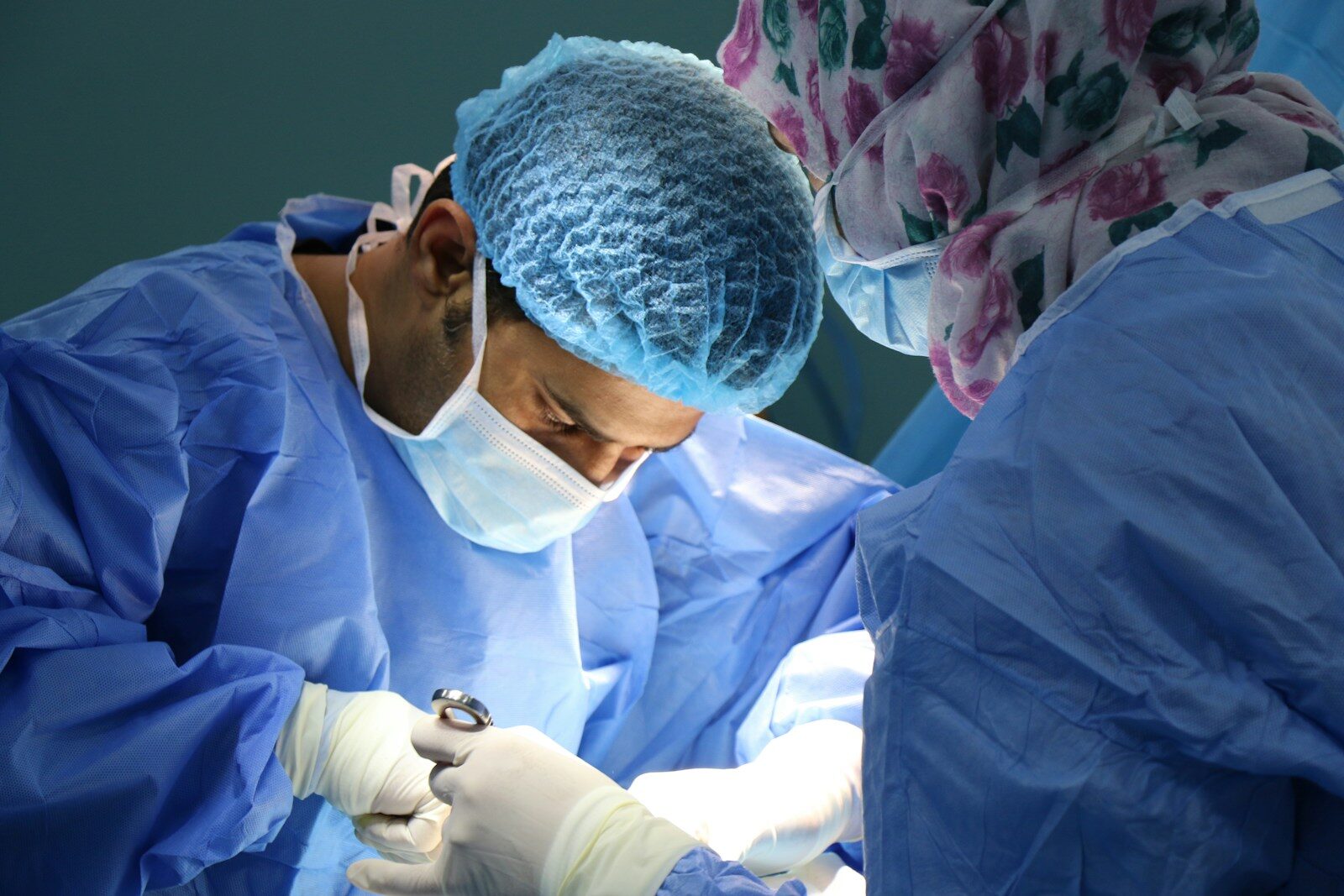
Most drivers show up to the track with one job: go fast, stay clean, finish strong. Patrick Staropoli shows up carrying something else entirely, and once you know what it is, it’s hard to look at his racing career the same way again. When he isn’t strapped into a stock car, he’s in an operating room working on people’s eyesight. Staropoli, who pilots the No. 48 Big Machine Racing Chevrolet in the NASCAR O’Reilly Auto Parts Series, isn’t just another name trying to climb the ladder. He’s a trained retina specialist, an eye surgeon, the kind of job where a single mistake carries consequences racing rarely does.
For Staropoli, this dual identity isn’t a novelty or a headline gimmick, it’s been part of his life for years. He started racing young, the same path plenty of drivers follow, but at some point he made a decision most racers wouldn’t even consider: he wanted to become a doctor, not later in life or after retiring from the sport, but at the same time he was still competing. Medical school isn’t flexible, and racing isn’t either, both demanding full attention and more time than most people can realistically give. So he did what the situation required, continuing to race while studying, then eventually stepping away from the track entirely to finish his medical training. Most drivers who leave the sport don’t come back the same, and some don’t come back at all. Staropoli did, returning to NASCAR competition in 2025 after completing his studies and pushing forward as though he’d never left.
That alone is unusual. Splitting time between racing and performing eye surgery pushes it into territory that feels almost unreal, but there’s a reason he’s able to make it work, and it isn’t just discipline. He’s spoken about the connection between the two worlds, and it’s actually fairly straightforward: both demand extreme precision, both rely heavily on hand-eye coordination, and both punish mistakes instantly. The environments couldn’t look more different, but the underlying skill set overlaps more than people assume.
The reality of that overlap hits differently once you see how people react to him in each setting. In the clinic, patients don’t just ask about their vision or treatment plans, they want to know about the race, wanting details about what happened on track, turning appointments into half medical consultation, half racing recap in a way that simply doesn’t happen with most doctors. Flip it around at the track, and it’s the same story in reverse. Fans line up for autographs, but instead of asking only about lap times or finishes, they’re asking what kind of doctor he is, some even joking about getting their eyes checked while they’re there. It blurs a line that’s hard to ignore.
Staropoli isn’t juggling two demanding careers purely for the challenge of it, either. He’s using one to support the other, openly using his racing platform to bring attention to issues in the medical field, a layer most drivers simply don’t have available to them. It isn’t just about results on track, it’s about what he can do with the visibility racing provides him.
And he is still producing results. At the Kansas Lottery 300 on April 19, he started deep in the field in 24th position, not exactly ideal, but worked his way forward to finish 14th. Not a win, not a podium, but solid, meaningful progress, the kind of drive that shows he isn’t out there just for the story. He’s there to compete, and that distinction matters, because it would be easy to write this off as a novelty: a driver who happens to also be a doctor, a cool headline for a week and nothing more.
But that level of commitment isn’t normal, even in a sport full of people who push limits, and it raises a genuine question about what’s possible in racing. Drivers are typically expected to be all-in, all the time, that’s the culture and the expectation. Staropoli doesn’t fit that mold neatly, and yet he’s still finding a way to compete at a high level. That doesn’t make him less serious about either career. If anything, it might make him sharper in both, operating with a level of focus that comes from balancing two worlds where mistakes simply aren’t an option. One wrong move on track costs positions. One wrong move in surgery carries consequences that are far heavier, and that perspective changes how he approaches both.
At the end of the day, this isn’t just a feel-good story about a driver with an unusual background. It’s a reminder that the people behind the wheel aren’t always what they seem, and sometimes they’re carrying a lot more than a helmet and a fire suit. In Staropoli’s case, he’s carrying two careers that demand perfection in completely different ways. That’s not normal, and it’s not easy. But somehow, he’s making it work anyway.
Source
About the Author