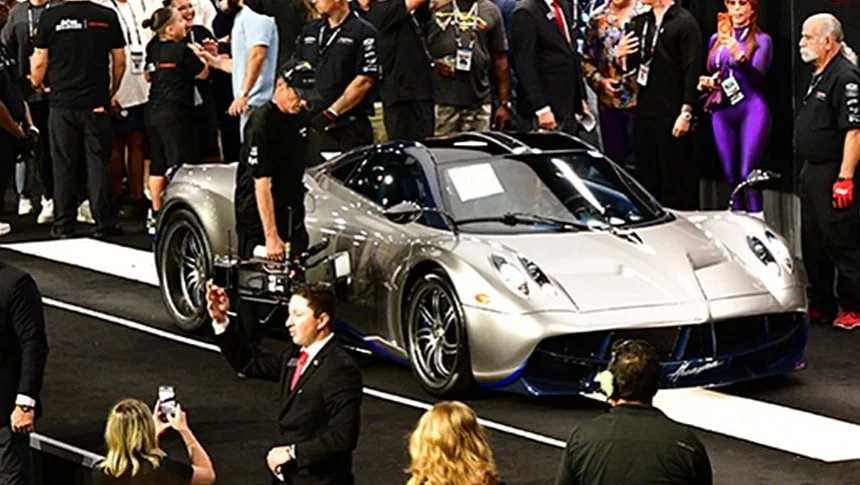
A Pagani Huayra just changed hands for $3.19 million, and on the surface, that figure isn’t shocking. Cars in this range live in exactly that price bracket, with rarer versions climbing well beyond it. Dig into the details of this specific sale, though, and it turns into something more interesting than just another expensive hypercar transaction, largely because of how the car has actually been used.
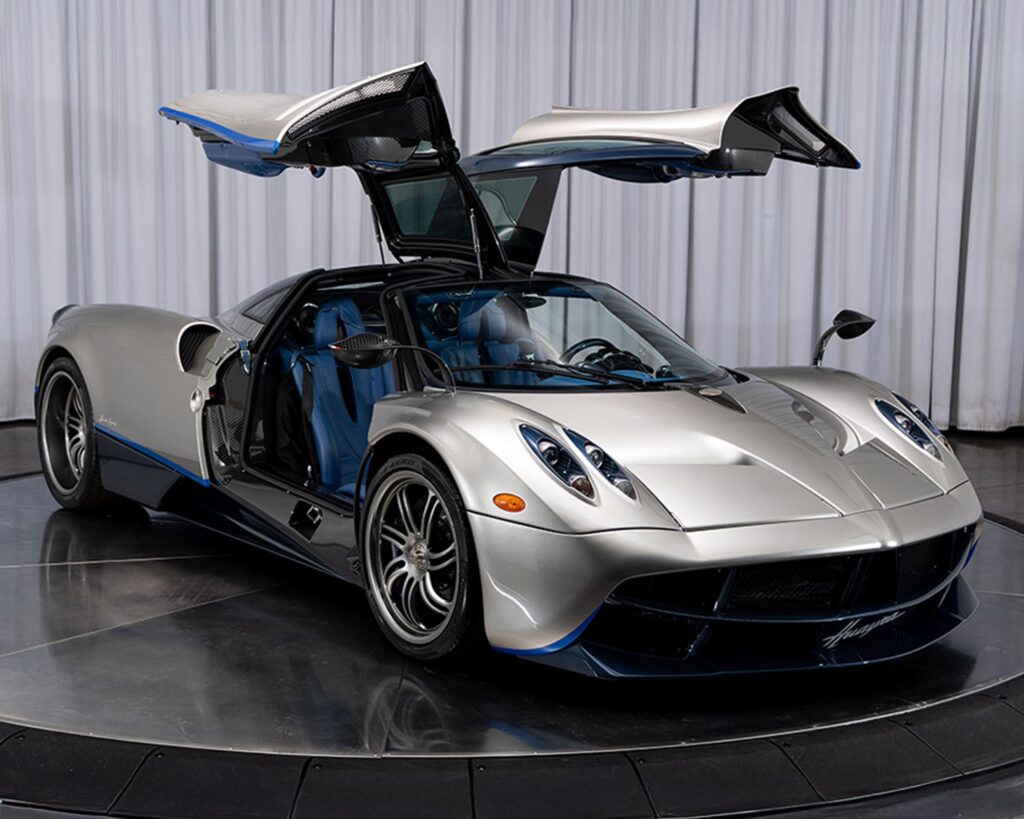
This Huayra is chassis number 93 of the 100 built between 2011 and 2022, delivered new roughly a decade ago through Miller Motorcars in Connecticut, finished in Gray Clement with exposed blue carbon fiber accents. Pagani never just built cars, it built them around individual customer taste, and every detail like this factors into how the market values a given example. Here’s where things get unusual: the odometer shows 2,331 miles. That might sound modest by ordinary car standards, but for a multimillion-dollar hypercar, it’s actually on the higher side, averaging out to roughly 233 miles a year. That’s not garage-queen behavior, that’s someone who genuinely drove the car, at least occasionally, and it changes how the sale should be read.
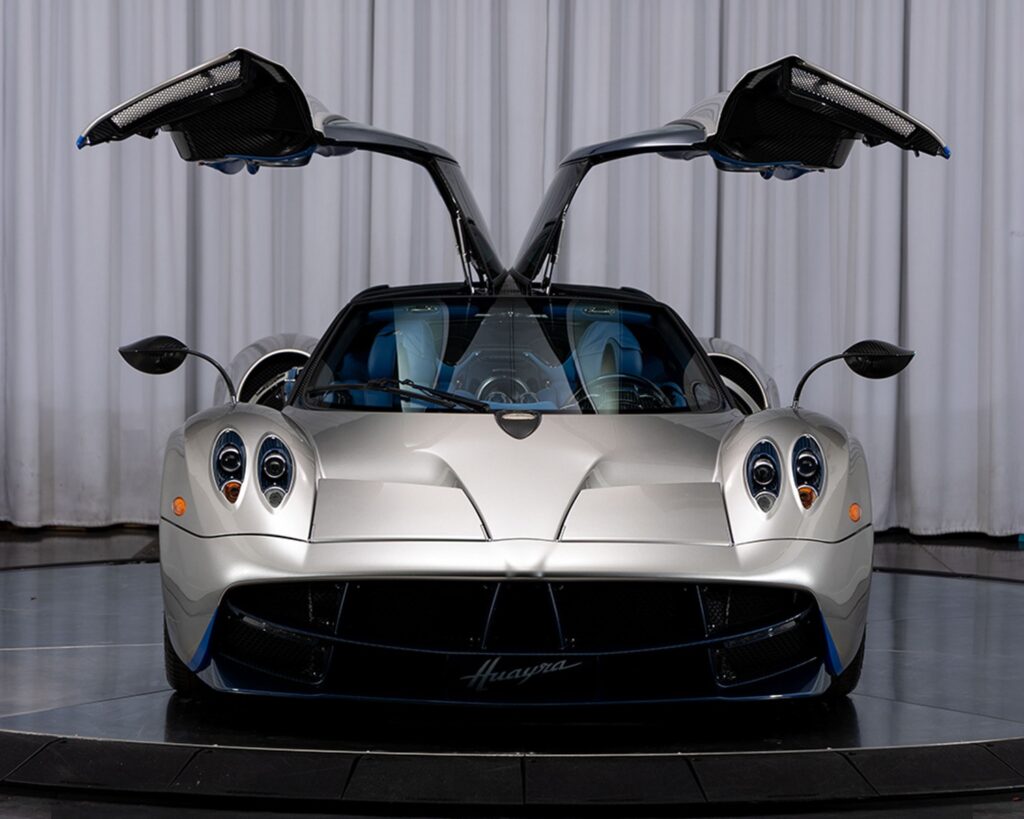
Most buyers in this segment treat cars like this as static investments, kept locked away, preserved, and maybe rolled out for the occasional event but rarely driven with any regularity. This Huayra didn’t follow that script exactly. It saw the road, even if sparingly, and that usage didn’t hurt its value in the slightest. If anything, it adds character to the sale. Despite that mileage, the car still pulled in $3.19 million, which sits right around the average range for a Huayra, typically running up to $4.5 million depending on version and rarity. High-performance variants like the Roadster BC can climb past $4.4 million, while track-focused machines like the Huayra R sit closer to $3.5 million, which puts this particular sale squarely in the middle of the range.
The details inside back up that positioning. Step into the cabin and it doesn’t hide what it is: carbon fiber everywhere, mixed with custom blue leather covering the seats, machined aluminum switchgear that feels deliberately overbuilt, and a steering wheel framing a mix of analog and digital displays that blends old-school and modern instrumentation without forcing the combination. Horacio Pagani’s signature sits on the dashboard, tying the car directly back to its origin, and in this market, that kind of direct connection to the founder carries real weight. The buyer didn’t just get the car, either. A seven-piece fitted luggage set designed specifically for this Huayra came along with the sale, the kind of small detail that reflects how completely Pagani built out the ownership experience around each individual car.
None of that would matter much if the car didn’t deliver mechanically. Under the surface sits a 6.0-liter twin-turbo V12 sourced from Mercedes-AMG, known internally as the M158, producing 720 horsepower and 738 pound-feet of torque. Those figures were serious a decade ago and remain firmly competitive today, especially paired with a car that weighs just under 3,000 pounds thanks to its carbon-titanium construction. That lightweight engineering is what turns big power into genuinely violent performance: 60 mph arrives in about three seconds, and top speed reaches 230 mph. That’s still fast by any modern measure, even though it isn’t the most extreme version Pagani builds. The Huayra R Evo pushes further with 888 horsepower from a naturally aspirated V12 that revs to 9,200 rpm, a more focused, more aggressive experience. But that comparison actually highlights something in the standard Huayra’s favor: even against newer, more extreme variants, and even in 2026 with a wave of newer hypercars pushing bigger numbers, the original Huayra still holds its ground as a genuinely quick, genuinely engaging car.
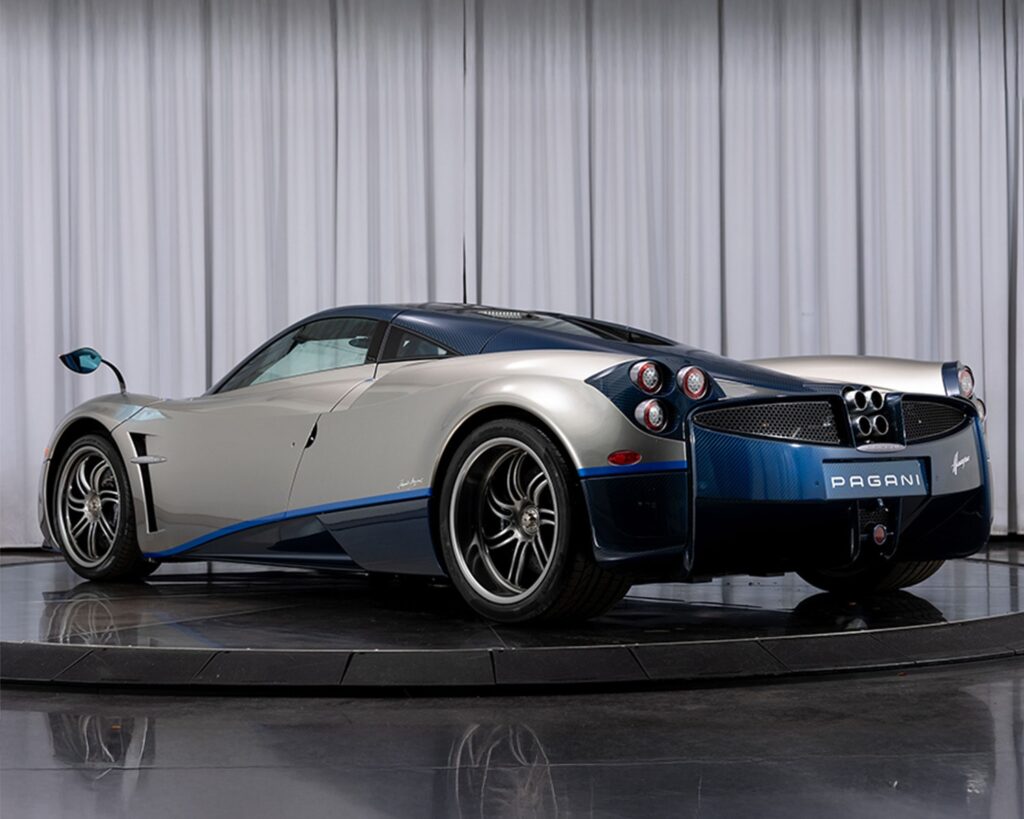
The buyer didn’t spend $3.19 million on something meant purely to be looked at. They got a machine with documented history, distinctive design, real performance, and just enough real-world use to make it feel alive rather than frozen in time. That’s the underlying truth with cars at this level: the ones that matter most aren’t always the ones locked away in climate-controlled storage. Sometimes it’s the ones that actually see the road, even if only a few hundred miles a year, that end up telling the better story, and that proves there’s still room in a preservation-obsessed market for cars that get genuinely used rather than just displayed.
About the Author