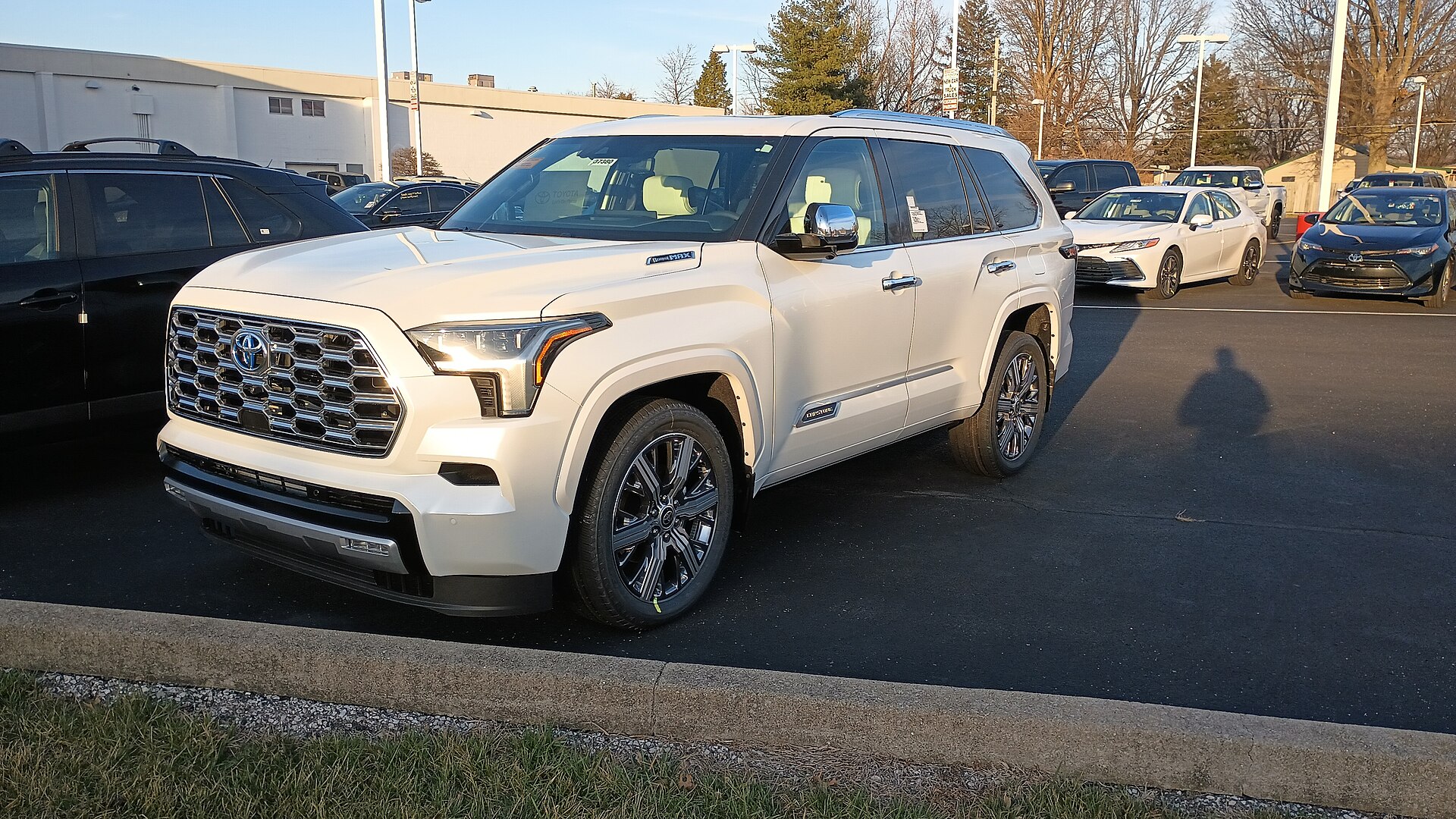
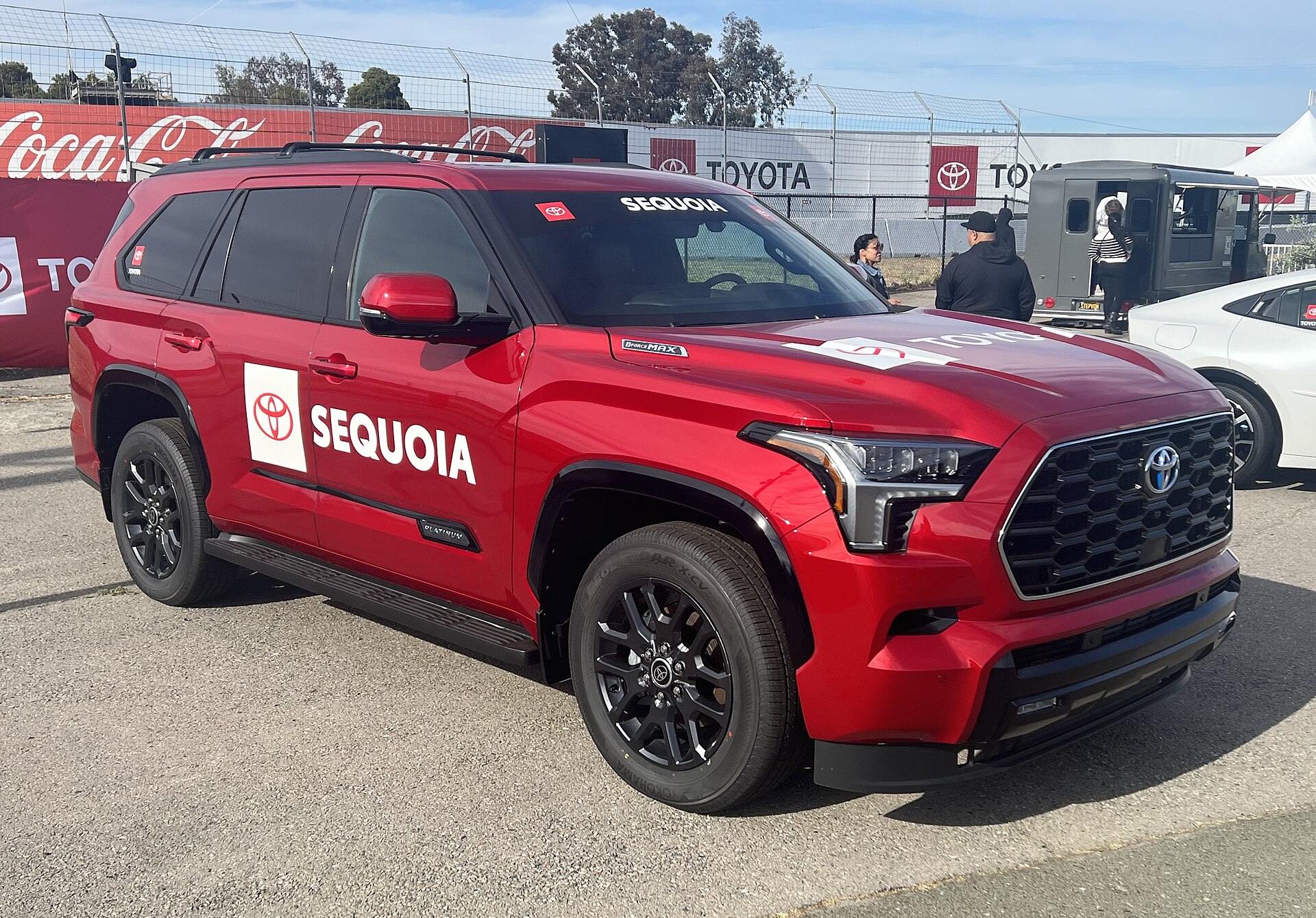
File photo of a 2023 Toyota Sequoia. Photo: deathpallie325 / Wikimedia Commons, CC BY-SA 4.0. Not the vehicle in this case.
Rod Moskowitz, 52, the CEO of PROSPORT Management in the Charlotte area, was arrested in Huntersville, North Carolina, on Thursday, Oct. 22, and charged with assault with a deadly weapon on a government official, according to Mecklenburg County court records reported by Queen City News and WBTV. The firm’s website lists NASCAR drivers Denny Hamlin, Chase Elliott, Kyle Larson and Bubba Wallace among its clients, WSOC reported.
The NASCAR agent charged here has not been quoted in any report I found, and none gave a court date. A charge is an accusation, and Backfire News has not seen the warrant itself, so the details below come from the outlets that quoted it.
What the arrest warrant describes
Officers were at a home on Cramur Drive for a civil disturbance when one of them saw a Toyota Sequoia being driven in what the affidavit calls an “aggressive and reckless manner,” WBTV reported. The SUV went into a ditch, backed out and pulled into the home’s driveway, Queen City News reported from the warrant. WBTV, citing the affidavit, put the time just after noon and called the vehicle a 2023 Sequoia; WSOC described it as orange.
The officer and others tried to get the driver to stop. The warrant says the officer had to step out of the vehicle’s path three times to avoid being hit, and WSOC added that he waved his hands and struck the car with his hand. Officers got Moskowitz out of the vehicle and arrested him. He was booked into the Mecklenburg County Jail that night, and on Friday, Oct. 23, he was given a $1,000 secured bond, which means money or a bonding company’s guarantee had to go up before release. None of the three reports describes a collision or an injury.
WSOC said it asked PROSPORT for comment and that Huntersville police did not return a message. Queen City News also reached out to the firm. Neither outlet reported a reply.
How a Toyota SUV becomes a deadly weapon in North Carolina
The reports do not say what weapon the warrant names, but every fact in them is about the Sequoia. The charge as described matches G.S. 14-34.2, which makes an assault with a deadly weapon on a state or local officer “in the performance of an official duty” a Class E felony. The statute never mentions vehicles. Courts decide case by case, and the answer turns on how the vehicle was moving.
In State v. Spencer, decided in 2012, a driver whose car had spun onto a sidewalk in Elizabeth City after a chase near 100 mph accelerated toward an officer, who jumped back eight or nine feet. The N.C. Court of Appeals held the car was a deadly weapon as a matter of law. State v. Maxwell, an unpublished 2011 opinion that is not binding precedent, sits at the other end. A driver in a Cadillac reversed toward an officer standing about four feet away, who ran clear without being hit. The court held the car was not a deadly weapon as a matter of law, so jurors had to decide, and it ordered a new trial partly because the judge never offered them the misdemeanor charge of assault on a government official.
That makes speed, distance and intent the facts that decide this kind of case, and the published reports supply none of them. A ditch, a reverse and a driveway are a long way from a 100-mph chase, and an officer stepping aside three times is not the same as a driver who never slowed.
What a Class E charge costs
Under the sentencing chart in G.S. 15A-1340.17, a Class E conviction for someone with no prior record, Level I, carries a presumptive minimum sentence of 20 to 25 months. The range is 15 to 20 months if the judge finds mitigating factors and 25 to 31 if aggravating ones. At Level I and Level II the chart allows either an active or an intermediate sentence, so probation is possible. The reports say nothing about Moskowitz’s record. A conviction for the misdemeanor version would carry a far lighter range, which is why the choice between the two matters.
What happens next
The next filing to watch is the first court date, and whether the charge on it still reads as a felony. Prosecutors can pursue the charge as written, reduce it, or drop it, and Maxwell shows why a jury could be handed that choice. None of the three reports quoted NASCAR or the drivers on the firm’s client list. For how the sanctioning body handles discipline when it does act, Backfire News covered its $50,000 fine for Zane Smith after his Phoenix hit on Carson Hocevar.
Should an officer being forced to step out of a moving vehicle’s path be a felony even when nobody is hit, or should that charge wait for actual contact?
About the Author