Drag racing sanctioning bodies do not typically show up in nine-figure billing disputes involving Elon Musk’s artificial intelligence supercomputers. Then again, 2026 has been a strange year for the International Hot Rod Association, and its owner just added a genuinely bizarre subplot to an already messy season: he says one of the most valuable companies on earth owes him more money than most race tracks in America are worth combined.
Darryl Cuttell bought the IHRA in late 2024, moved the organization’s headquarters to Ohio, and went on a track-buying spree that folded several strips into his own company’s branding, including the former National Trail Raceway outside Columbus, which now runs under the name Darana Raceway. We’ve covered the ownership shuffle and rumor mill around Cuttell’s track acquisitions before, and it’s worth a read before getting into what happened this week.
That Darana name is not a racing term. It is the name of Cuttell’s actual day job: Darana Hybrid, an Ohio-based electro-mechanical contractor that installs the guts of major industrial builds, wiring, cooling, and power distribution, the unglamorous infrastructure that makes massive facilities function. Since 2024, Darana Hybrid has been doing exactly that kind of work for SpaceXAI, the merged Musk operation building the Colossus and Colossus II supercomputer clusters in Memphis, Tennessee, on sites that include the old Electrolux appliance plant on the city’s south side.
That relationship has now landed in public records in a big way. On July 30, Darana Hybrid filed a mechanic’s lien against CTC Property for $18.6 million. A day later, it filed a second lien. Combined, the two claims recorded with the Shelby County Register of Deeds add up to roughly $136.9 million for work performed between 2024 and June of this year. A mechanic’s lien is not a lawsuit, it is a legal claim staked directly against a piece of real property, and it is a contractor’s way of making sure a client cannot sell, refinance, or quietly walk away from a building until the bill gets sorted out. Filing one publicly, rather than negotiating privately, is usually a sign that quieter conversations already failed.
Cuttell says that $137 million is only the portion he could document well enough to attach to the property. In an interview published July 31, he told the Daily Memphian that SpaceXAI still owes Darana Hybrid roughly 40 percent of its total bill, which he puts north of $1.5 billion altogether. Do that math and the gap lands right around the $570 million figure now attached to his name. Liens and total invoices rarely match in construction disputes this size. A lien can only cover work a contractor can document inside a strict filing window, while a running account balance can include change orders and disputed scope still being argued over between accounting departments.
Cuttell’s version of events is that payments dried up after xAI and SpaceX formally combined into SpaceXAI earlier this year, and that the shortfall has already cascaded downhill. He says Darana Hybrid itself now owes close to $200 million to its own vendors and subcontractors, which is exactly how unpaid construction bills tend to spread, one contractor’s cash crunch becomes several smaller companies’ cash crunch almost overnight. SpaceXAI has not responded to comment requests from any outlet covering the story, which fits a pattern for a company whose leadership has never been shy about big claims but considerably shier about the smaller, unglamorous ones.
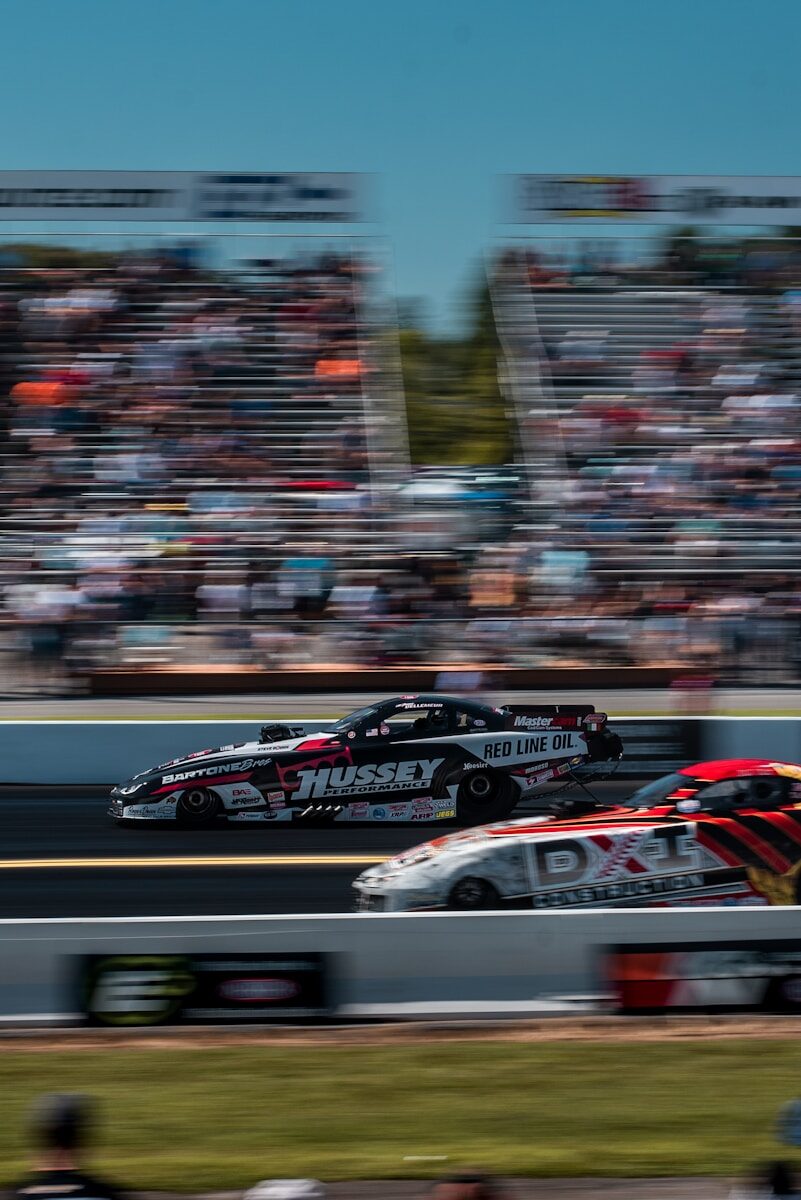
Back on the actual racetrack, IHRA has its own unpaid-bills problem, and it has nothing to do with Elon Musk. In June, the sanctioning body ran its inaugural, seven-figure-payout Triple Crown at Darana Raceway in Hebron, Ohio. In the weeks since, racers, sponsors, and vendors have said publicly that they still have not been paid for that event, and IHRA has not addressed those claims individually. Then, in early July, the organization canceled the remainder of its 2026 Outlaw Nitro Series schedule outright, saying it could not complete the season at the standard it wanted, while insisting its member tracks, bracket racing, and sportsman programs would carry on as normal.
The uncertainty was enough that Summit Motorsports Park owner Bill Bader publicly offered sportsman racers a championship destination of his own in case IHRA could not deliver one this season, an unusual move for a competing track owner and a sign of how shaky things looked from the outside.
None of this is entirely new territory for the IHRA. Larry Carrier founded the organization in 1970 as a nitro-friendly alternative to NHRA, and ownership has churned through multiple hands since, including a 2022 sale to Larry Jeffers before Cuttell bought in less than two years later. Every new owner has arrived promising a stability that has stayed in short supply. What is new is having an owner whose outside company is currently fighting one of the largest, most scrutinized businesses on the planet over more than half a billion dollars, while his own racers wonder where their purse money went.
Legally, the two disputes have nothing to do with each other. Darana Hybrid’s lien fight is a construction-payment matter tied to specific properties in Tennessee, and the IHRA payment complaints are a separate, unresolved mess tied to a drag strip in Ohio. Neither has been decided in court. But the overlap matters for anyone thinking about racing an IHRA points event or signing a sponsorship deal with the organization going forward. Racers and vendors dealing with a sanctioning body have far less recourse than a contractor holding a lien against a data center; there is no comparable mechanism to attach purse money that was never escrowed in the first place, which is exactly why series with a history of ownership turnover tend to draw a security deposit’s worth of skepticism from veteran teams before every new season.
Somewhere in Ohio, a nitro Funny Car that could have been paid for twice over with Elon Musk’s money is still waiting on a check that hasn’t cleared. That’s the kind of detail you can’t make up, and in a story this odd, you don’t have to.
About the Author