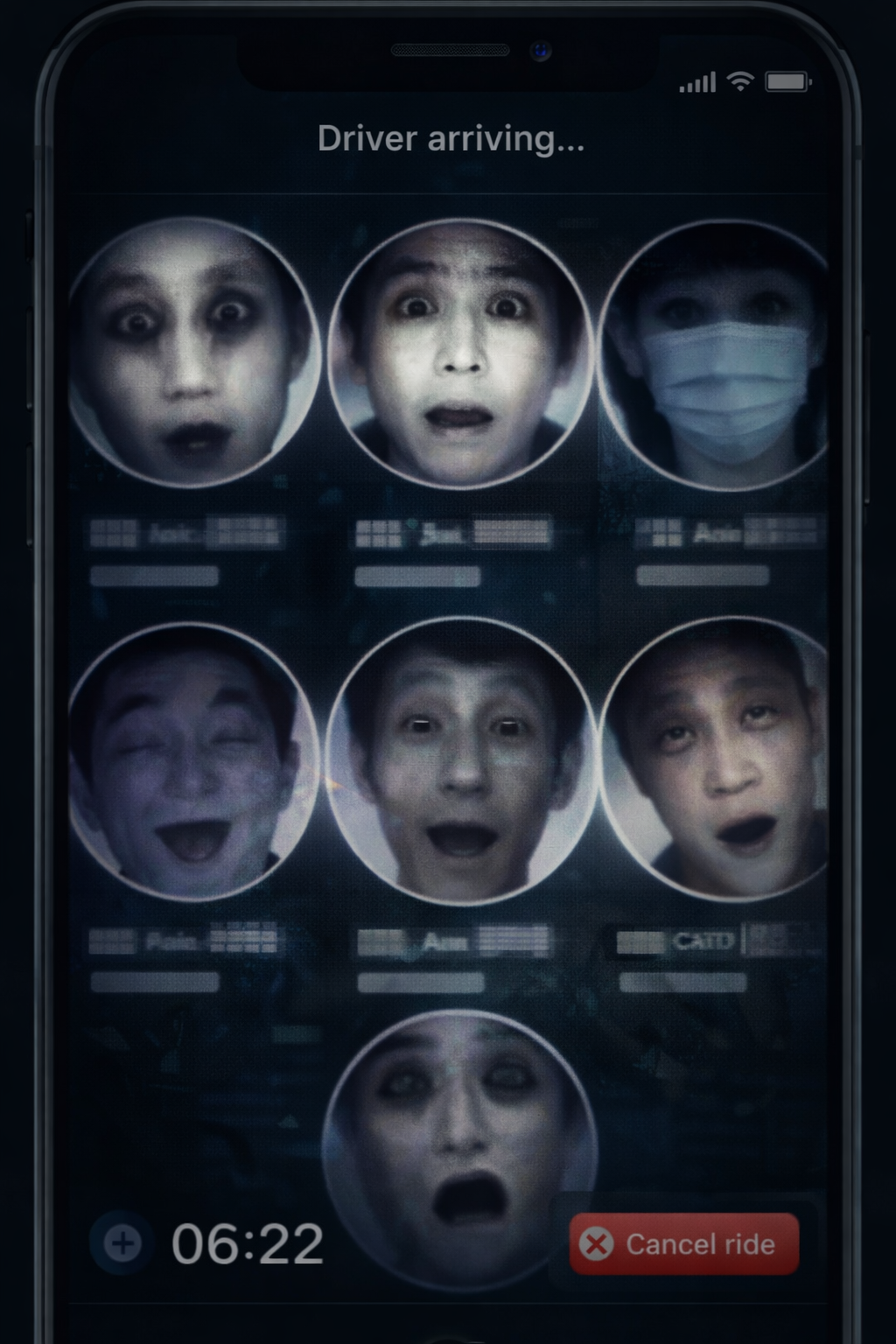
Uber once had a genuinely strange problem in China: some drivers weren’t just gaming the system, they were scaring riders into paying without ever picking them up. The trick was simple, weird, and just effective enough to spread before anyone shut it down. Drivers started turning their own profiles into something out of a horror movie — and it worked well enough that it became a real pattern, not a one-off prank.
The Scam Wasn’t About Driving — It Was About Fear
The setup relied on something most riders barely think about. When you request a ride, you get a driver profile with a photo, a name, and car details, all meant to build a sense of trust before the car even arrives. Some drivers flipped that completely, uploading images that looked distorted, eerie, or straight out of a horror scene — unnatural faces, heavy shadows, anything that would make a rider hesitate the moment the app loaded the profile picture. Enough people canceled the ride almost immediately, especially when the photo felt unsettling or outright suspicious, and that hesitation is exactly where the money came from. Uber’s system charges a cancellation fee if a rider backs out after a short window, and these drivers were counting on that built-in friction. They didn’t need to drive anywhere. They just needed the rider to cancel, and it worked often enough to spread across the platform.
Why a Creepy Photo Trick Actually Spread
At first glance, a driver using an unsettling profile picture doesn’t sound like a serious strategy. In practice, though, it hit a real psychological trigger. Riders weren’t reacting to logic or pricing — they were reacting to instinct. If something feels off, most people don’t wait around to figure out why. They cancel first and ask questions later, and that hesitation, even lasting just a few seconds, was enough to trigger the fee every time.
Uber Had to Step In
Once reports started circulating and the pattern became clear, Uber stepped in to shut it down. The company said it maintains a zero-tolerance policy for fraudulent behavior and began removing accounts tied to the tactic, while riders who were affected were refunded in cases where the scam was identified. That ended the immediate problem, but it didn’t answer the more interesting question underneath it.
This Was Never Really About “Ghost Photos”
The actual dollar amounts involved in each individual cancellation were small, and even repeated constantly, the fees alone weren’t enough to build a serious income stream. That’s what makes this more interesting than it looks on the surface — the behavior wasn’t random. According to Professor Mark Graham of Oxford University, this kind of tactic fits into a broader pattern seen across gig economy platforms, where workers look for small advantages in how jobs get assigned, canceled, or completed. The methods change depending on the platform, but the underlying logic stays the same: in ride-hailing, that can mean manipulating cancellations or positioning; in delivery apps, it might mean selectively accepting orders; on freelance platforms, it can show up as managing multiple accounts or adjusting availability strategically. The “ghost driver” approach just happened to stand out because of how unusual it looked, but underneath it, it was the same basic idea — find a weak point in the system, and use it.
Why This Still Matters
This isn’t just a strange story from a few years back. It’s a reminder of how digital platforms actually operate, especially ones built entirely on automated rules and predictable human behavior. If there’s a way to exploit a system, someone is going to find it — sometimes subtly, sometimes obviously. In this case, it just happened to look like something out of a horror movie. No one expects to be scared out of a rideshare request, but this was never about fear for its own sake. It was about turning a brief moment of hesitation into a guaranteed fee, and for a short stretch of time, that was enough to make it work. Which says less about the drivers who tried it, and more about how easy it can be to manipulate a system that depends on people reacting in real time.
About the Author