There’s a moment every driver hopes to never experience: something mechanical fails without warning, and control suddenly feels a lot less certain. For one Florida driver, that moment happened at highway speed, on a bridge, where the options for dealing with it were limited and any mistake could escalate fast. What the driver did next has sparked real debate — not just about the incident itself, but about how anyone should respond when there’s no clean, obviously safe move available.
A Hood That Turned Into a Windshield-High Wall
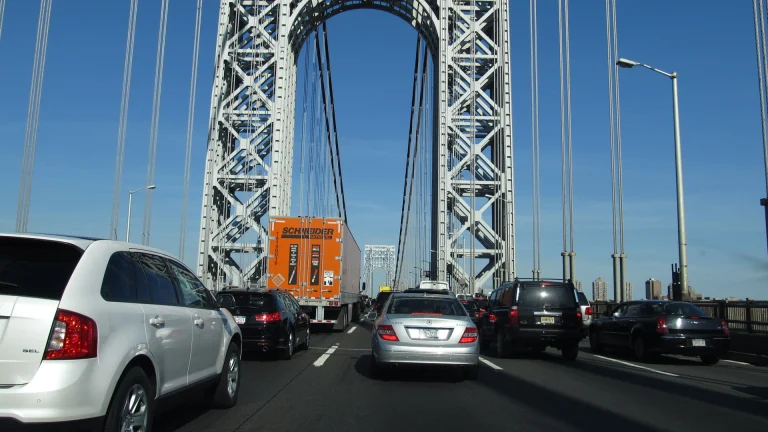
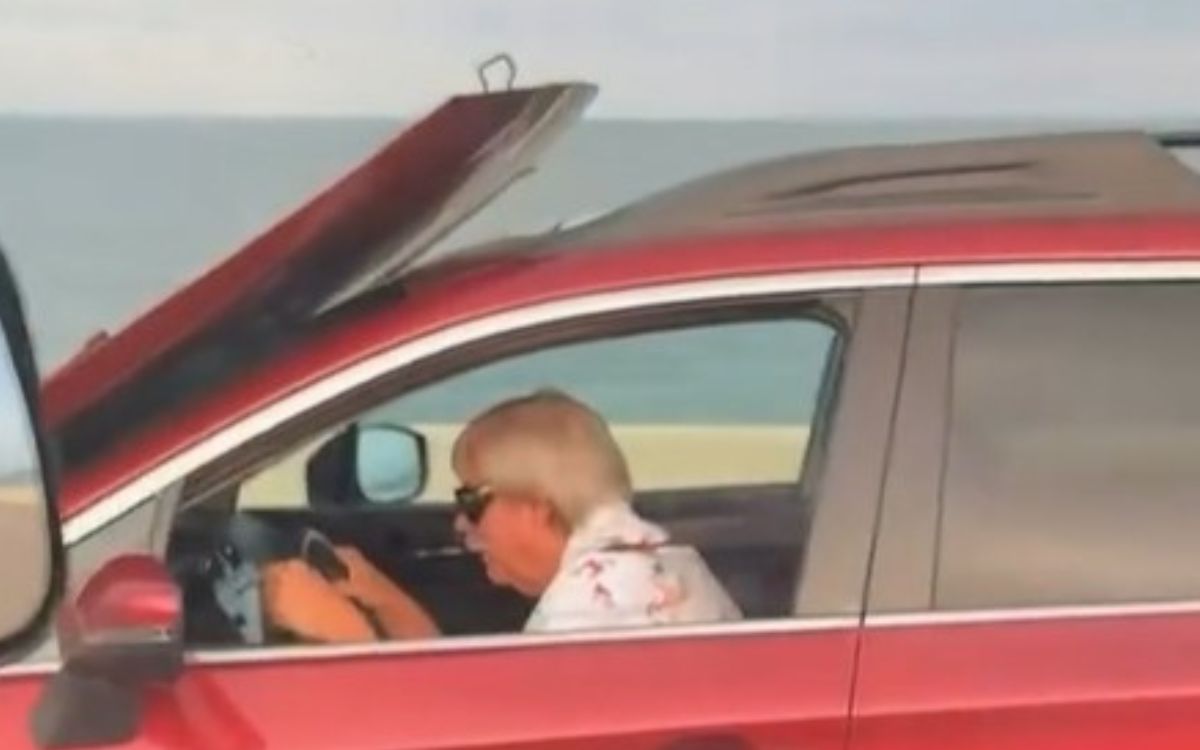
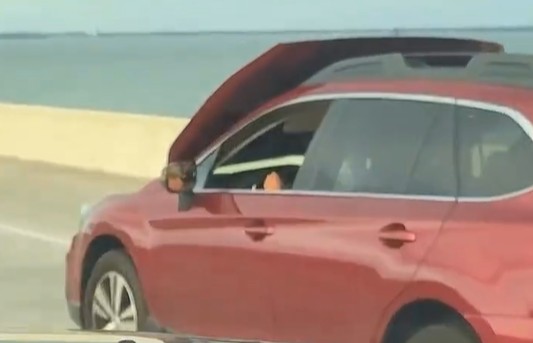
The incident happened on a busy stretch of a Tampa-area bridge. The driver, behind the wheel of a red Subaru Outback, was moving with traffic when the hood suddenly failed and snapped upward. Airflow forced it back against the windshield with enough force to completely block forward visibility. In seconds, a normal highway commute turned into a situation with almost no visibility and nowhere obvious to safely stop.
Staying in Motion, on Purpose
Rather than slamming on the brakes, the driver kept the vehicle moving and worked to maintain lane position. That single decision is what’s divided reactions since the footage surfaced. Video from the scene shows the Subaru continuing forward while the driver relied on a narrow gap near the base of the windshield — a small strip near the wipers, barely enough to track the lane ahead. Despite that limitation, the car stayed relatively stable and didn’t appear to drift or lose control. From the outside, it looked reckless. In practice, it was also controlled.
The location mattered as much as the decision itself. Bridges like this one typically offer little to no shoulder space, leaving a driver with almost no good options if something goes wrong mid-span. Stopping suddenly in a live lane creates its own serious danger, especially with traffic still moving at highway speed — a sudden stop in that setting can trigger rear-end collisions or a chain-reaction crash behind it. By continuing forward, the driver stayed part of the traffic flow instead of becoming an unexpected, stationary obstacle, and other vehicles were able to adjust and move around the Subaru rather than react to a car stopped dead in a live lane. That doesn’t make the situation safe, but it does change the category of risk involved — in this case, staying predictable may have actually reduced the odds of a much larger crash.
The Mechanical Failure Behind It
The failure itself isn’t especially complicated, but it’s a detail a lot of drivers overlook. A vehicle’s hood is secured by both a primary latch and a secondary safety catch, and for the hood to fully open at speed, both systems have to fail or go unengaged. In many cases, the root cause is simply a hood that wasn’t fully latched after being closed. Once airflow gets underneath it at highway speed, force builds quickly — the hood can bend or snap at the hinges and slam back against the windshield hard enough to distort the glass, block visibility, and potentially interfere with any sensors mounted near the front of the vehicle, affecting both the driver’s view and any electronic driver-assist systems relying on that same area.
A Split Reaction, and No Clean Answer
Public reaction has been divided since the footage started circulating. Some viewers see the choice to keep driving as reckless, arguing that any situation involving blocked visibility should end in an immediate stop no matter the setting. Others point to the environment and traffic conditions, arguing that stopping outright may well have created a more dangerous scenario on a bridge with nowhere to pull over. Both views reflect just how difficult these split-second calls are to judge after the fact, from the comfort of a replay. Incidents like this are a reminder of how quickly routine driving can turn unpredictable — mechanical failures don’t always give warning, and drivers are sometimes forced to react with only a narrow strip of windshield and a few seconds to work with. In moments like that, there may not be a perfect decision, only one that limits the damage. Whether staying in motion was the right call remains open to debate, but the outcome itself avoided something considerably worse.
About the Author