Dunlop Warned California About Its Tire Rule. The Comment Window Had Been Shut for 16 Days.
California’s Energy Commission adopted the country’s first minimum efficiency standard for replacement tires on August 17. The vote was 5-0: Hochschild, Gunda, McAllister, Gallardo, Skinner, no nays, no abstentions. Resolution 26-0817-09 certified the environmental impact report and adopted the express terms as published on July 17.
Two days later, Dunlop Tires North America — Sumitomo Rubber Industries’ American arm, headquartered in Rancho Cucamonga — issued a detailed statement urging California to weigh tread life, wet and winter traction, load capability, hydroplaning resistance, product availability and the health of the aftermarket, not rolling resistance alone. It is a careful document. It is also a press release, and it arrived after the last comment period closed at 10:00 a.m. on August 3.
Related Articles
- A Forgotten Forum Post Just Solved the 24-Year Mystery of Michael Jordan’s Missing Ferrari
- Dunlop Says California’s New Tire Rule Is Solving The Wrong Problem
Search the rulemaking docket log for 26-TIRE-01 and you will not find a filing from Dunlop, Falken, Sumitomo Rubber North America, or Sumitomo Rubber Industries. Same for the companion EIR docket, 24-TIRE-01. What you will find is Bridgestone, Continental, Michelin, Pirelli, Toyo, JATMA, and a joint letter from Goodyear, Hankook and Kumho asking the CEC to pause Phase 1 entirely. There is a small irony there: Goodyear, which sold the Dunlop brand rights for Europe, North America and Oceania to Sumitomo effective May 7, 2025, filed. The company that bought the brand and then renamed itself after it in January 2026 did not, under any of its names.
To be fair to Dunlop, its interests were in the record. Sumitomo has long been listed among the members of the U.S. Tire Manufacturers Association, and USTMA filed twice. Read its August 3 comments and you find nearly every technical argument Dunlop made publicly: rolling-resistance-versus-treadwear tradeoffs, thin light-truck test data, run-flat sidewall penalties, OE tires sold as replacements, the need for a formal Phase 1 review. Those arguments moved the rule. The July 17 revisions pushed Phase 1 from 2028 to 2029 and Phase 2 from 2031 to 2033, created a competition-tire exclusion, added a large off-road exclusion, exempted 3PMS-marked all-season winter tires from both standards, gave run-flats a softer bucket, and lowered the treadwear thresholds for the long-life categories. Then the Commission found that nothing further in the record justified any changes to the proposed regulations.
What the numbers actually say
The express terms cap rolling resistance coefficient in newtons per kilonewton, measured by ISO 28580:2018 at an EU-correlated reference or aligned verification lab. Ordinary passenger replacement tires: 9.0 N/kN from January 1, 2029, dropping to 7.1 from January 1, 2033. Light truck and commercial: 9.0, then 7.8. Long-life: 9.4, then 7.8. Low load index, 91 or below: 9.5, then 7.6. Ultra-high-performance, ultra-long-life and run-flats share the loosest bucket at 9.8, then 8.5. Qualify for more than one category and you get the more forgiving number.
Put that in physical terms. A 3,500-pound car puts roughly 15.7 kN on the ground. At 9.0 N/kN that’s about 141 newtons of rolling drag; at 7.1 it’s about 112. Thirty newtons doesn’t sound like much until you multiply by speed — at 65 mph it’s roughly 860 watts of tractive power, a bit over one horsepower, running continuously. That is real, and it is also why the fight is over Phase 2 rather than Phase 1. Nine N/kN is not an aggressive target. Seven-point-one is a compound-and-casing problem across hundreds of SKUs.
The safety guardrail is a relative wet grip braking index floor of 1.0, meaning parity with the ASTM F2493-20 standard reference test tire, effective for tires built on or after January 1, 2029. Passenger tires are measured under ISO 23671:2021; LT and C-type tires under ISO 15222:2025, a change the Commission made after USTMA pointed out that a passenger-car method was being applied to truck tires. That correction is genuine progress. USTMA’s remaining objection is harder to wave off: only 16 LT tires appear in the underlying Smithers work, six in Phase 1 and ten in Phase 2, which is a thin basis for a market that spans everything from a Sienna to an F-250.
The exclusions are where owners should look
A tire escapes the rule entirely if it is retreaded, used, deep tread at 18/32 inch or more, a dedicated winter-type snow tire, a temporary spare, mounted on a rim of 13 inches or less, a motorcycle tire, a limited production model under 15,000 units a year, rated load index 122 or above, incapable of sustaining more than 50 mph, a competition tire, a large off-road tire, or unmarked with a DOT identification number.
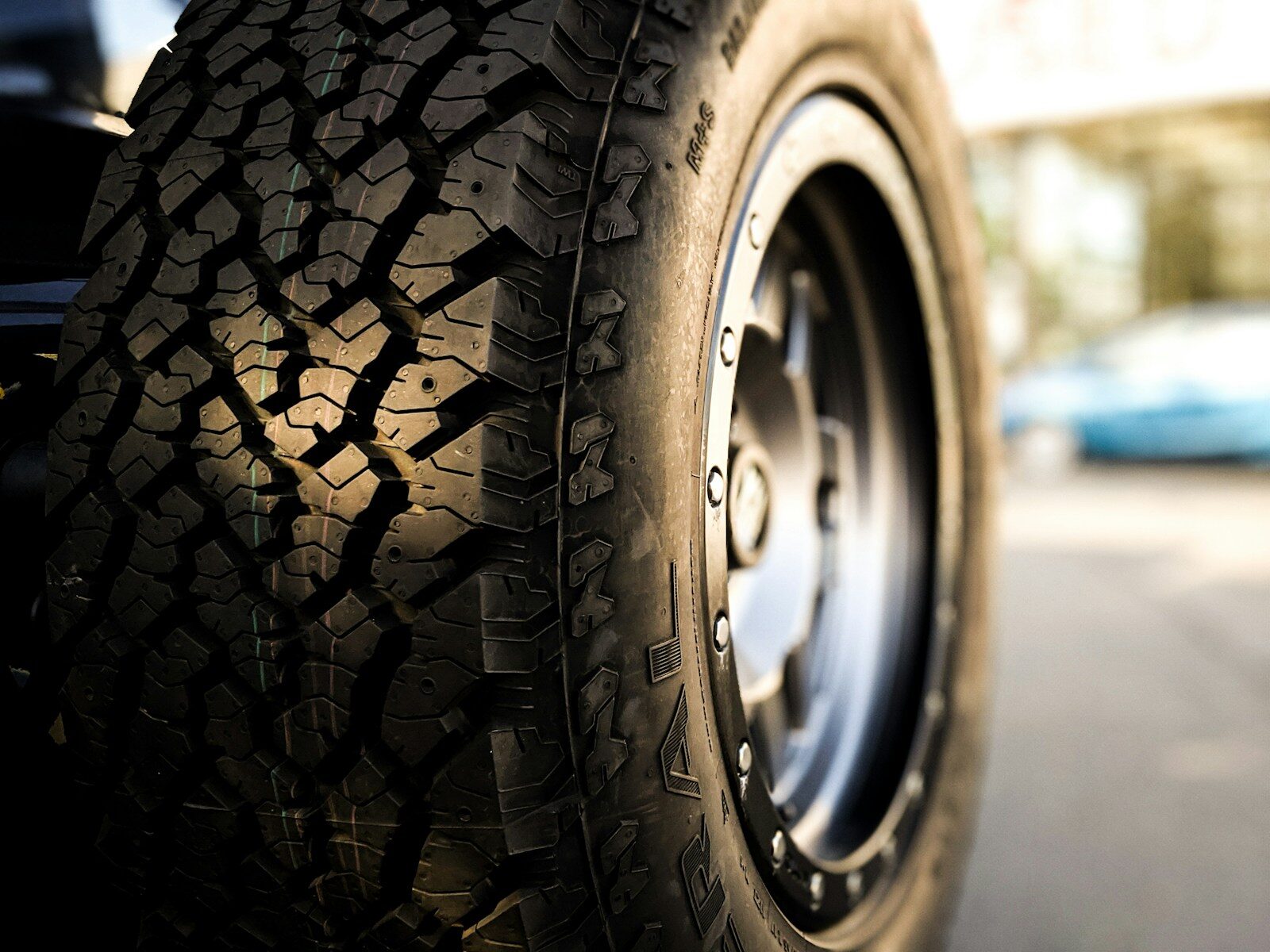
Read those carefully. Competition tire means tread depth of 8/32 or less, a W/Y/(Y) speed rating, treadwear grade no higher than 200, and no all-season labeling — so a 200-treadwear extreme-performance summer tire probably walks, while a 300-treadwear track-day compromise probably doesn’t. Large off-road means a Q speed rating or lower and a minimum diameter of 34.5 inches, so a 35-inch mud-terrain rated Q is out of scope, while the same tire rated S is in it. A lot of 33-inch aggressive rubber will instead escape through the deep-tread door, because 18/32 tread is common in that segment. And 13-inch classic-car sizing is untouched, which is a quietly good outcome for anyone running an old Alfa or a Mini.
The most consequential detail is one nobody is talking about: the rule attaches to date of manufacture, not date of sale. Section 3301 applies the article only to tires manufactured on or after January 1, 2029. A tire built on December 31, 2028 is outside the regulation forever. Expect distributors to think hard about 2028 production, and expect Californians to start reading DOT date codes the way they read expiration dates.
What happens next, and why the timing still matters
The Commission delegated staff to compile the rulemaking file and send it to the Office of Administrative Law. OAL then has 30 working days to approve or disapprove on procedural and legal grounds, not policy ones. Nobody should expect a rescue there.
Related Articles
- First Rumble Bee SRT And A Viper-Powered Ram Head To Vegas
- Hyundai Patent Shows Braced Swing-Out Truck Tailgate That Carries Real Weight
Preemption is also a dead end, and has been since 2015. The federal consumer tire information statute, 49 U.S.C. 32304A, expressly says nothing in it preempts a state from regulating tire fuel efficiency, testing methods included. NHTSA finished the test-procedure half of its national program in a 2010 final rule and never delivered the consumer-facing half. California waited, then stopped waiting. AB 844 told it to do this by July 1, 2008.
So Dunlop’s leverage now runs through implementation, not adoption: the last-resort exemption process, the appeals procedure under section 3310(d), the Final Statement of Reasons where USTMA wants family certification confirmed, and the Phase 2 window in 2033. Those are real levers. A press release two days after a unanimous vote is not one of them.
One more thing worth flagging for shops. Section 3309(h) bars advertising claims inconsistent with what a manufacturer reported to the state database, and manufacturers declare that data under penalty of perjury. California is about to publish a searchable, government-maintained record of every tire’s rolling resistance and wet grip band. That is a marketing constraint, and in tire-failure litigation it will become a discovery exhibit. Retailers who fit an exempted last-resort tire without documenting why should think about that now, not in 2029.
The CEC says all this costs $1.50 per tire in Phase 1 and $6.50 in Phase 2, against $179 in fuel savings over a set. Whether that survives contact with an actual tire counter in Bakersfield is the question Phase 1 exists to answer. Dunlop’s argument is that California should ask it before 2033. It just needed to say so before August 3.
About the Author