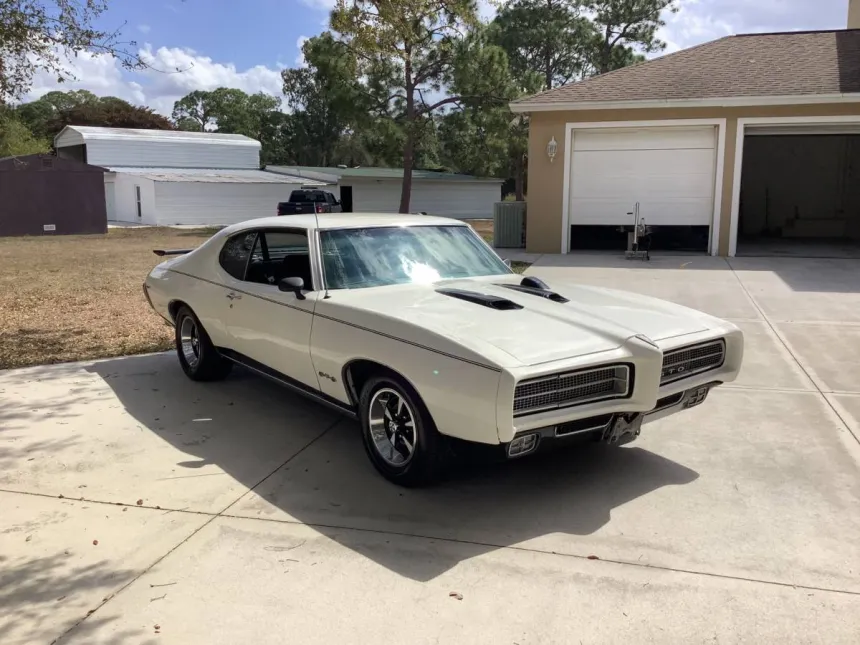
The 1969 Pontiac GTO sits in a strange place in muscle car history. It was still desirable, still loud, still very much the car people wanted in their driveway, but that was also the year things started to slip. Insurance costs crept up, buyers got nervous, and sales dropped harder than Pontiac probably expected. Now, decades later, two completely different versions of that same car have surfaced for sale. Same model year, same badge, completely different reality. One has been sitting, aging, quietly deteriorating. The other looks like it never stopped evolving. And both need to move.
Back in 1969, Pontiac managed to sell 72,287 GTOs. That might sound like a strong number, but it was already a noticeable decline from the year before. Most of those were hardtops, over 58,000 units, which made them the most common version you’ll find today. It was also the year the Judge package showed up, giving the GTO a new identity and a performance edge that collectors still chase. But not every GTO got that kind of attention. Some were driven hard, parked, and eventually forgotten.
The Relic: An Honest, Unfinished Gamble
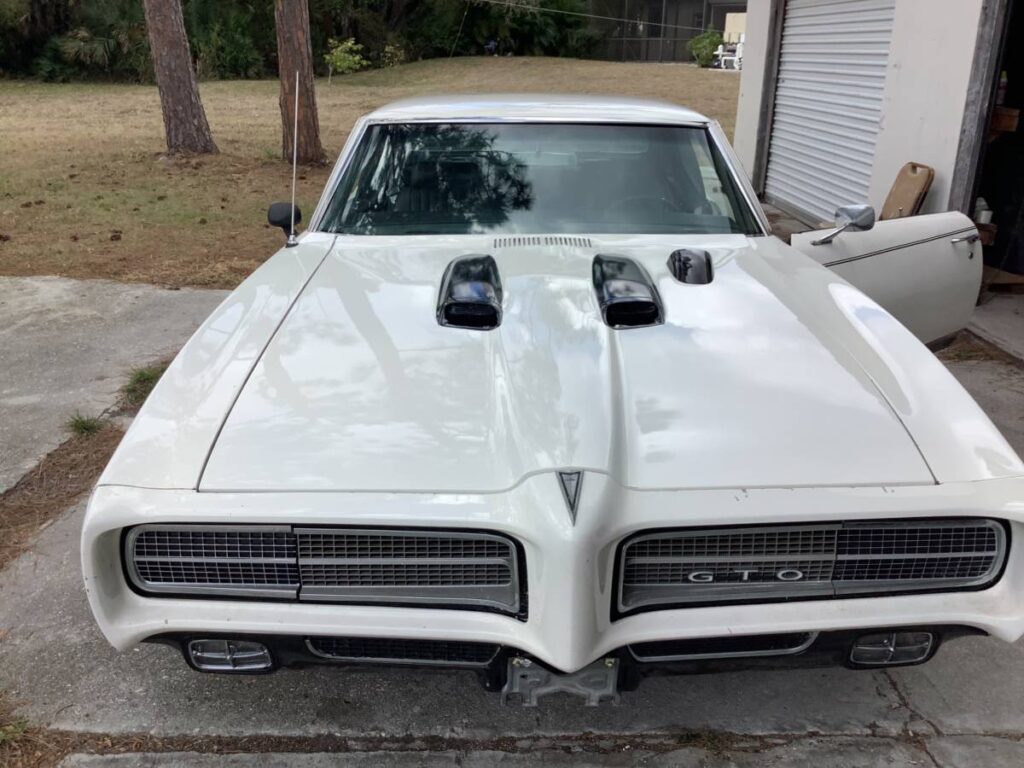
That’s exactly the case with the first car. It’s the kind of listing that doesn’t try to hide anything. The owner says it’s rusty and hasn’t run in years. That alone tells you what you’re getting into. No polished photos, no long backstory, no promises. Here’s the part that matters, though: the car still has matching numbers. That’s a big deal in this world, even when everything else looks rough. At some point, the engine did run before it was parked, but time has a way of changing things. Sitting for years can do serious damage. Seals dry out, internals seize, and what once turned over easily might now be completely locked.
And that’s where it gets complicated. There aren’t many details beyond that. No deep breakdown of the condition, no confirmation on whether the drivetrain is salvageable. It’s a gamble, the kind of purchase where you’re either saving something rare or taking on a massive headache. Still, it’s not empty. The car comes with extra parts, including a Tri-Power setup. That alone adds value and hints at what the car could become again with enough time and money. For the right buyer, that’s not junk. That’s potential.
The price reflects the risk. Ten thousand dollars gets you the whole thing, but you’re not driving it home. You’re bringing a trailer, tools, and probably a long-term plan.
The Monster: 500 Horsepower and No Apologies
Then there’s the other GTO. Same year, same name, completely different story. This one didn’t sit. It didn’t get left behind. It got rebuilt, rethought, and turned into something far more aggressive than it ever was from the factory. It’s not trying to be original, and honestly, it doesn’t care.
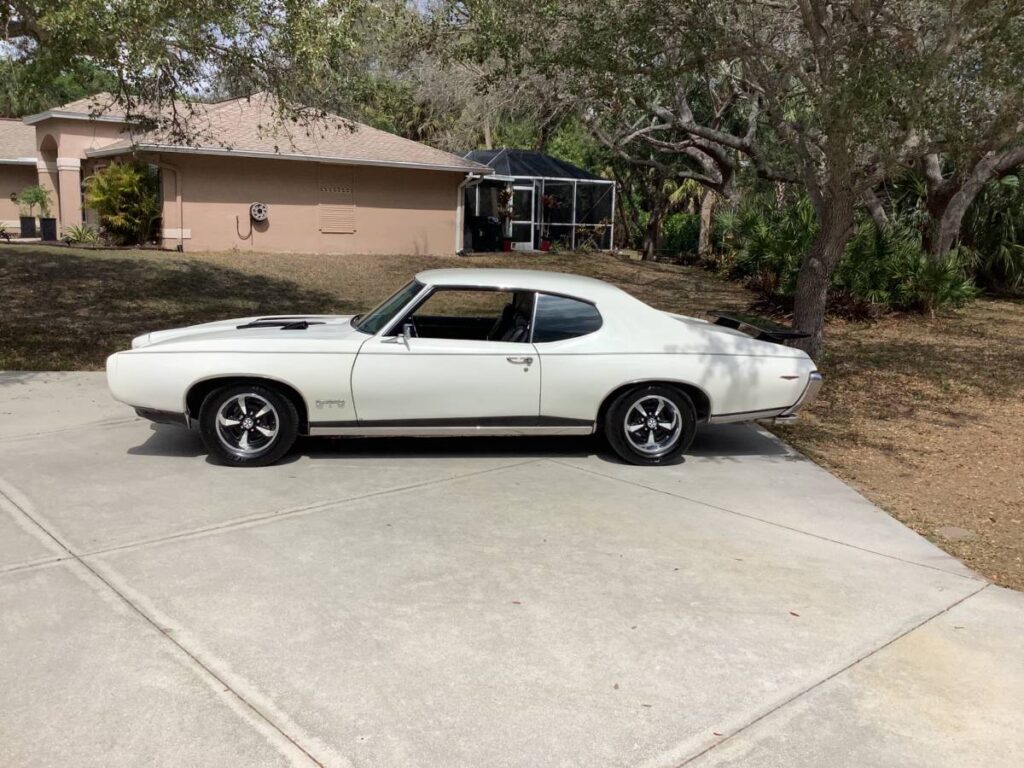
Under the hood sits a Chevy 502 crate engine. That alone changes everything. This isn’t just a mild upgrade or a period-correct rebuild, it’s a full shift in identity. Pair that with a built 700R4 transmission, and you’re looking at a car designed to be driven hard, not preserved quietly. It also has the supporting upgrades to match: a new exhaust system, an aluminum radiator, and other mechanical improvements that suggest someone didn’t cut corners. This wasn’t thrown together. It was built with purpose.
Mileage tells part of the story too. Less than 5,000 miles since the build means it hasn’t just been sitting around after the work was done. It’s been used, but not abused, enough to know it runs, not enough to wear it down. The owner claims it’s very fast, which isn’t surprising when you’re dealing with around 500 horsepower in a car that originally came from a completely different era of performance. Numbers aside, this is the kind of setup that feels different the second you hit the gas.
But it’s not for everyone. Purists won’t love it. If you’re hunting for a factory-correct GTO with original components and historical accuracy, this isn’t your car. The appeal here is in the experience, not the authenticity. And that’s the split between these two cars. One represents what the GTO was. The other shows what it can become when originality isn’t the priority. Price makes that clear too. Thirty-seven thousand dollars puts the custom build in a completely different category from the project car, but you’re paying for something you can actually drive. No waiting, no rebuilding, no guessing.
Two Cars, Two Philosophies
Some buyers want untouched history. Others want raw performance with classic looks. These two cars hit both ends of that spectrum, and they both highlight something that’s been happening for years: the gap between restoration projects and finished builds keeps growing. One demands time, patience, and money. The other demands a bigger upfront check but saves you the headache. There’s no right answer, just different kinds of buyers.
In the end, both cars tell the same story from opposite directions. One shows what happens when a muscle car gets left behind. The other shows what happens when someone refuses to let it fade.
Via craigslist
About the Author