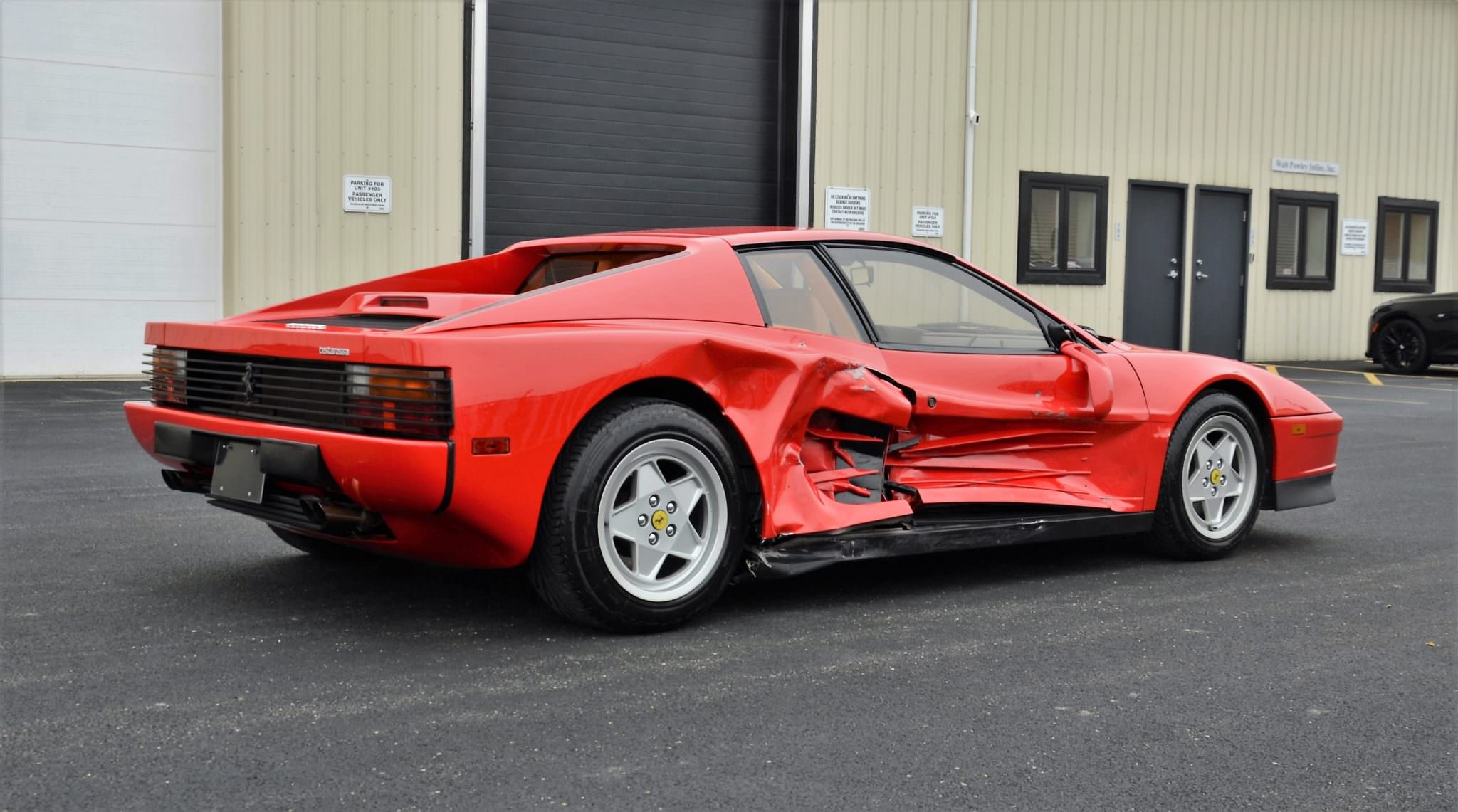
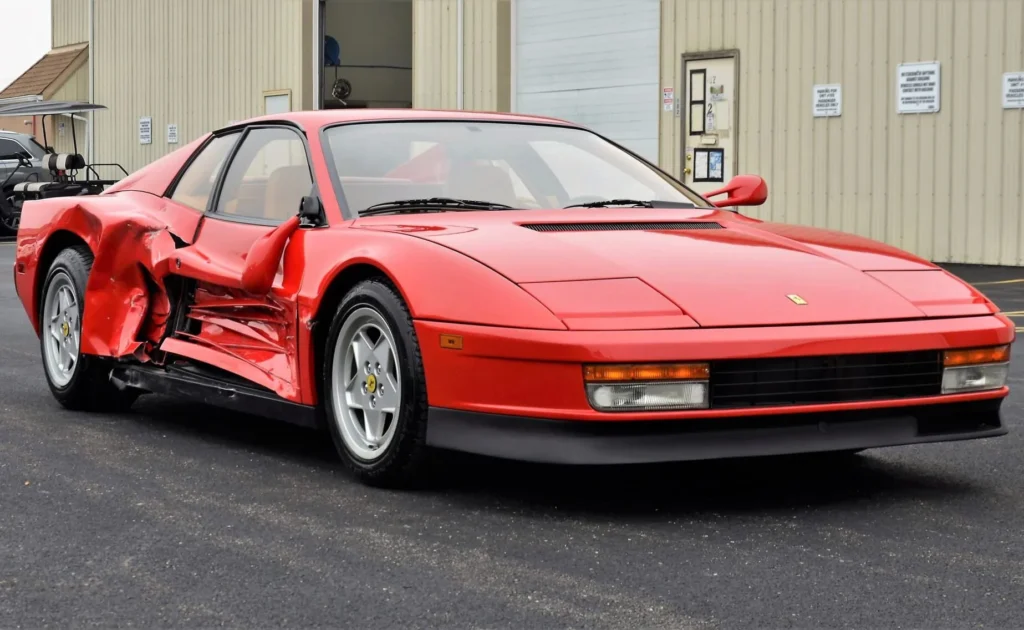
A 1990 Ferrari Testarossa with just 14,000 miles should be a collector’s dream. Instead, it’s now a damaged project car with serious repair needs following a side-impact collision in late 2025. That alone would raise eyebrows, but what makes this story more complicated is what happened just a few years before the crash: this car received an extensive engine-out service in 2022 costing roughly $44,000, covering nearly every major mechanical system. Now, despite that investment, it’s heading to market as a restoration project. That’s where the real tension starts — because this isn’t just about fixing a Ferrari, it’s about whether the numbers still make sense once you factor everything in.
What Went Wrong, and How Bad It Is
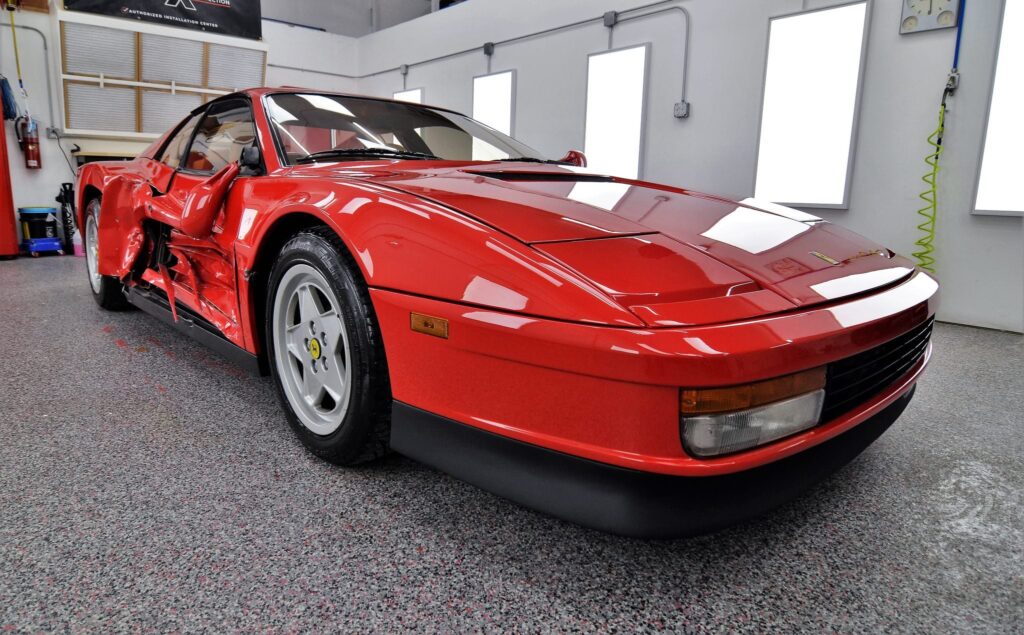
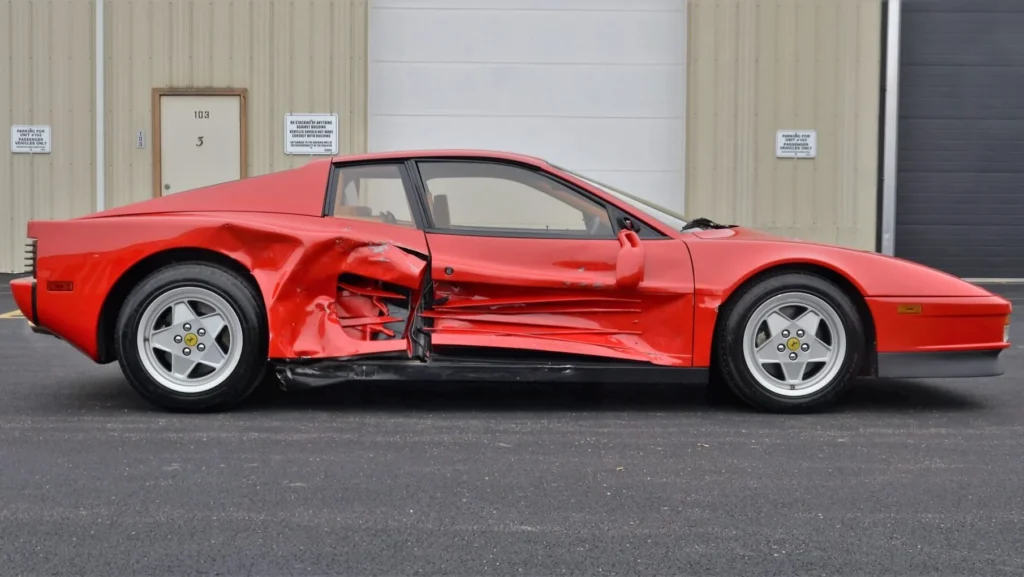
The damage centers on the right side and right rear of the car, and it isn’t cosmetic. The impact affected critical systems, including the radiator, suspension, alignment, bodywork, and cooling components — a combination that immediately pushes this car out of the “easy fix” category and into something far more involved. When a Testarossa takes a hit like this, repairs aren’t straightforward: the car’s wide body, unique side intake design, and rear-mounted cooling layout make structural and mechanical work considerably more complex than on a typical vehicle. Fixing the alignment issues alone can become a major undertaking, especially paired with suspension and cooling system damage. This isn’t a weekend project; it’s a full restoration challenge demanding real time, specialized expertise, and a serious budget.
The $44,000 Question
What makes this situation especially frustrating is the timing. In 2022, the car underwent a comprehensive engine-out refurbishment that addressed nearly every major wear item: timing belts were replaced, the transaxle was rebuilt, and the clutch, fuel system, ignition components, and various supporting systems were all refreshed. That’s exactly the kind of service history buyers want to see in a Testarossa, since these cars are notorious for costly maintenance, and an engine-out service ranks among the biggest expenses an owner can face. Having that work already completed should position a car as a strong, usable example. Instead, the crash has shifted the entire conversation. The question now isn’t whether the car is mechanically sorted — it’s whether the cost of repairing the collision damage will end up outweighing the value of everything that was already invested.
Why the Testarossa Still Commands Attention
To understand why this car is drawing interest despite its condition, it helps to know what the Testarossa represents. Ferrari developed it to fix the shortcomings of the earlier 512 BBi, particularly around heat management and everyday usability. By relocating the radiators to the rear and redesigning the cooling system, Ferrari solved both a performance problem and a practicality problem in one move — an engineering decision that directly produced the car’s most iconic feature, the wide side strakes that define its look. Love them or hate them, those “cheese grater” intakes became one of the most recognizable design elements in automotive history. Paired with a 4.9-liter flat-12 engine and a gated 5-speed manual, the Testarossa delivered a blend of performance and daily usability that few rivals could match at the time.
The numbers still hold up decades later. With nearly 380 horsepower in U.S. specification and a top speed around 180 mph, the Testarossa was a legitimate supercar, capable of sprinting to 60 mph in under six seconds and quicker in some tests. But its impact went well beyond raw performance figures — it became a genuine cultural icon through appearances across television and gaming that cemented its place in automotive history. For plenty of enthusiasts, the Testarossa isn’t just a Ferrari; it’s the Ferrari of the 1980s. That legacy is a big part of why even a damaged example like this one can still generate real interest, since the badge, the design, and the engine configuration all carry weight that goes beyond current condition alone.
The Reality of Taking On a Project Like This
Still, this is where things get complicated. A low-mileage example with just 14,000 miles should command strong attention on its own, especially finished in classic Rosso Corsa over beige leather. The interior, complete with period-correct details like Veglia gauges and a gated shifter, adds to the appeal. None of that changes the reality of the repair work required, though — damage to the cooling system, suspension, and alignment means this car needs considerably more than cosmetic attention, and will require a careful, likely expensive restoration to return it to genuinely roadworthy condition.
The documentation helps buyers weigh that risk. The car comes with service records, a Carfax report, manufacturer’s literature, and an Illinois title, a level of transparency that’s genuinely important when dealing with a project of this scale, since buyers need to know exactly what they’re taking on before committing.
Who Actually Takes On a Car Like This
Cars like this attract a specific kind of buyer — not someone shopping for a turnkey Ferrari, but someone willing to take on the challenge of bringing a damaged icon back to full health. There’s a real potential upside here: with the major mechanical service already completed, a properly repaired example could still represent a genuinely compelling car once the dust settles. But that outcome depends entirely on how the restoration gets handled and, just as importantly, how much it ultimately costs. The risk is straightforward: miscalculate the repair scope or underestimate the complexity of working on a car this specialized, and the project can spiral quickly. That’s exactly where a lot of enthusiasts get burned, particularly when dealing with high-end European cars that don’t forgive shortcuts.
What This Says About the Collector Market
This Testarossa highlights a growing reality in the collector car world: even well-maintained, low-mileage cars aren’t immune to becoming projects overnight. A single incident can completely shift a car’s trajectory, turning a once-desirable example into a genuine high-stakes gamble. At the same time, it demonstrates how strong demand remains for truly iconic models — despite the damage, this car is still drawing attention purely because of what it is, which speaks to the enduring appeal of both the Testarossa and the broader Ferrari brand.
The Bigger Question Moving Forward
The real story here isn’t just about a crashed Ferrari. It’s about how quickly value, condition, and perception can shift in the collector market. A car that once represented a finished, fully sorted product is now a genuine question mark. So the real question becomes whether this is a rare opportunity to revive a low-mile icon, or a cautionary tale about how fast things can go sideways, even after a $44,000 investment already sunk into the car. Because in today’s market, the line between dream car and financial risk is thinner than it’s ever been.
About the Author