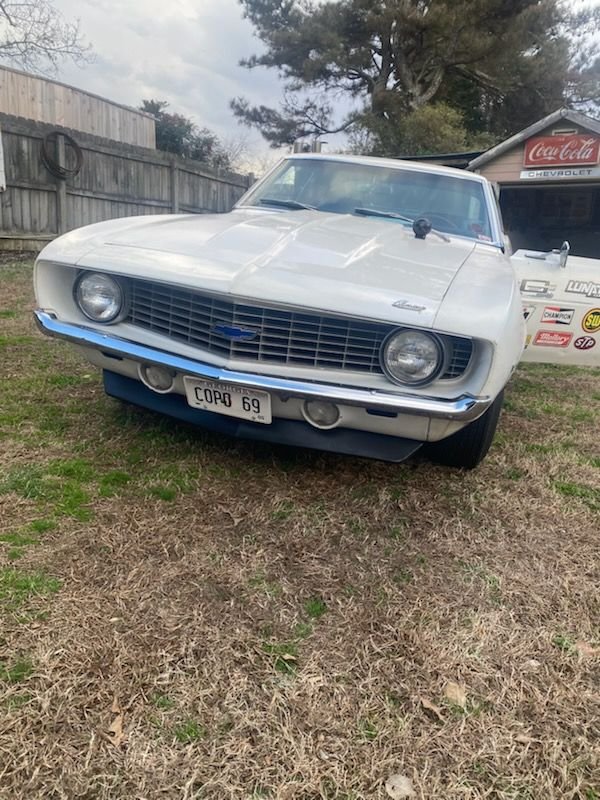
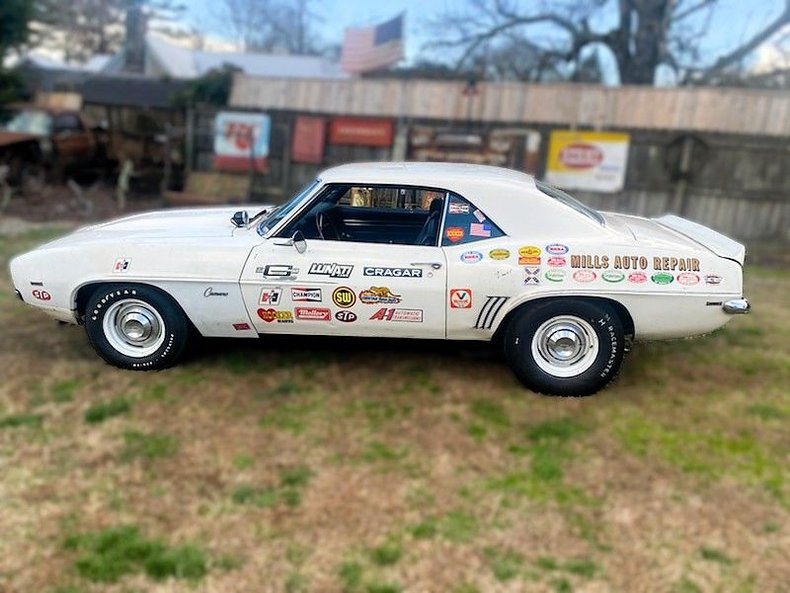
A 1969 Chevrolet Camaro COPO with just 753 miles is heading to auction this April, and it’s already stirring serious attention among collectors. This isn’t another restored muscle car dressed up for the spotlight — it’s an unrestored survivor backed by documentation and a traceable ownership history, making it one of the most compelling factory muscle machines to hit the block this year.
Scheduled to cross the auction stage on Saturday, the white-on-blue coupe represents something increasingly rare in today’s collector market: genuine authenticity. While plenty of high-dollar Camaros have been rebuilt, modified, or over-restored over the decades, this example has managed to avoid all of that. For serious buyers, that’s exactly where the real value lies, and where the competition starts to heat up.
Why This Particular Camaro Matters
The COPO Camaro isn’t just another trim level. It was born from a backdoor ordering system that let dealers bypass Chevrolet’s standard factory limitations and build high-performance cars the company never officially advertised, which makes every genuine COPO example a piece of insider automotive history on its own. This specific car adds another layer of intrigue: with mileage listed as exempt but owner-stated at just 753 miles, it falls into a category collectors obsess over — the ultra-low-mile survivor.
It’s the kind of car that hasn’t just been preserved, it’s been virtually untouched. The fact that it remains unrestored only amplifies its appeal, since original paint, an original interior, and factory-correct components are getting harder to find every year, especially in cars that were originally built to be driven hard. This Camaro avoided that fate entirely, and now it’s positioned as a genuine time capsule from the peak of the muscle car era.
The Financial Stakes Are Higher Than Ever
Cars like this don’t just attract admiration — they attract serious money. In today’s collector market, originality often commands a real premium over restoration, and low-mileage examples can push values even higher still, creating close to a perfect storm for aggressive bidding. Buyers here aren’t just purchasing a car; they’re investing in a piece of automotive history that’s proven resilient in value over time. As more restored cars flood the broader market, truly untouched examples stand out even more, and collectors are well aware of it. That scarcity is exactly what drives prices upward and fuels competition between bidders who don’t want to miss out on one of the few genuine survivors left.
The stakes aren’t purely financial, either. Owning a documented, unrestored COPO Camaro carries real status within the collector community, signaling access, knowledge, and the ability to secure something very few people ever will.
The Power Struggle in the Collector Car World
Behind the scenes, auctions like this often turn into quiet power struggles. Private collectors, investors, and even institutions compete for the same limited pool of high-end vehicles, and when a car with this level of originality surfaces, it becomes an immediate target. The Camaro’s documented history, including its purchase from the original owner back in 2004, adds exactly the kind of credibility buyers demand at this level — paperwork matters, and in many cases it’s the difference between a strong sale and a record-setting one.
That dynamic creates real tension in the market. As prices climb, the barrier to entry rises with them, gradually pushing out smaller enthusiasts while consolidating the rarest cars into the hands of fewer, wealthier buyers. It’s a shift many in the enthusiast community are watching closely, and not always comfortably.
What This Means for Everyday Enthusiasts
For everyday car enthusiasts, this sale highlights a growing divide within the hobby. On one hand, it’s genuinely exciting to see historically significant cars preserved and celebrated rather than modified into something unrecognizable. On the other, it reinforces the reality that some of the most iconic machines in American performance history are becoming increasingly inaccessible to ordinary buyers.
The rise in value of cars like this COPO Camaro has a real ripple effect, influencing pricing across the board, from rough project cars all the way to fully restored examples. As top-tier vehicles command higher numbers, the rest of the market tends to follow along behind them. It also raises a fair question about how these cars actually get used once they’re sold: ultra-low-mile survivors tend to live sheltered lives, rarely driven and carefully maintained as appreciating assets rather than machines meant to be enjoyed. That’s a real departure from the original spirit of muscle cars, which were built specifically to be driven hard and enjoyed on the street, not tucked away in climate-controlled storage.
The Bigger Picture for the Muscle Car Market
As this 1969 COPO Camaro heads to auction, the real story isn’t just how much it ends up selling for — it’s what that number ultimately represents. Is this the new normal for genuinely rare muscle cars, or is the market pushing into territory that could reshape the hobby entirely? Because if cars like this keep climbing in value at this pace, the fight for ownership stops being purely about passion. It becomes about power, access, and who gets to control the legacy of American performance going forward.
About the Author