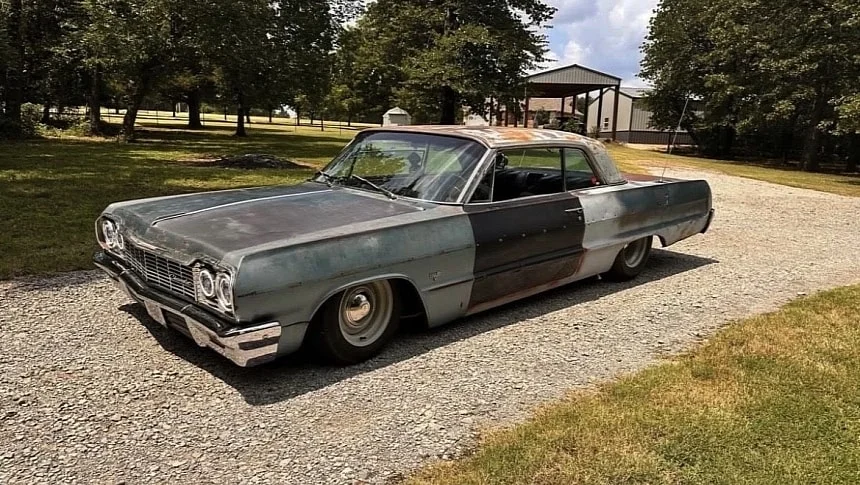
At first glance, this 1964 Chevrolet Impala doesn’t look like something you’d rush to buy. The body tells a story, and not the clean, polished kind collectors usually chase. But spend a little more time with it, look closer, and something unexpected starts to show up.
This isn’t just another worn-out classic sitting around waiting for a miracle. There’s a modern V8 under the hood, a partial rebuild already in motion, and a project that could go either way depending on who takes it on next.
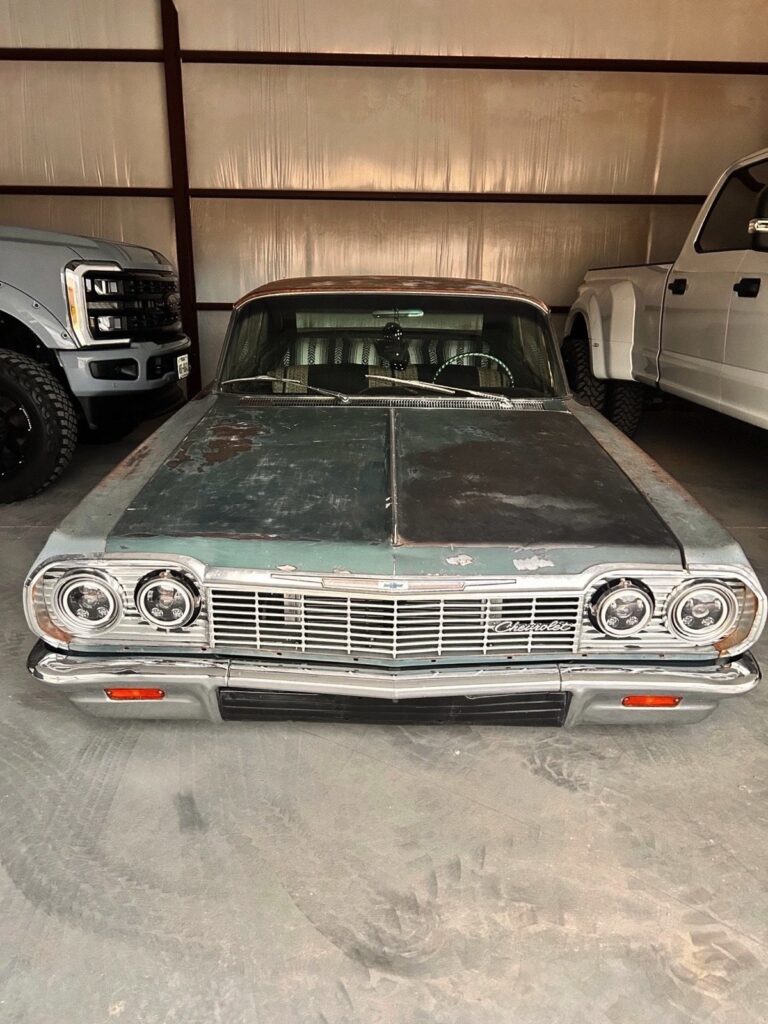
A Transition-Year Impala Just Before the Record-Breaking 1965
The car itself comes from a year that didn’t try to reinvent the wheel. Chevrolet kept things relatively steady in 1964, knowing a major redesign was right around the corner. The Impala was already dominating sales charts, and the focus shifted toward refining what already worked. By the time the 1965 model hit, it would go on to break records, becoming the first car in the U.S. to sell over a million units in a single year.
So this car comes from that transition period. Not the flashiest year, but still tied to one of the most important nameplates in American car history.
An LS Engine Pulled From a 2001 Tahoe
Under the hood sits an LS engine pulled from a 2001 Chevrolet Tahoe. That alone changes the conversation. Whether you love or hate swaps like this, LS power has become the go-to solution for reliability and performance in builds like this. It’s paired with a 4L60E transmission, keeping things relatively simple and proven.
The seller says the engine is mostly stock, although some sensors have been removed. That detail might not scare off experienced builders, but it’s something that will matter when it comes time to actually get the car running properly.
The Metal Work Is the Real Challenge
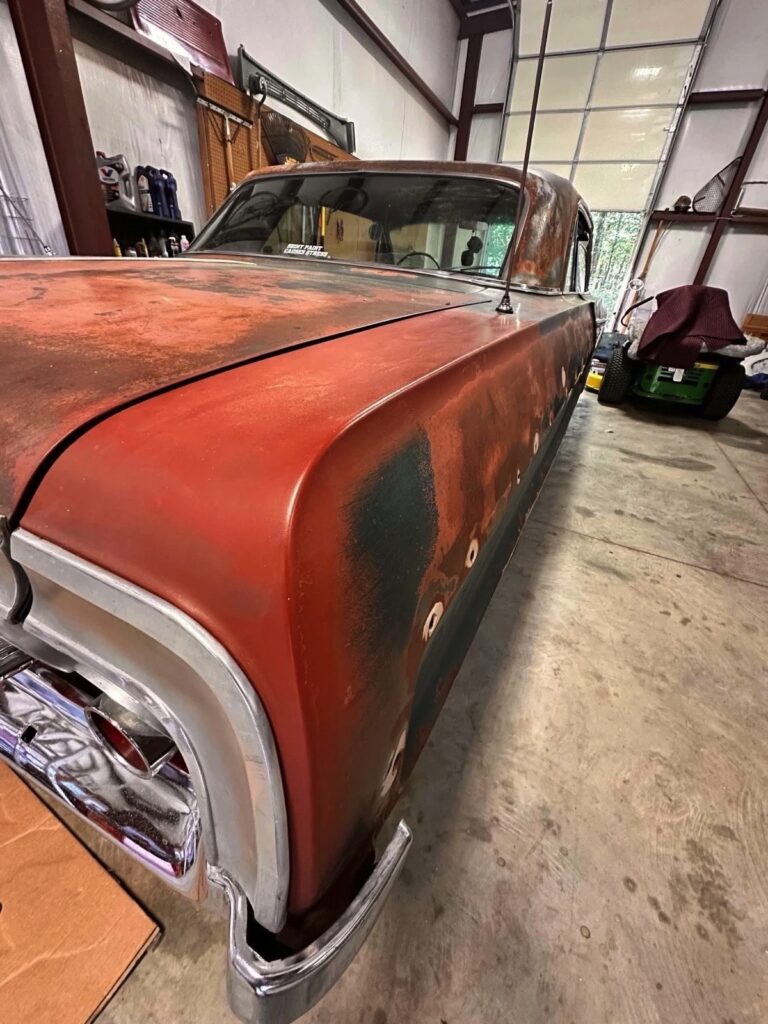
And that’s where it gets complicated. Because despite all the mechanical progress, the car is nowhere near ready for the road. Not even close. The biggest issue isn’t the drivetrain. It’s the metal.
The floors need to be replaced. Not patched, replaced. The same goes for the trunk floor. That’s not a small job, and anyone who has dealt with rust repair knows how quickly that kind of work can spiral. It’s time-consuming, expensive, and requires real skill if you want it done right.
The seller is upfront about it, which helps. No pretending, no hiding it under carpet or paint. But honesty doesn’t reduce the amount of work needed. It just makes the decision clearer for whoever’s thinking about stepping in.
A solid metal guy could turn things around, sure. That part isn’t impossible. But it’s not a weekend project either. This is the kind of job that either excites you or immediately pushes you away.
$18,500, With Room to Negotiate
And then there’s the price. The asking number is $18,500. For a finished, clean 1964 Impala with modern upgrades, that might sound reasonable. For something in this condition, still mid-build, it’s a different conversation. The seller has left the door open with a make-offer option, which probably tells you they understand that hesitation.
Because let’s be honest. At that price point, buyers start doing mental math fast. Cost of metal work. Cost of finishing the install. Cost of sorting out wiring, sensors, and everything else that comes with an unfinished swap. It adds up quickly.
That said, there’s still something here. This isn’t a pile of parts thrown together randomly. There’s direction behind the build. Someone started with a plan, invested in key components, and got the harder mechanical pieces at least partially handled.
A Trip to Odessa, Texas Required
And location adds another layer. The car is sitting in Odessa, Texas, which means anyone serious about it is probably going to have to travel to see it in person. That’s not unusual for project cars, but it does narrow the field a bit. You’re likely looking at a buyer who knows exactly what they’re getting into before they even make the trip.
Zoom out for a second and this car fits into a larger pattern. Classic cars aren’t getting easier to find in perfect condition, and more people are turning to builds like this. Half-finished projects. Modern swaps. Cars that sit somewhere between restoration and reinvention.
Sometimes those builds turn into something incredible. Other times they stall out, exactly like this one has. And now it’s someone else’s turn to decide what happens next.
That’s really what this comes down to. Not whether the Impala is worth it on paper, but whether someone sees the potential through the rough edges. Because there are plenty of good bones here. The engine swap gives it a future. The rust tries to pull it backward.
And right now, it’s sitting in the middle, waiting for someone willing to take on both sides of that equation.
Source: eBay seller d.m.432
About the Author