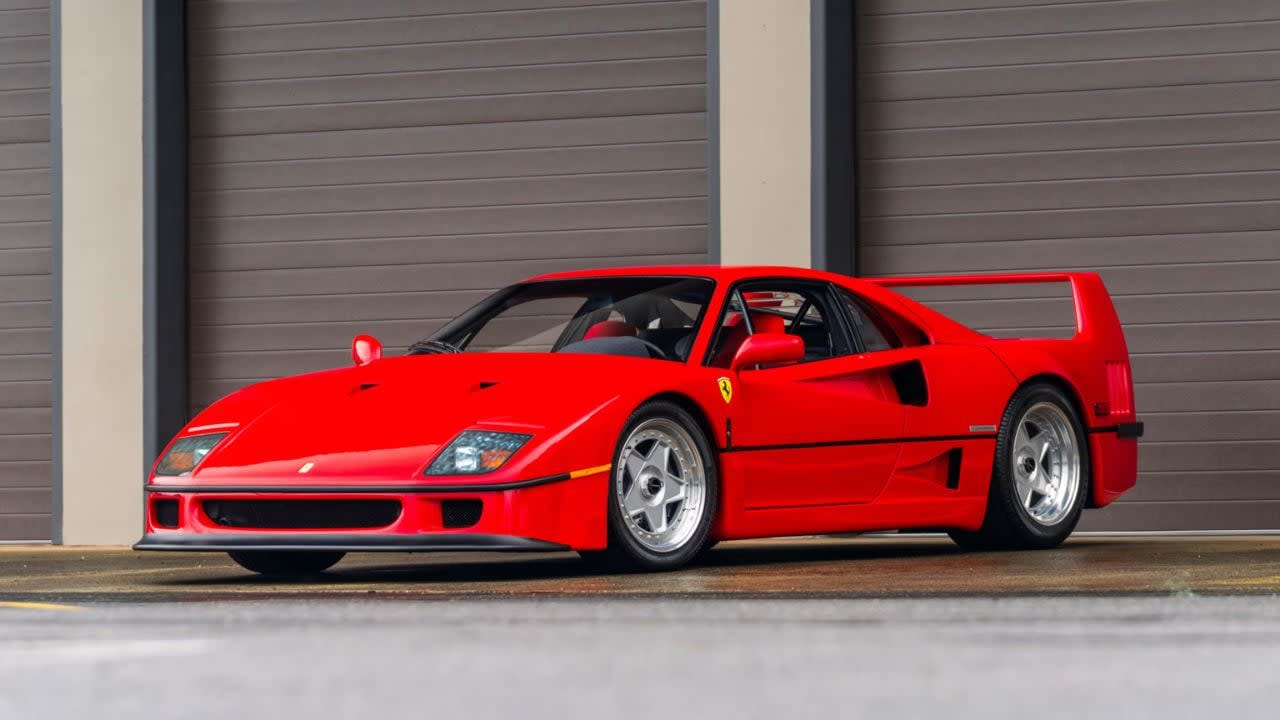
A Ferrari F40 doesn’t need hype to command a room. But every now and then, one shows up that makes even seasoned collectors pause a little longer than usual, and that’s exactly what’s happening with this 1991 example heading to Mecum Indy. It isn’t just the car itself, it’s the combination of details stacked around it, and those details matter more than they might seem at first glance.
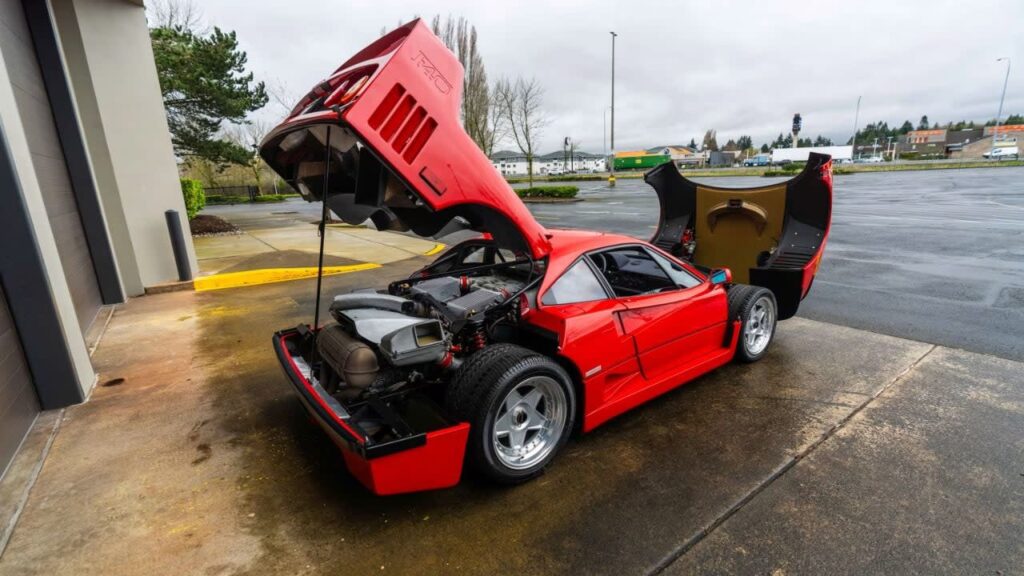
This F40 has just 1,771 miles on it, which alone would draw attention, but it doesn’t stop there. It’s a U.S.-market car, one of only 213 delivered new to this country, and it’s crossing the block without a reserve. That combination shifts the entire tone of the sale. The car is scheduled as Lot R713 on May 16, 2026, carrying VIN ZFFMN34A5M0087568, and while those details are just numbers on paper, in practice they anchor a car with a fully visible track record in the collector market. This exact F40 sold for $1,682,500 back in 2019 at RM Sotheby’s Monterey, then reappeared in 2023 at Gooding’s Pebble Beach sale and brought $3,085,000. That kind of jump isn’t random, it reflects how the market has treated top-tier F40s over the past several years, with low mileage, clean history, and correct specification pushing the best examples into a different pricing tier entirely. This car has already proven it belongs in that tier, and now it’s back, with the no-reserve structure adding a layer of unpredictability serious collectors can’t ignore.
No reserve doesn’t mean cheap, it just means the car will sell no matter what the final bid turns out to be. That certainty alone tends to pull in serious bidders, since there’s no artificial price floor standing between them and the car. Once the hammer drops, it’s done, and for a car with this kind of pedigree, that structure creates real tension in the room almost immediately.
Stepping back, the F40 itself needs little introduction. Introduced in 1987 to celebrate Ferrari’s 40th anniversary, it wasn’t designed to be comfortable or forgiving, it was built to be fast, raw, and more than a little intimidating, and that was entirely the point. Ferrari stripped away the extras and focused purely on performance in a way that feels almost unthinkable in a modern production car. Under the rear deck sits a twin-turbocharged 2.9-liter V8 producing roughly 471 horsepower, sending power to the rear wheels through a 5-speed manual with nothing soft about how it delivers that output. The car was capable of reaching around 200 mph, which at the time placed it in an extremely small club of road cars.
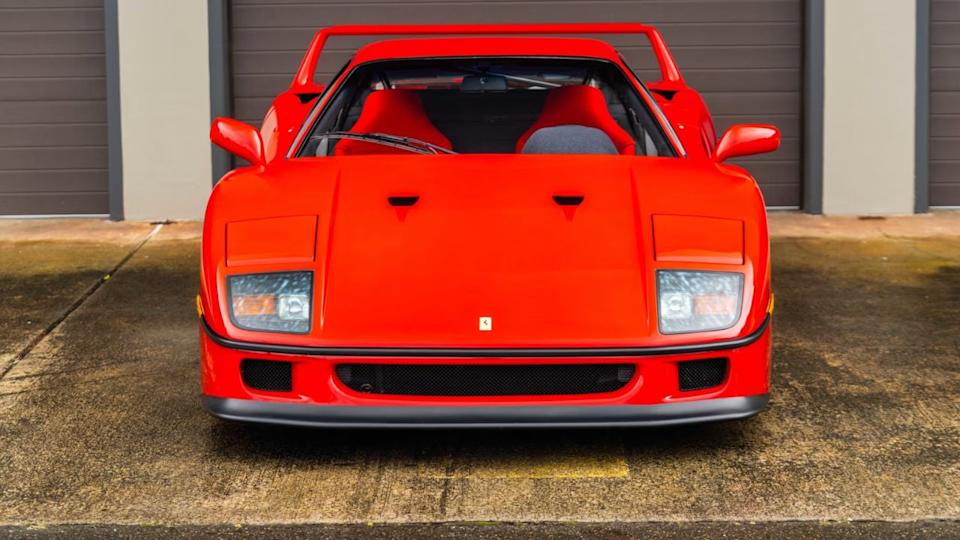
Numbers only tell part of the story, though. The construction is where the F40 really separates itself from nearly everything else on the road: Kevlar, carbon fiber, and composite materials were used throughout to keep weight down, and inside, there’s barely anything resembling luxury. No excess padding, no distractions, nothing to soften the experience. It feels more like a race car that happens to be street legal than a traditional grand tourer, and that rawness is exactly why people still care about it decades later. Modern supercars are unquestionably faster, but they’re also filtered through layers of electronic assistance. The F40 isn’t. It delivers everything directly to the driver, sometimes harshly, and that kind of unfiltered experience has become genuinely rare in 2026. Collectors know it, drivers know it, and owning one isn’t just about owning a Ferrari, it’s about owning one of the last purely analog supercars built before electronics started managing the experience for the driver.
Ferrari ended up building around 1,311 F40s in total, more than originally planned because demand kept climbing throughout production. Even so, it isn’t a car you see often, especially in this kind of condition, and within that total production run, U.S.-spec cars remain a smaller subset that collectors track closely. That’s why this Mecum appearance isn’t just another auction listing, it’s an event. People will be watching this car cross the block regardless of where the final number lands, because the result will say something about whether analog supercars still hold the grip on collectors that newer, more digital machines simply can’t match. If the price surprises people, that will spark its own conversation. Either way, the outcome will matter to how the broader market reads F40 values going forward.
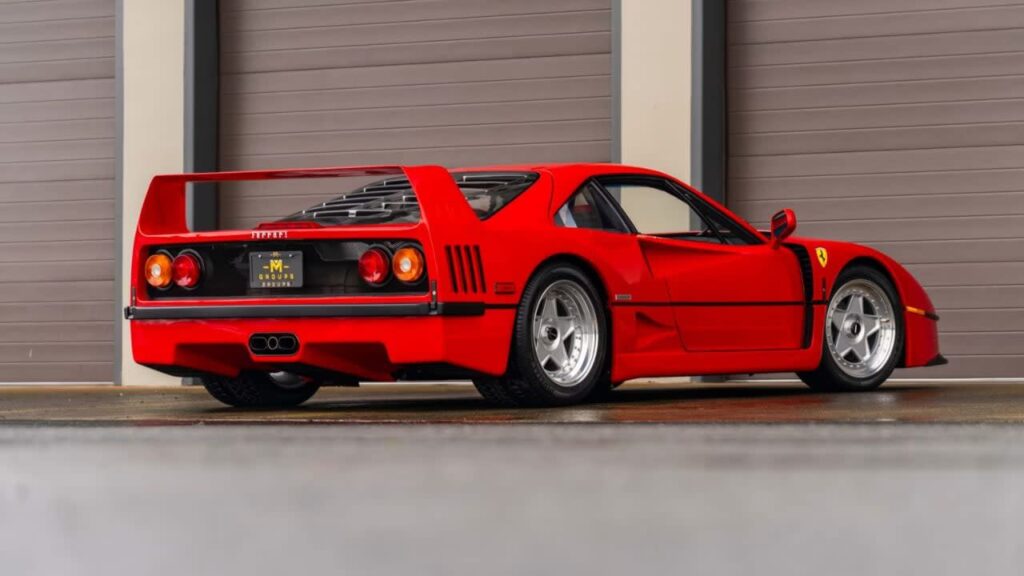
At the end of the day, this isn’t just about one Ferrari changing hands. It’s about what the F40 still represents: a moment in automotive history when performance came without filters, when driving demanded real skill and attention from the person behind the wheel. That hasn’t changed in the decades since. And when a car like this rolls onto the stage, the entire room feels it.
About the Author