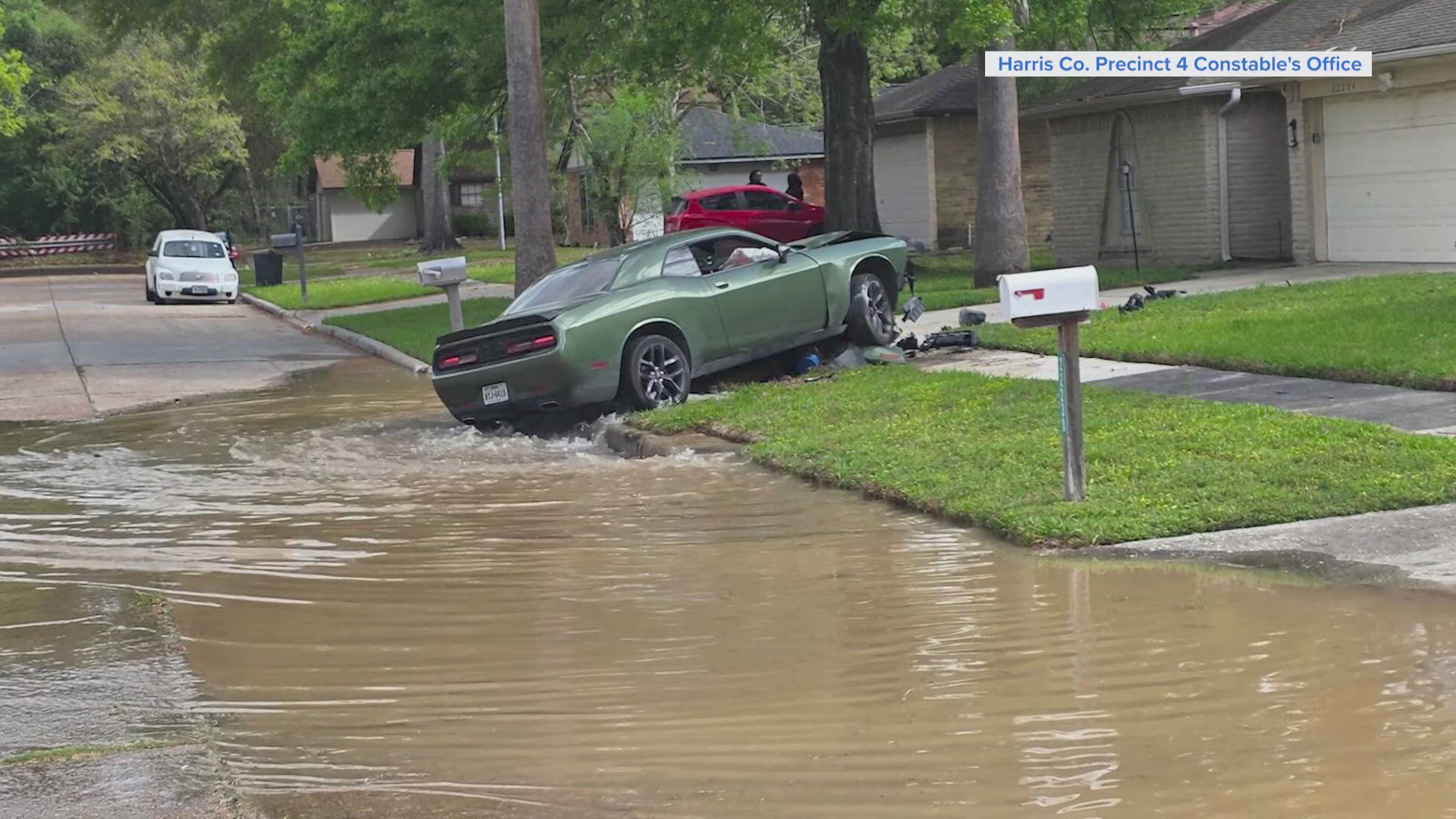
A Dodge Challenger crashing into a fire hydrant sounds like a routine fender-bender until you learn it ended with a flooded yard, a foot chase, and two men in handcuffs. That’s exactly how deputies in Spring, Texas describe a crash near Lynngate that started as a drive through a residential neighborhood and ended as a multi-charge legal mess for everyone involved.
The Crash Didn’t End at Impact
According to Harris County Precinct Four deputy constables, the Challenger veered into the residential street and slammed directly into a fire hydrant positioned in front of a home. The impact triggered an immediate surge of water, flooding the yard and surrounding property within moments. That alone would have been enough of a headache for the homeowner and the utility crews who’d eventually have to repair it. But the crash wasn’t the end of the story — instead of staying put, both occupants reportedly fled the scene on foot, leaving the damaged car and the gushing hydrant behind and turning what should have been a straightforward crash report into an active manhunt.
Running Made Everything Worse
Deputies caught up with both men. The driver was arrested on suspicion of driving while intoxicated, a charge serious enough on its own before anyone starts adding to it. The passenger didn’t walk away clean either — authorities determined he had an active arrest warrant, which meant his detention was essentially automatic the moment deputies confirmed his identity. Add in the fact that both men had already fled the scene of a crash, and what could have been a single-charge accident report turned into a layered case involving suspected impairment, evading, and an outstanding warrant, all stacked on top of each other.
A Car Built for Performance, Used Poorly
The Challenger is one of the defining names in modern muscle — a car built around straight-line power and a reputation for freedom behind the wheel. None of that works in a residential neighborhood if the person driving it isn’t handling that power responsibly, and in this case, that responsibility appears to have broken down well before the hydrant came into the picture. A high-output car in a neighborhood setting already carries elevated risk; add suspected impairment into the mix and that risk compounds fast. To be clear, this isn’t an indictment of the car or of muscle car owners broadly — most people who own performance vehicles drive them exactly the way they’re meant to be driven. But incidents like this one reinforce a stereotype that enthusiast vehicles and reckless behavior go hand in hand, and that perception carries consequences of its own: more scrutiny from law enforcement, tighter enforcement in residential areas, and a shift in how communities view high-performance cars parked in their driveways.
Part of a Larger, Recurring Problem
This kind of crash isn’t an isolated event. High-powered cars ending up in residential collisions has become a recurring pattern nationally, usually tied to some combination of speed, inexperience, or impaired driving. What sets this case apart is how quickly it escalated — a single crash turned into flooding, a foot pursuit, and multiple arrests within the span of an afternoon. The legal process will run its course for both men, but the disruption to the neighborhood itself won’t be forgotten as quickly. For enthusiasts, it’s another reminder of how fast a situation unravels once responsible driving gets pushed aside — and it raises a bigger question about whether incidents like this keep getting treated as isolated one-offs, or whether they’ll keep shaping how performance cars are viewed and policed in everyday residential settings.
About the Author