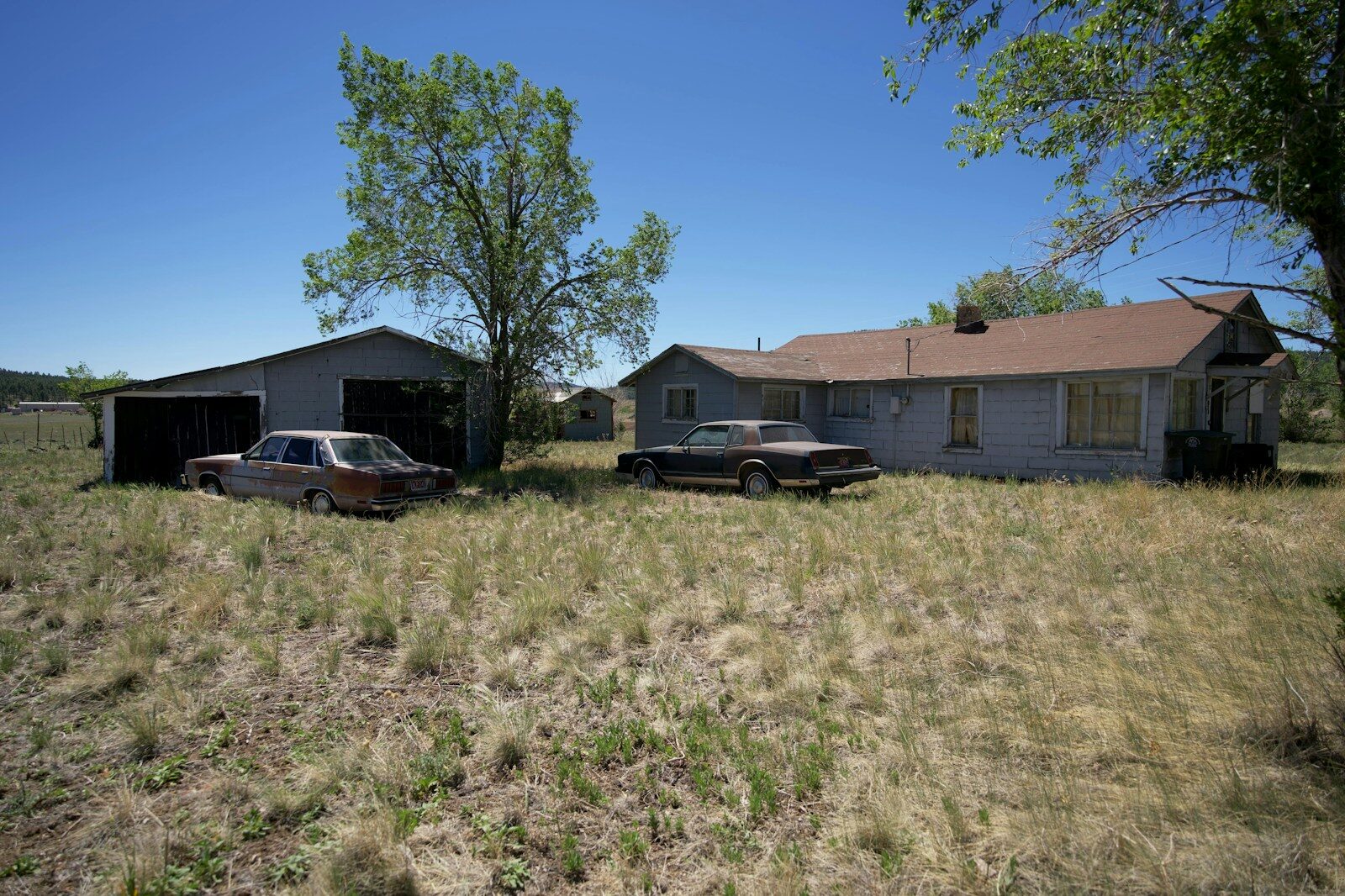
America doesn’t “lose” great car collections in one dramatic moment. It loses them the way people lose a house to termites: slowly, quietly, and often while everyone involved swears they’ll deal with it “soon.” The cars sit while probate drags, titles don’t match reality, heirs disagree, storage costs balloon, and the physical condition slides from “barn find” romance into irreversible decay.
The hard numbers show the stakes are not theoretical. RM Sotheby’s reported $29,616,400 in sales for “The Junkyard: The Rudi Klein Collection,” with every lot sold, proving that even long-neglected collections can be worth massive money—if they’re rare enough, and if someone can actually get them to market. Gooding Christie’s published $19,016,296 total sold and a 100% sell-through rate for “Selections From The Mullin Collection,” a museum-linked dispersal that preserved value but ended a public institution. Mecum’s “Larry’s Legacy” auction—tied to the Klairmont museum collection—reported $16.5 million in total sales with every lot placed into new hands.
Those are the “clean” endings, executed with paperwork, authority, and logistics in place. The uglier reality is what sits between those headline auctions: stranded collections like the NASCAR-linked Circle Bar museum assets in Texas that, according to published reporting, have drifted into neglect and uncertainty after the owner’s death. This report explains the structural reasons collections decay, quantifies the financial and cultural losses, and lays out policy and preservation fixes that would stop turning American automotive history into rust and landfill.
This investigation emphasizes primary or near-primary sources wherever possible. Auction totals and prices were taken from auction house releases and published “prices realized” pages, including RM Sotheby’s, Gooding Christie’s, Mecum, and VanDerBrink’s posted results PDFs. Local news reporting was used to document real-world “hoard logistics,” including a New Mexico station’s coverage of the Dorsey Mansion estate auction and the conditions described on-site.
For legal bottlenecks, the report relies on court guidance, statutes, and state DMV forms that govern how assets move (or fail to move) after a collector dies. These include a probate court handbook outlining personal representative duties and timelines, creditor-claim windows in California and Florida probate law, and multiple state title-transfer forms designed specifically for deceased owners.
For financial drivers, the report uses published storage price ranges and insurer eligibility guidance to show what “holding” a collection actually costs when done correctly. Environmental and decay analysis draws on EPA stormwater guidance for salvage-yard-like sites and corrosion research from professional corrosion engineering organizations to quantify why “waiting” destroys value. Museum capacity and funding constraints are documented using American Alliance of Museums reporting on the sector’s economic impact and current financial stress indicators.
Case studies
Rudi Klein’s “Junkyard” proves rarity can survive neglect
The Rudi Klein story matters because it demonstrates both sides of the same problem. On one hand, it shows how long a major collection can remain effectively inaccessible while rumors swirl and condition drops. On the other hand, it shows that the market will still pay serious money for historically irreplaceable cars, even after decades of “non-museum” storage, as long as the collection can be legally and logistically delivered to buyers.
RM Sotheby’s stated “The Junkyard: The Rudi Klein Collection” brought $29,616,400 in sales and sold 100% of lots, nearly doubling the presale low estimate mentioned in the release. That outcome is the exception collectors love to cite, but the report’s lesson is sharper: the “survivor premium” belongs to a narrow tier of vehicles, not the average stash of projects. People see the jackpot result and miss the warning, which is that most collections do not contain enough unicorns to justify years of degradation and delay.
Mullin Automotive Museum shows how the cars can survive but public access can die
The Mullin closure is a case study in cultural loss disguised as a successful sale. The museum announced it would close on February 10, 2024 following Peter Mullin’s death in September 2023, ending a public institution built around Art Deco-era automotive design. Even in the closure announcement, the plan included preserving legacy through targeted donations, including vehicles donated to the Petersen Automotive Museum.
From a market perspective, the dispersal was executed with uncommon clarity. Gooding Christie’s published Total Sold: $19,016,296 with a 100% sell-through rate for April 26, 2024. The cars found new homes and value was protected, but the public-facing “place” disappeared, which is a loss auction totals cannot replace. When museums close, the community doesn’t just lose access to cars; it loses tourism, education, and a shared archive that can’t be reassembled once dispersed.
Klairmont’s “Larry’s Legacy” auction shows what happens when liquidation is planned
Mecum’s “Larry’s Legacy” is the “best-case” version of a museum-linked dispersal. Mecum’s own release reported $16.5 million in total sales, over 1,200 registered bidders, and every lot finding a buyer. That type of outcome requires organization, clear title, and a defined route to market—three factors that are missing in most decaying collections.
What makes this case useful is how it contrasts with stranded estates. When the paperwork is clean and the sale is structured, a collection becomes liquid fast. When titles are missing, heirs are divided, or property issues emerge, collections sit and rot while the family argues about a value they can’t access.
The Slavens Corvette hoard exposes the brutal economics of “projects”
The Slavens Corvette auction provides the clearest numeric evidence that “collector car value” is not evenly distributed inside collections. VanDerBrink’s published results show a 1963 Corvette Split Window with A/C selling for $144,720, and a 1953 Corvette Roadster selling for $99,900. Those are meaningful numbers that validate why heirs imagine the collection as a fortune.
Then the bottom falls out. Two 1973 Corvettes in the same event sold for $3,780 and $3,510, and an 1987 Corvette sold for $2,052, showing how quickly “project status” turns cars into low-value burdens. The same results sheet shows parts and components commanding real money—fuel injection items and rare accessories selling for thousands—illustrating why parts theft and “piecemeal liquidation” become tempting when estates are cash-strapped.
This is where many collections die. A handful of top-tier cars may justify preservation spending, but the majority of vehicles in a hoard can become negative equity once deterioration sets in. When heirs cannot quickly sort “assets worth saving” from “cars worth less than their storage bill,” they delay, and the delay destroys what remains.
Dorsey Mansion hoard shows how logistics alone can freeze a collection
The Dorsey Mansion hoard in northeastern New Mexico demonstrates how large collections can become a supply-chain problem even when everyone agrees to sell. Local reporting described more than 500 collector cars and trucks and parts stored in five barns, with the collection built over decades by Sandra Henning and Dr. Roger Akers. The same report explained that Henning decided to sell most of the collection after Akers died the previous September, and detailed the viewing and auction timeline.
This case illustrates why “just sell it” is not a real plan. Large hoards require identification, cataloging, title preparation, and coordinated removal windows with safe transport. Without a structured liquidation partner, collections don’t “wait,” they decay, and the costs of eventual cleanup rise every month.
Circle Bar Truck Corral highlights how NASCAR-linked heritage can become stranded
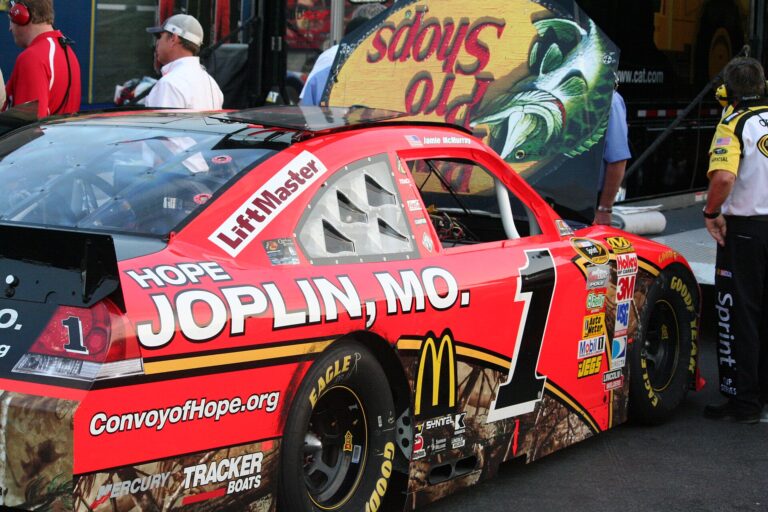
For Backfire readers, the Circle Bar story hits differently because it involves racing history, not just random classics. Hemmings reported on an abandoned NASCAR team owner’s car collection tied to Tom Mitchell and Circle Bar Racing, describing a museum-like building with vehicles and memorabilia now sitting in a neglected state. Older travel-industry reporting described the site as a destination with a museum housing racing cars and boats tied to Circle Bar, which underscores how the collection used to have a public-facing purpose.
This is the nightmare scenario for heritage collections. A public-facing museum is born from one person’s passion, but it is not built with governance that survives the founder. When continuity breaks and ownership becomes unclear, the collection doesn’t just lose money; it loses meaning, because nobody can access it, interpret it, or preserve it properly.
Comparative table of major “decay and dispersal” cases
| Case | Type | Approx. age of collection | Approx. scale | Documented value | Legal status in reporting | Storage condition | Outcome |
|---|---|---|---|---|---|---|---|
| Rudi Klein “Junkyard” | Hoard / private collection | Assembled from 1967 (reported) | Unspecified lots; sold as event series | $29,616,400 sales | Professional auction placement | Long-term yard/warehouse exposure | Liquidated via RM Sotheby’s |
| Mullin Automotive Museum | Museum closure | Founded 2010 | “Selections” auction lots | $19,016,296 | Closure after death; planned dispersal | Museum-grade before closure | Sold via Gooding; some donated |
| Klairmont / “Larry’s Legacy” | Museum-linked dispersal | Unspecified | 700+ lots | $16.5M | Planned auction | Museum context | Sold via Mecum |
| Slavens Corvette hoard | Barn-find hoard | Lifetime accumulation (reported) | Dozens of cars + parts | Price spread: $144,720 to ~$2,052 | Estate auction | Mixed project condition | Sold via VanDerBrink |
| Dorsey Mansion hoard | Multi-barn hoard | “Several decades” | 500+ vehicles/parts | Unspecified | Sale after owner death | Stored in five barns; many under tarps | Auction scheduled/underway |
| Circle Bar / Tom Mitchell | NASCAR-linked legacy museum | Unspecified | Unspecified | Unspecified | Post-death continuity unclear | Reported neglect/inaccessibility | Outcome unspecified |
Legal bottlenecks
The first reason big collections decay is legal authority. Until a court issues letters and formally empowers a personal representative, many third parties will not accept instructions to insure, consign, transport, or sell estate property. Probate guidance used by courts is blunt about the personal representative’s duties and potential liability, but it also illustrates why this role becomes a bottleneck the moment a collector dies.
Probate also builds time windows into the process that can feel like enforced inactivity. California’s Probate Code sets creditor claim timing to “four months after letters are first issued,” or “60 days after notice is mailed or delivered,” creating a built-in runway where estates must handle process before clean distribution. Florida’s probate code similarly governs creditor claim limitations, embedding legal timelines that constrain how quickly assets can be cleared and sold.
Then there is the car-specific problem: title. Vehicles are not like furniture, and large collections often have decades of title errors, missing paperwork, and ownership ambiguity. States provide special tools—California’s REG 5 affidavit for transfer without probate and Florida’s spouse transfer form are examples—but these tools still require documentation, time, and strict compliance, and they are not designed for a 200-car estate with incomplete records.
Financial drivers and market dynamics
Decay accelerates because “holding” a collection is expensive when done correctly. National storage pricing guidance shows vehicle storage costs can range widely, with indoor units often running well over $100 per month depending on market, and climate control adding additional monthly cost. If you apply even conservative math, the carrying-cost problem becomes aggressive fast: a 100-car collection at $150 per month per car is $15,000 a month before security, insurance, transport, or maintenance enters the chat.
Insurance is another quiet pressure point. Specialty collector insurers often prefer enclosed, secure storage as a baseline risk-control measure, which means the moment a collector’s dedicated building is locked, sold, or compromised, the estate can collide with stricter underwriting requirements. That forces a choice: pay for secure storage, or accept elevated risk and potentially coverage issues, neither of which families want to confront while they’re still fighting over the estate itself.
Maintenance is where “value” quietly dies. Manufacturer storage guidance published through NHTSA’s portal warns that long-term storage affects systems and components and recommends preventive measures to minimize degradation. Slavens’ results demonstrate exactly how the market punishes “project status”: the sale included a six-figure Split Window and a five-figure spread across desirable early cars, but it also included multiple complete vehicles selling for just a few thousand dollars. That gap is the rot-away mechanism in numbers, because once a car slips into “needs everything,” it can take more to fix than it will ever be worth.
Tax rules can also push families toward liquidation rather than preservation. IRS guidance on vehicle donations emphasizes that deductions are generally limited to the charity’s actual sale price for the vehicle in many scenarios, which can make “donate it and preserve the legacy” financially less attractive than people assume. When museums are space-limited and deductions are complex, estates often default to auction, not philanthropy, even when the owner’s intent was public preservation.
Preservation ecosystem and barriers
The easy answer is “museums should save these cars,” but the museum sector is not built to absorb sudden, massive collections. The American Alliance of Museums reported that museums collectively contributed more than $50 billion in GDP, supported 726,200 jobs, and generated $12 billion in taxes in 2016, which underscores the economic role museums play when they are healthy. The problem is that the sector is under stress, not expansion.
AAM’s survey reporting shows more than half of museums are seeing fewer visitors than in 2019 and describes an increasingly unstable financial outlook. That means even when a museum wants to preserve a collection, it may not have staff, storage, insurance capacity, or capital to do so. The Mullin closure illustrates this fragility; a world-class collection can still lose its public institution when the founder is gone, even if cars are donated and others are sold responsibly.
Environmental and regulatory barriers can also lock collections in place. EPA guidance for automobile salvage yards highlights how vehicle storage and material handling can expose pollutants to stormwater, creating compliance pressure and potential contamination issues if fluids are not controlled. When a long-term storage site begins to resemble a salvage yard—leaks, parts piles, derelict vehicles—cleanup and regulatory uncertainty can delay sale or redevelopment, which keeps cars stuck longer and worsens their condition.
The physics of decay does not negotiate. Corrosion organizations have documented how corrosion imposes massive economic costs at national scale and varies with environment, exposure, and maintenance, reinforcing a simple truth: a collection that sits is not static. Rust is a compounding process, and every year of delay multiplies the cost and reduces the number of cars that can realistically be saved.
Policy recommendations
Collectors can cut the risk dramatically with planning that treats cars as a managed portfolio, not a pile of toys. The highest-impact move is inventory plus title hygiene, because if your heirs cannot prove ownership cleanly, your collection is already on the path to stagnation. Beneficiary designation tools like Texas’ motor vehicle “transfer-on-death” form exist specifically to reduce post-death friction, but most collectors don’t use them until they’re already in trouble.
States should modernize and standardize title succession pathways for estates with multiple vehicles. California’s REG 5 process and Florida’s spouse transfer form are examples of tailored tools, but they do not scale well for large collections with messy records. A bulk-transfer process for executors—paired with digital title reconciliation—would reduce the “paperwork paralysis” that causes collections to sit while assets deteriorate.
Probate courts should also adopt a preservation-first playbook that allows limited, audited spending early in administration to prevent deterioration. Probate handbooks explicitly warn that personal representatives have duties and can face liability for mishandling estates, but many estates cannot fund secure storage or maintenance during the earliest, most chaotic period. A court-approved “preservation bridge” mechanism—spending caps for storage, security, and stabilization—would reduce the incentives to delay action until the cars are already ruined.
Tax policy should reward public access and conservation, not just liquidation. Vehicle donation rules that limit deductions to a charity’s sale price often push estates toward auction, even when the collector wanted public preservation. A targeted incentive for museums that commit to multi-year public display and conservation standards could make donation a real option again, especially for collections that would otherwise be scattered.
Finally, local governments should treat abandoned collections as both a cultural opportunity and a compliance risk. EPA guidance makes clear that long-term vehicle storage can create stormwater pollution issues if handled like a junkyard without controls. A practical program would offer technical assistance or small grants to stabilize collections—fluid removal, containment, secure storage—so assets can move safely to new caretakers before they become environmental liabilities.
Conclusion
“Abandoned millions” is not a mystery, and it is not a story about laziness. It is a story about systems colliding: probate and title rules built for normal households slamming into collections scaled like small dealerships, while storage costs, insurance requirements, and corrosion punish every week of indecision. The auction record proves money still exists for the right cars—$29.6 million for Rudi Klein’s “Junkyard,” $19.0 million for the Mullin dispersal, $16.5 million for Larry’s Legacy—but those outcomes require authority, planning, and logistics that most estates do not have when the collector is gone.
The bigger loss is cultural, and it is compounding. Museums play a documented economic and civic role, yet they are financially strained, which limits their ability to rescue surprise collections even when they want to. When NASCAR-linked heritage like the Circle Bar museum drifts into neglect, the loss is not just the cars—it’s access, interpretation, and memory.
If America wants to stop watching automotive history dissolve into rust, the fix is painfully clear. Make title transfer easier at scale, give estates early authority to preserve, align tax incentives with public access, and build a preservation bridge between private hoards and institutions before the cars become liabilities. Because once a collection crosses the line from “stored” to “decaying,” the market doesn’t just discount it. The market—and time—buries it.
Primary source links used in this report:

RM Sotheby’s “The Junkyard” results:
https://rmsothebys.com/media-center/press-releases/rk24_results/

Gooding Christie’s “Selections From The Mullin Collection” prices realized:
https://www.goodingco.com/auction/realized/selections-from-the-mullin-collection-auction/

Mullin Automotive Museum closure release:
https://kahnmedia.com/mullin-automotive-museum-to-close-in-february/

Mecum “Larry’s Legacy” results release:
https://www.mecum.com/releases/mecums-larrys-legacy-auction-delivers-exceptional-results-as-private-collection-sells-in-chicago/

VanDerBrink Slavens results PDF:
https://www.vanderbrinkauctions.com/app/uploads/Slavens-Auction-Results-with-BP.pdf

KOB local news report on Dorsey Mansion hoard:
https://www.kob.com/news/top-news/massive-car-auction-set-for-october-at-historic-new-mexico-mansion/

Freedom Car Auctions Dorsey Mansion listing:
https://www.freedomcarauctions.com/auctions/29035/landing

Probate and title transfer primary references:
https://www.fultonprobatega.org/235/A-Handbook-to-Guide-Personal-Representat
https://california.public.law/codes/probate_code_section_9100
https://www.flsenate.gov/Laws/Statutes/2025/733.702
https://www.dmv.ca.gov/portal/uploads/2020/06/reg5-2.pdf
https://www.flhsmv.gov/pdf/forms/82152.pdf
https://www.txdmv.gov/sites/default/files/form_files/VTR-121.pdf

IRS vehicle donation rules:
https://www.irs.gov/charities-non-profits/charitable-organizations/irs-guidance-explains-rules-for-vehicle-donations
https://www.irs.gov/pub/irs-pdf/p4303.pdf

EPA Sector M stormwater guidance:
https://www.epa.gov/sites/default/files/2015-10/documents/sector_m_autosalvage.pdf

Museum economic impact and sector strain:
https://www.aam-us.org/2018/01/19/museums-as-economic-engines/
https://www.aam-us.org/2025/11/11/national-survey-reveals-alarming-downturn-museums-face-worst-financial-outlook-since-pandemic/

Illustrative image/diagram links (public-domain or press-use pages; verify rights before publishing)
Public-domain rusted cars image (Wikimedia Commons search):
https://commons.wikimedia.org/wiki/Category:Rusted_cars

Press-use imagery embedded on auction/museum pages:
https://rmsothebys.com/the-junkyard/
https://www.goodingco.com/auction/selections-from-the-mullin-collection-auction/false/auction/selections-from-the-mullin-collection-auction
About the Author