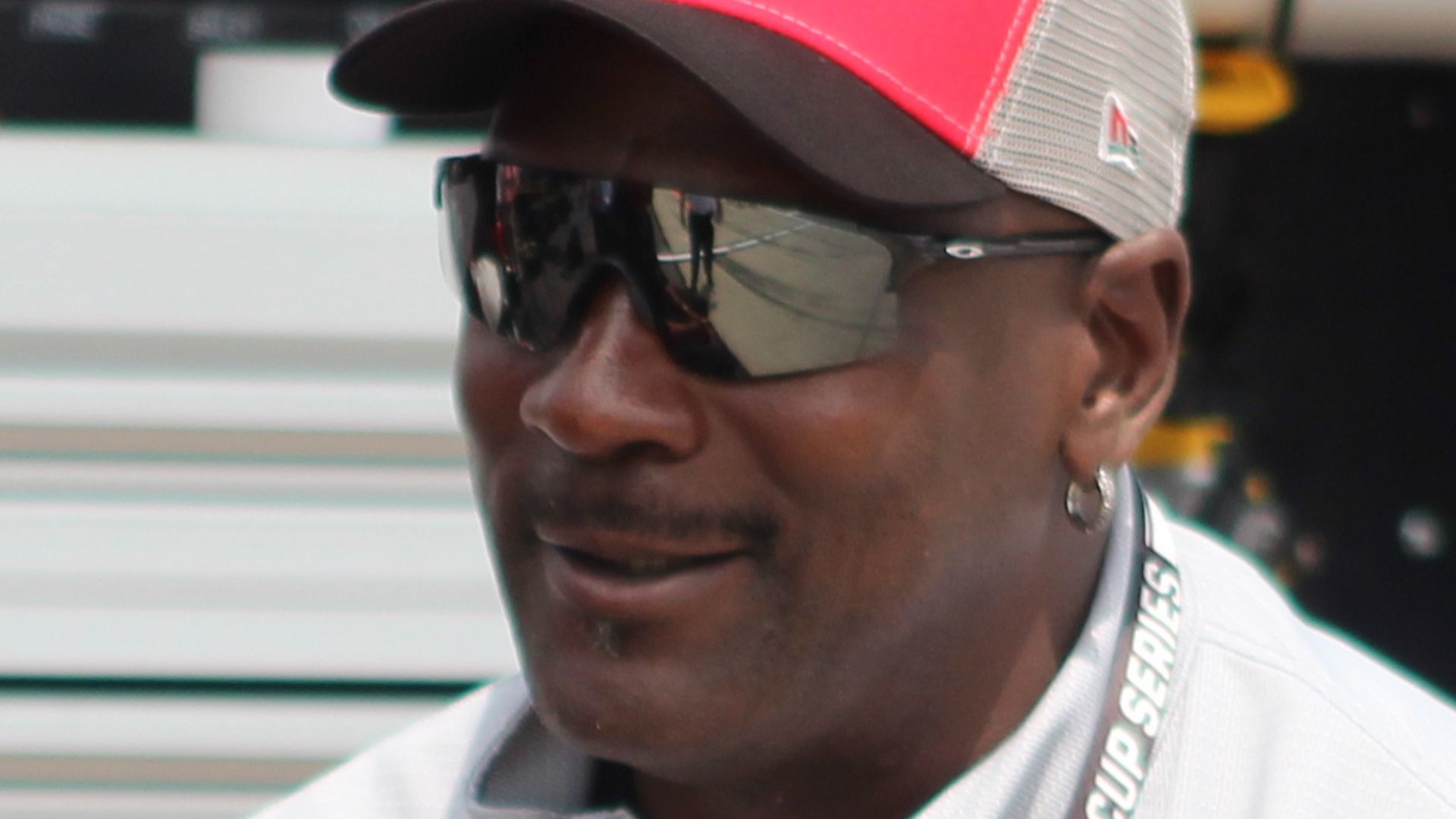
Tyler Reddick’s final-lap pass to win the Daytona 500 was vintage superspeedway drama, perfectly timed and perfectly executed. But the image that lingered after the checkered flag wasn’t just the No. 45 crossing the line first. It was Michael Jordan holding the Harley J. Earl Trophy like he’d been waiting for that exact moment for years.
A Milestone for the Team, a Different Kind of Milestone for Jordan
For 23XI Racing, the win marked its first Daytona 500 victory, a real milestone for a relatively young team competing in NASCAR’s most tradition-heavy race. For Reddick, it was a career-defining moment on the sport’s biggest stage. For Jordan, it was something quieter but arguably just as meaningful: validation.
Jordan has never needed another trophy to secure his place in sports history; that part of his résumé has been untouchable for decades. What makes this particular moment resonate isn’t dominance, since he wasn’t the one behind the wheel. It’s buy-in. For years, Jordan has shown up to NASCAR not as a novelty team owner collecting a vanity project, but as someone genuinely invested in the sport’s future, present, patient, and willing to learn a world that operates nothing like the one he conquered on a basketball court. That distinction matters enormously to a fan base that can tell almost instantly when someone is just passing through versus actually building something.
Why This Feels Earned Rather Than Manufactured
Jordan earned this respect the long way. He didn’t arrive with a marketing campaign announcing his commitment to stock car racing. He arrived with curiosity, competitive fire, and a willingness to let the sport speak for itself rather than trying to reshape it around his own celebrity. Watching him celebrate in Victory Lane wasn’t about crossover hype for a bigger television audience. It felt like the payoff of years of quiet, genuine involvement.
Why It Matters Beyond One Race
Culturally, this win carries weight well past a single Sunday. NASCAR has spent years trying to expand its audience without losing what makes it NASCAR, and moments like this help bridge that gap organically rather than through forced marketing. Jordan doesn’t change NASCAR. He amplifies it, inviting new eyes to the sport without asking it to become something unrecognizable to longtime fans, which is a genuinely rare balance to strike.
The Daytona 500 has always functioned as NASCAR’s front door, the one race casual fans circle on the calendar even if they don’t follow the series week to week. Having one of the most recognizable figures in the history of American sports standing in Victory Lane after that race sends an unmistakable message to anyone watching from outside the sport: this is a place worth paying attention to.
Adding a Chapter, Not Rewriting the Story
This win also reinforces something longtime fans already understand: NASCAR isn’t stuck in the past. It’s evolving, not by abandoning tradition, but by adding new chapters on top of it. Jordan’s first Daytona 500 win doesn’t rewrite NASCAR’s history. It adds to it. For 23XI Racing, it’s proof the project is working. For Tyler Reddick, it’s a defining career achievement. And for NASCAR, it’s a reminder that when authenticity and star power actually align, instead of being forced together, the impact reaches well beyond the trophy itself.
About the Author