Rental car companies aren’t supposed to be exciting — that’s kind of the whole point. You land, grab a bland sedan, and forget about it the second you leave the lot. Hertz just flipped that script in a way nobody quite saw coming, adding a genuinely serious off-road SUV, the Ineos Grenadier, to its rental lineup.
On paper, this sounds like a win for enthusiasts: a rugged, old-school 4×4 with real capability, available right at the airport counter. That’s the kind of vehicle you’d expect from a niche off-road outfitter, not a legacy rental brand. But the deeper you dig into how this actually works in practice, the more it raises questions about who this is really for, and whether renters will ever get to use it the way it was designed to be used.

The Grenadier Enters the Rental Game
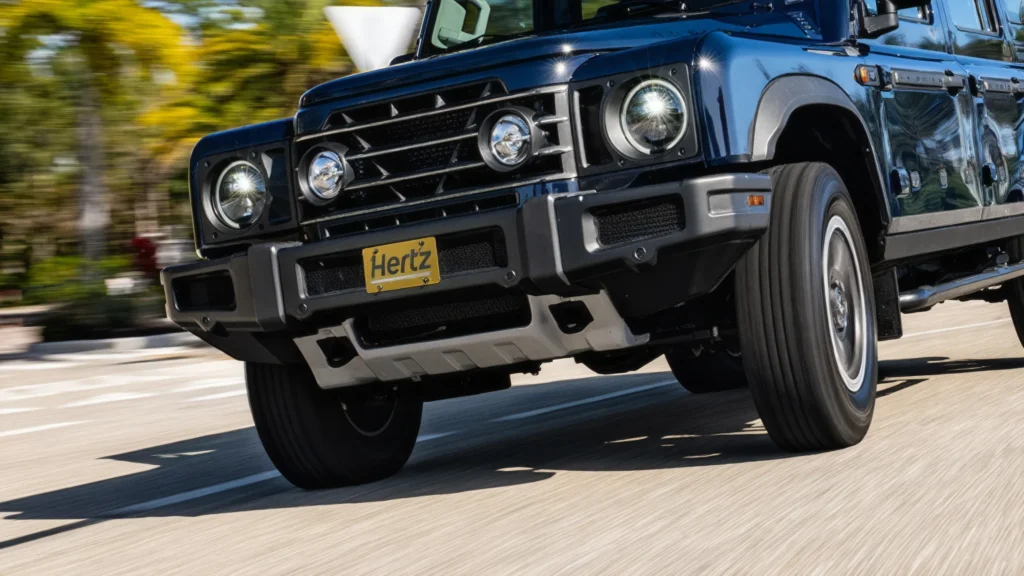
Hertz announced it will offer the Ineos Grenadier as part of its expanding premium fleet, with availability planned at select airport locations across the United States. This isn’t a token rollout, either — Hertz claims it will have the largest availability of Grenadiers for rent anywhere in the country. The version hitting rental lots is the Fieldmaster trim, which leans toward comfort rather than the more hardcore Trialsmaster variant, meaning leather upholstery, heated front seats, a premium sound system, and design touches like safari windows and an exterior ladder. From a marketing standpoint, Hertz is positioning the Grenadier as a practical choice for families and travelers hauling heavy luggage. That explanation only tells part of the story, though, because underneath those comfort touches sits a vehicle built for something entirely different.
A Purpose-Built 4×4 in the Wrong Environment
The Ineos Grenadier isn’t pretending to be rugged — it actually is. This is a body-on-frame SUV with solid axles, permanent four-wheel drive, and hydraulic steering, engineered more like a classic Land Rover Defender than a modern crossover playing dress-up as an adventure vehicle. That authenticity is exactly what makes it appealing to enthusiasts in the first place; it’s one of the few new vehicles on the market that actually prioritizes durability and off-road capability over polished on-road manners. That’s also precisely where the tension starts. Rental environments aren’t built around off-road use — they’re built around liability, contract terms, and minimizing risk for the rental company. So while Hertz can advertise the Grenadier’s capability all it wants, most renters won’t be able to take real advantage of it without risking serious financial consequences.
The Catch No One’s Talking About
Here’s the part that doesn’t show up in the announcement: rental agreements generally don’t encourage off-roading. If anything, they tend to actively discourage it. Taking a rental vehicle onto trails, rough terrain, or anywhere that could realistically cause damage typically violates the terms of the rental contract. That creates a strange disconnect — Hertz is offering a vehicle purpose-built for rugged exploration, while the fine print almost certainly pushes drivers to keep it firmly on pavement. For enthusiasts, that’s a genuinely frustrating reality. The Grenadier isn’t special because of its leather seats or premium sound system; it’s special because of what it can do off the pavement, and if you can’t actually use it that way, you’re left with a compromised on-road experience in a vehicle that was never designed to prioritize comfort or refinement in the first place.
Not Hertz’s First Rodeo With Unusual Rentals
To be fair, Hertz isn’t new to offering interesting vehicles. The company has a history of renting out performance cars, including Shelby Mustangs and even high-end exotics. But those cars still make sense in a rental context, because they shine on the road, even in short bursts. The Grenadier is different: it’s slower, heavier, and less refined than most modern SUVs, with steering and overall driving dynamics that reflect its utilitarian roots, plus known quirks in systems like HVAC and driver-assist features. It’s not trying to be a luxury SUV, even in Fieldmaster form — it’s a tool, and tools don’t always translate well to environments where they can’t actually be used for their intended purpose.
The Price Factor Changes the Equation
There’s also the matter of cost. With a starting price north of $70,000, the Grenadier sits in a completely different category than typical rental fleet vehicles. Even positioned as a premium option, renters will likely pay a significant premium just to get behind the wheel, which raises the stakes considerably. Driving an expensive, specialized vehicle under a rental agreement adds real pressure, especially when the financial consequences of damage could be steep — it’s one thing to push your own off-roader on a trail, and another thing entirely to do it in a rented vehicle where every scratch could turn into a genuine financial headache. For a lot of drivers, that risk alone will be enough to keep the Grenadier firmly on asphalt for the entire rental period, which again defeats the purpose of choosing the vehicle in the first place.
Why This Move Still Matters
Despite the contradictions, this is still a notable shift in the rental car world. Companies like Hertz are clearly trying to move beyond basic transportation and sell an actual experience, from luxury sedans and exotic cars to now hardcore off-roaders. It reflects a broader trend where the act of driving itself is being marketed as part of the travel experience, rather than just a way to get from point A to point B. The problem is that not every vehicle fits neatly into that model, and the Grenadier is a perfect example: it’s memorable, no question, but whether it actually delivers the experience it promises is an entirely different story.
The Bigger Question for Drivers
At the end of the day, Hertz’s decision to add the Ineos Grenadier is bold, unexpected, and genuinely interesting. It’s also a reminder of how the rental industry sometimes sells the idea of capability without actually enabling it. For enthusiasts, that leaves a lingering question: is this about giving drivers real access to something unique, or just putting a rugged image on display without the freedom to actually use it as intended? Because if the most capable SUV on the lot can’t leave the pavement, what exactly are you renting — the machine itself, or just the illusion of what it could do?
About the Author