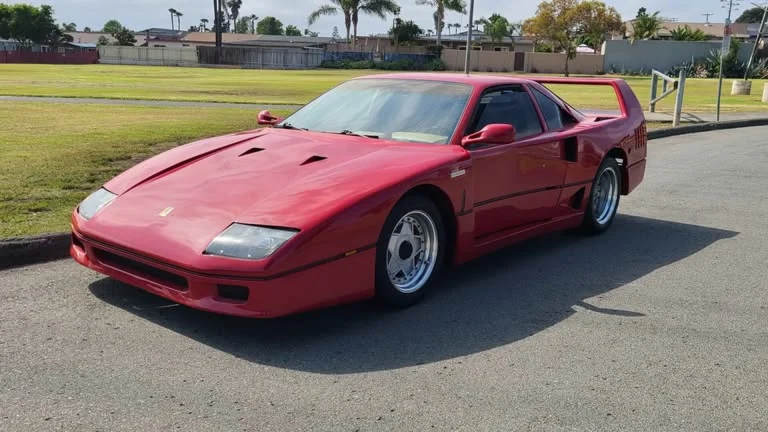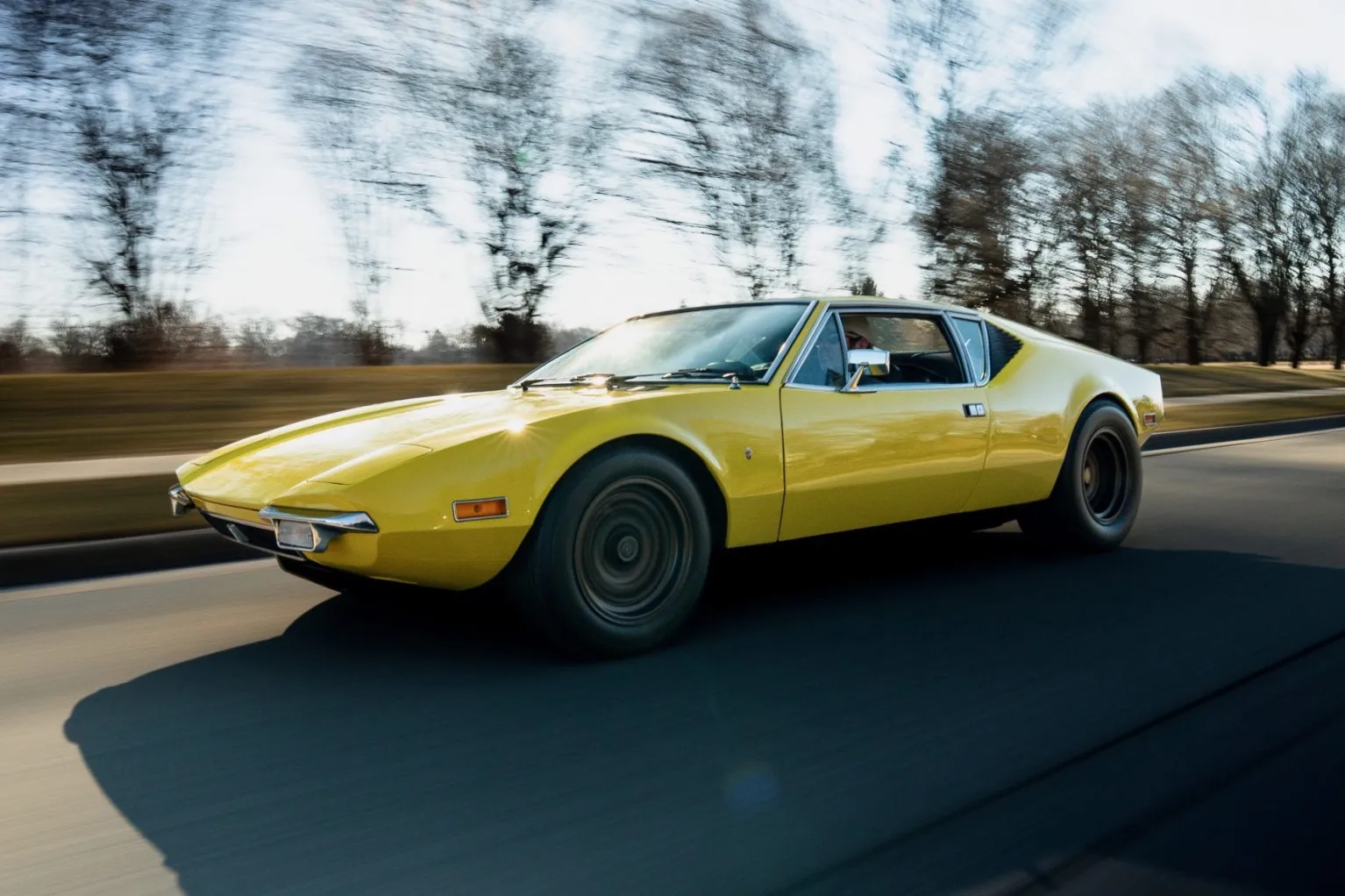
Ford’s top executive just put one of his own cars on the auction block, and it’s not some quiet collector piece. It’s a 1972 DeTomaso Pantera with a backstory that feels like it’s been through too many chapters already. Corporate use, a museum life, a crash during a test drive, and now it’s back up for sale again. That alone would get attention. Add the fact that it belongs to Ford CEO Jim Farley, and suddenly the stakes feel a lot higher.
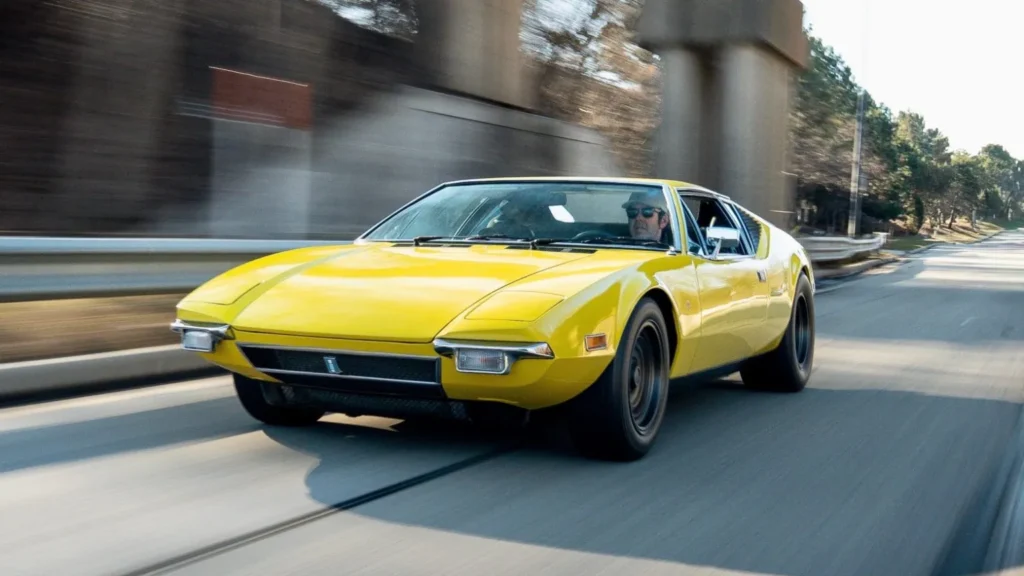
A Company Car From Ford’s Aerospace Division
The car is being listed out of Wisconsin, right back on Bring a Trailer, the same place Farley bought it not long ago. It’s still early in the auction cycle, but the numbers are already climbing to match what he paid in 2024. That’s where things start to get interesting, because this isn’t just a flip. It’s a car with a weird, tangled history that somehow still makes sense in today’s collector market.
Go back to the beginning and it gets even stranger. This Pantera, chassis THPNMD04013, didn’t go to a private owner when it was new. Instead, it was delivered to Ford’s Aeronutronic division. That’s not a dealership or a racing team. It was part of Ford Aerospace. And yes, that means this Italian-built, Ford-powered sports car was used as a company pool vehicle. Not a perk you see every day, even back then.
From there, it moved on like most cars do. In 1974, after about two years of corporate duty, it was sold off to a private owner. Then it disappeared into a long stretch at a museum tied to Yankee Candle in Massachusetts. Eighteen years sitting in a collection is a long time for any car, especially one built to be driven hard. It’s the kind of thing that sounds good on paper but can raise questions once the car comes back into the real world.
A Crash During a Test Drive
And that’s where things change. The car resurfaced publicly in 2018 when it was listed for sale. Around that time, it was repainted back to its original yellow, which fits the car better than almost anything else. But before things could go smoothly, it hit a problem that still follows it today. During a test drive by a potential bidder, the car was crashed. It wasn’t a minor bump either. The passenger side door and rear quarter panel took damage.
The repairs were completed, and the car went back into circulation. That should have been the end of it. But when a car gets crashed during an auction preview, it sticks in people’s minds. It becomes part of the story whether anyone likes it or not.
Farley Steps In
Fast forward to June 2024, and Jim Farley steps in. He bought the Pantera through Bring a Trailer, paying $121,000. For someone in his position, that’s not about flipping for profit or chasing trends. Farley has built a reputation as a genuine enthusiast, not just an executive who talks about cars when the cameras are on. So when he buys something like this, it usually means he sees something worth keeping.
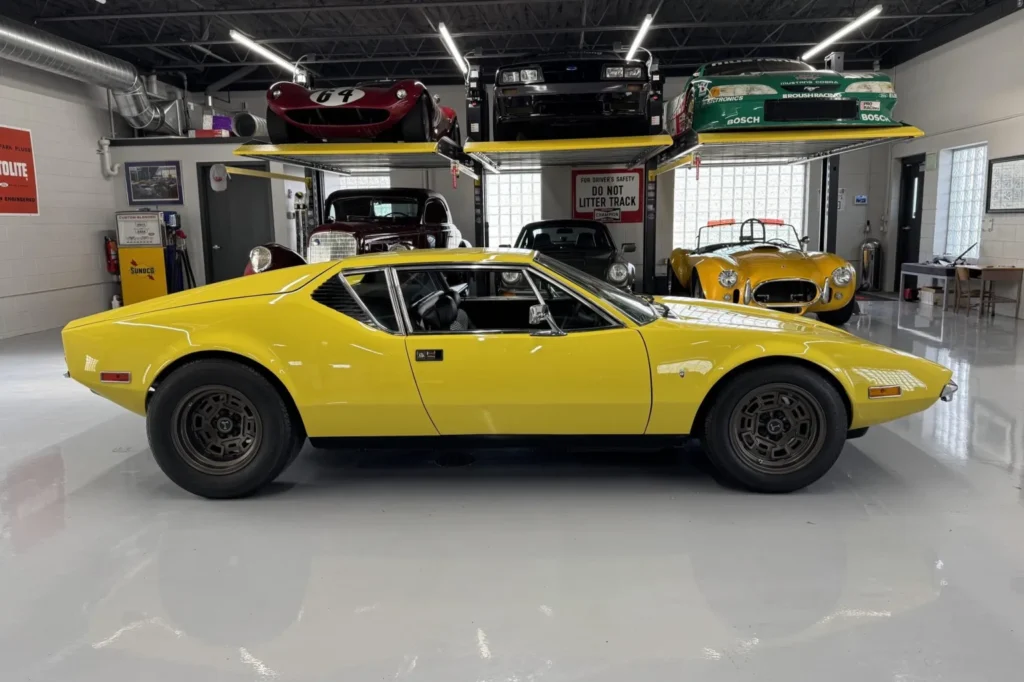
He didn’t leave it alone either. Under his ownership, the car received mechanical attention where it counts. The overbored 351 cubic inch Windsor V8 was serviced, along with the ZF five-speed transaxle. Those are the core pieces that define how a Pantera drives. On top of that, a few changes were made. An Edelbrock Performer intake manifold was added, the Campagnolo magnesium wheels were refinished in bronze, and the interior got a new steering wheel and updated audio system. Nothing excessive, nothing that turns it into something it isn’t. Just enough to keep it usable and a bit more refined.
Why This Pantera Matters Beyond the Farley Connection
Here’s the part that matters. Even without the Farley connection, this Pantera has a lot going for it. It’s an early example, which means it avoids some of the styling excess that showed up on later cars. Those later models started to pick up heavier design elements that didn’t always age well. This one stays closer to the original vision, cleaner and more balanced. That combination is exactly what made the Pantera work in the first place.
It filled the gap left by the Shelby Cobra, offering American power wrapped in Italian styling. Ford sold these through its own dealerships in the United States, which still feels unusual even now. It wasn’t just an imported exotic. It was something you could theoretically buy alongside a Mustang.
A History That Cuts Both Ways
And that’s where it gets complicated. Cars like this live and die on their stories. This one has a strong one, but it’s not clean. Corporate fleet use, long museum storage, a documented crash, and then a high-profile owner stepping in and making changes. For some buyers, that’s too much history. For others, it’s exactly what makes it worth chasing.
At the time of writing, bidding has already reached the same number Farley paid, with several days still left. That suggests there’s real interest, not just curiosity. Whether it goes significantly higher is another question entirely. The reality is simple. This isn’t just a Pantera anymore. It’s a Pantera tied to Ford’s past, its present leadership, and a string of events that make it impossible to ignore. Someone is going to end up with it, and they’re not just buying a car. They’re buying everything that comes with it, good and bad. And once you understand that, the price almost stops being the main story.
Via Bring a Trailer
About the Author