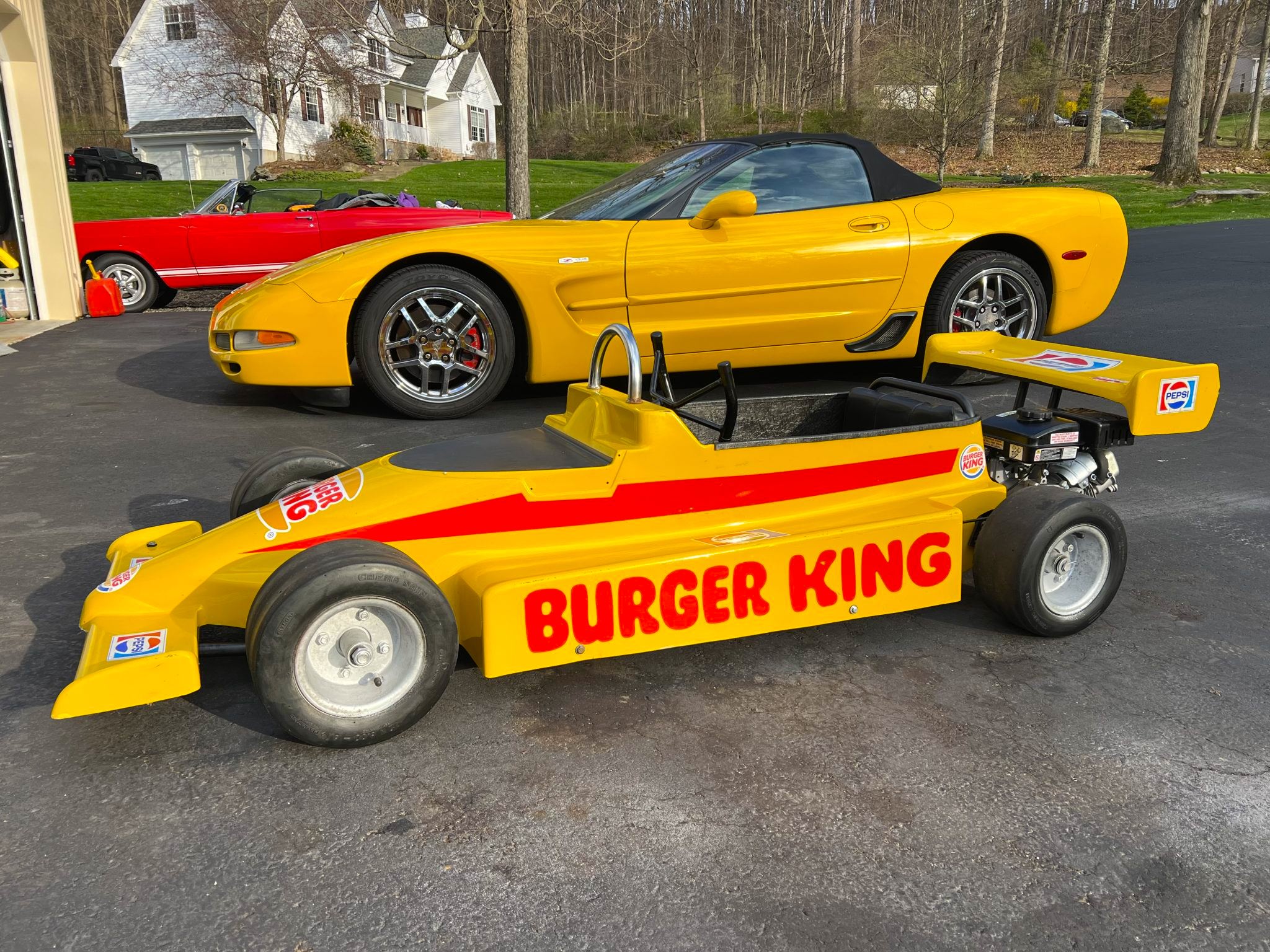
There’s something oddly perfect about a fast-food-branded go-kart showing up decades later with a modern engine under the back. It sounds like a joke at first. It’s not. This thing is real, and it’s now up for grabs with no reserve, which usually means someone’s about to get a deal or make a mistake depending on how you look at it.
A Real Indy-Style Kart, Not a Toy
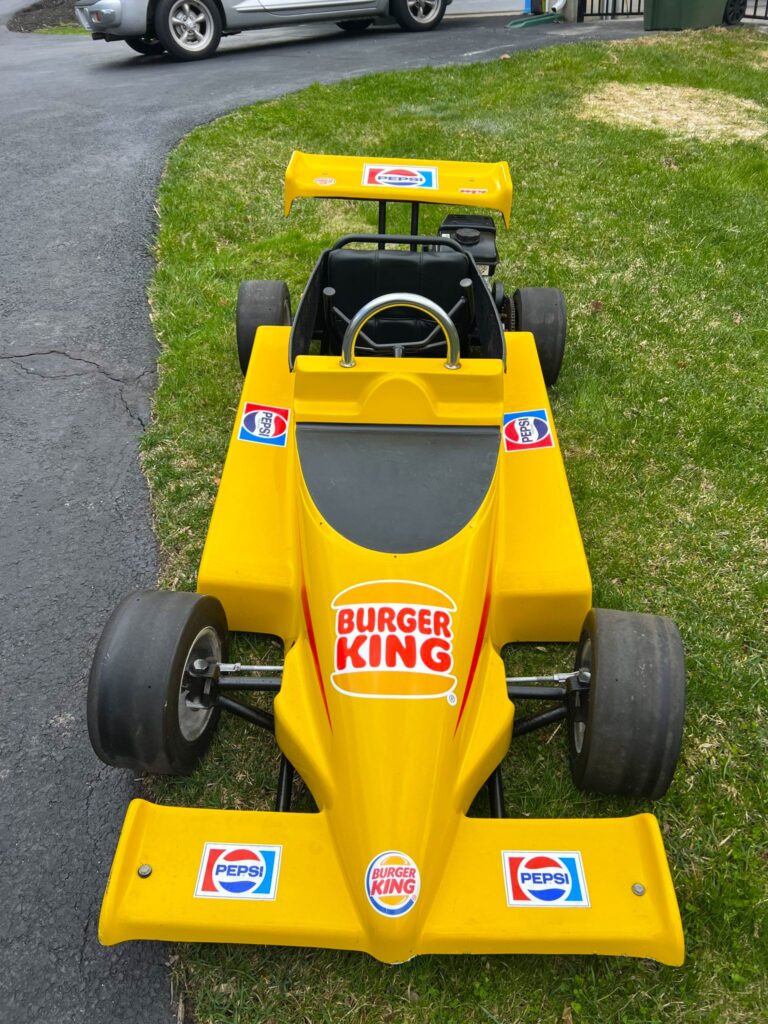
What we’re looking at is a Burger King-liveried Indy-style go-kart built by Bird Corporation, a name that used to carry serious weight in the small recreational vehicle world. Back in its day, this wasn’t some backyard project or novelty toy. It was part of a broader push to turn go-karts into mini replicas of real race cars, complete with sponsor decals, wings, and fiberglass bodies that actually looked the part.
Here’s where things start to shift. The kart you see today isn’t running its original engine. That older flathead motor is gone, replaced with a 79cc Predator overhead-valve single-cylinder unit. It’s a more modern setup, and while it’s not exactly high performance by today’s standards, it’s definitely a step up from what these typically had when they rolled out of the factory. It’s hooked up to a centrifugal clutch and chain drive, which keeps things simple and very much in line with how these machines were meant to operate.
A Nebraska Company That Named Everything After Birds
To understand why this thing even exists, you have to rewind a bit. Bird Engineering started out in Nebraska in 1959, right when go-karts were exploding across the United States. This wasn’t a niche hobby back then. It was everywhere. Bird built everything from karts to minibikes to three-wheelers, and they had a habit of naming everything after birds: Hawk, Eagle, Starbird, Falcon. It was a whole theme, and it worked.
They weren’t just selling direct either. These machines ended up in major retail catalogs, including Sears and JC Penney, sometimes under different branding. That meant a lot of people got their first taste of go-kart ownership through Bird without necessarily knowing the name, even replicas of real cars: Indy cars, NASCAR stock cars, Formula 1 shapes. Some were built for dealerships or promotions, not just regular buyers. You’d see these things given away at gas stations or used as eye-catching display pieces.
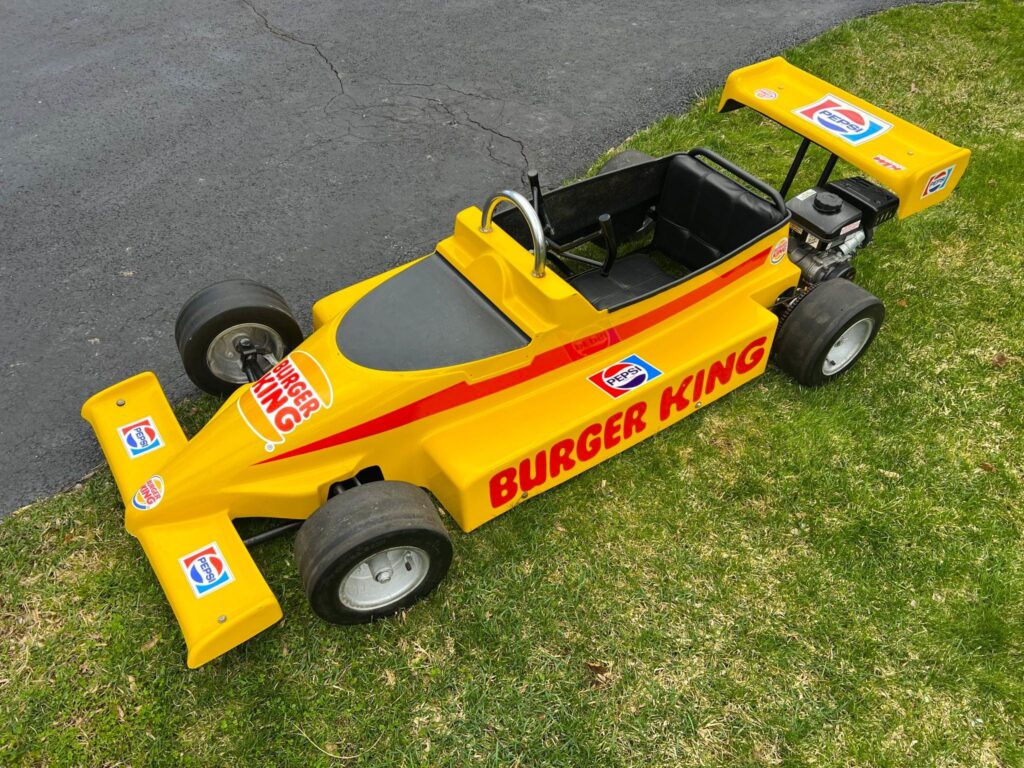
This Burger King kart fits right into that era. Bright yellow bodywork, red branding, Pepsi decals thrown in for good measure. It’s got front and rear wings, a chrome roll hoop up front, and just enough detail to make it feel like a scaled-down race car rather than a toy. It’s not perfect, though. The body shows some chips, and it’s clearly been used, which honestly adds to the appeal more than it hurts it.
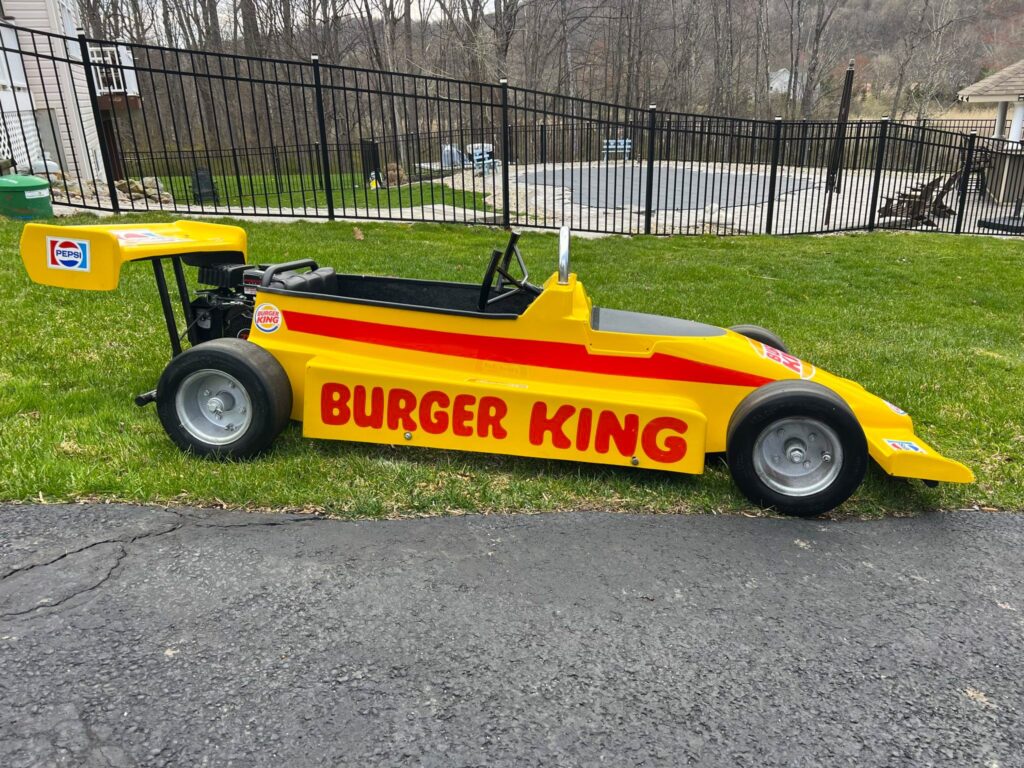
The frame underneath is tubular steel, repainted in black at some point, and it rides on 6-inch wheels that have been refinished in white. Those are wrapped in bias-ply slick tires, which is about as old-school as it gets. Braking comes from a drum setup on the rear axle, nothing fancy, but exactly what you’d expect from something like this.
Bare-Bones Inside, and Surprisingly Collectible
Inside, it’s simple. One seat, black vinyl, steering yoke instead of a traditional wheel, and pedals mounted up front. No frills, no extras. Just enough to get you moving and remind you that this thing was built for fun, not comfort.
Here’s the part that matters. Karts like this have become surprisingly collectible. Early Bird models are already rare, with some examples barely surviving in any meaningful numbers. Later replicas like this one show up more often, but they still draw attention every time. The engine swap means it’s likely more reliable than it would have been with its original setup, even if purists might argue that it loses a bit of authenticity.
That debate is always there with vehicles like this. Originality versus usability. Leave it as it was, or make it better to actually enjoy it. In this case, someone clearly chose the second option.
No Reserve, No Safety Net
Now it’s sitting in Hackettstown, New Jersey, being offered with no reserve on a bill of sale. That last part is important. No reserve means there’s no safety net for the seller. Whatever the highest bid is, that’s where it goes. Sometimes that leads to bargains. Sometimes it leads to regret.
Either way, it’s hard to ignore something like this. A fast-food-themed Indy-style go-kart from a company that helped define an entire era of recreational vehicles, now running a newer engine and still ready to move. It’s weird, it’s a little rough around the edges, and it doesn’t pretend to be anything it’s not. And honestly, that’s exactly why it works.
Via Bring a Trailer
About the Author