Ferrari has built a reputation for going after anyone who steps out of line with its cars. That’s been the narrative for years. So when a custom F40-inspired build surfaced from StanceWorks, most people expected the same ending. Lawyers, shutdowns, and another builder added to the unofficial blacklist.
That’s not what happened. Instead, what unfolded exposed something a lot of enthusiasts have been getting wrong for years about how far Ferrari’s legal reach actually extends.
The Project That Looked Like a Lawsuit Waiting to Happen
Mike Burroughs, the mind behind StanceWorks, didn’t pick an easy target. He went straight for one of Ferrari’s most sacred cars, the F40. A machine tied to the brand’s identity, its history, and its reputation.
Back in 2024, he revealed plans for the F40 EVO, a custom project inspired by the original icon. That alone was enough to get people talking. Not just because of the car itself, but because Ferrari has a long track record of protecting its image aggressively.
So when news broke that Ferrari had sent a letter to StanceWorks, it seemed like confirmation of what everyone expected. The assumption was simple. Ferrari saw the project and moved to shut it down.
That’s where things change.
The Letter Was Real, But Not What People Thought
The letter existed. Burroughs even shared it publicly, though the full details weren’t released. Naturally, speculation filled the gaps. Most assumed it was tied directly to the F40 EVO build.
It wasn’t. According to details that later came out, Ferrari’s issue had nothing to do with the car itself. The problem was merchandise. Posters and desk mats that featured the Prancing Horse logo crossed the line. That’s a very different fight. Ferrari wasn’t going after the build. It was protecting its trademark. And that distinction matters more than most people realize.
Ferrari Didn’t Stop the Build
Here’s the part that flips the entire narrative. Ferrari saw the project. And didn’t shut it down.
Even more interesting, Burroughs had already pushed the limits before. He built a Ferrari 308 with a Honda K24 engine swap. That’s the kind of move that usually triggers outrage in certain circles, especially when it involves a brand as image-conscious as Ferrari. Still, there was no public action taken against that project either.
Behind the scenes, Ferrari’s legal team reportedly made something clear. They couldn’t stop him from modifying his own cars. What they did want was acknowledgment of the risks involved, both mechanically and financially. That’s a very different stance from the myth most people believe.
The Myth of the Ferrari Blacklist
For years, Ferrari has been painted as the brand that controls everything. Modify your car too much, and you’re done. No more special orders. No more access. No more relationship with the company.
There’s truth to that reputation. Ferrari absolutely manages its customer relationships tightly. But ownership still carries weight. Once the car is yours, the line becomes harder to enforce legally. That’s what this situation quietly confirms.
Burroughs leaned into the idea of Ferrari cracking down. It made for a good story. It got attention. But the reality turned out to be more nuanced. Ferrari will protect its logo, its trademark, its business. But when it comes to what an owner physically does to their own car, the legal picture gets even more interesting.
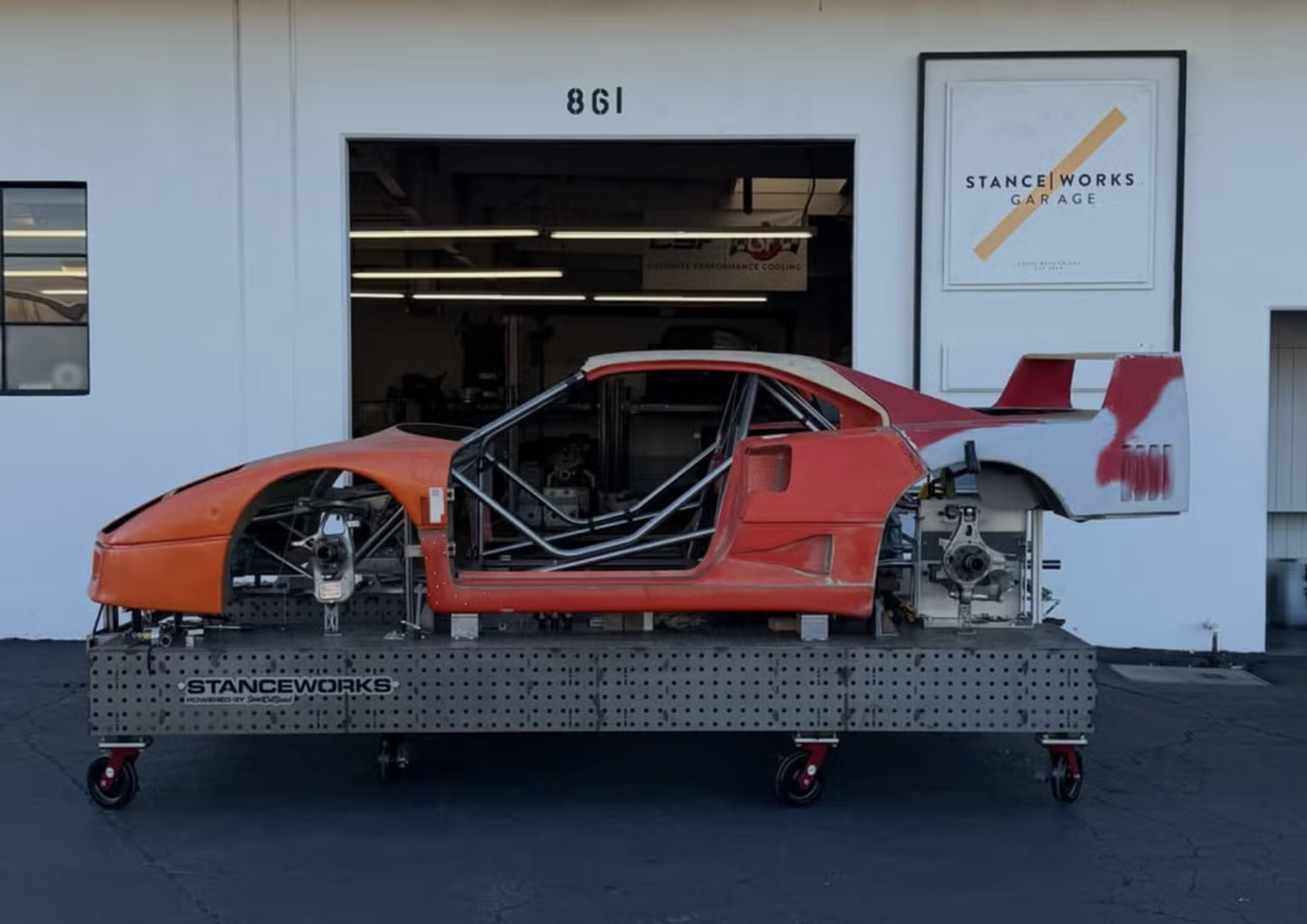
The F40 EVO isn’t a traditional F40 build. It’s not a restored or modified original. That would have been a completely different level of risk and cost. Instead, Burroughs used genuine F40 components like the front end, doors, and roof, and mounted them onto a custom tube chassis. That changes the equation significantly. It’s not a $3 million car being cut apart. It’s a ground-up project using authentic parts.
And under the surface, it’s even more removed from the original. The engine isn’t the twin-turbo V8 that defined the F40. It’s a V12 pulled from an 812 Superfast, with very low mileage. That decision alone tells you what this project is really about. It’s not preservation. It’s reinterpretation.
Why This Matters for Car Enthusiasts
This is where the story goes beyond one build. Car enthusiasts have been walking a tightrope with brands like Ferrari for years. There’s always been this tension between ownership and control. You buy the car, but the brand still looms over what you can and can’t do.
This situation pushes back on that idea. It suggests that while brands can influence behavior through access and reputation, their legal reach has limits. You can modify your car. You can build something wild. You just can’t misuse the brand’s identity in the process.
That’s a big distinction. And for builders, it opens doors.
The Business Side Ferrari Still Protects
At the same time, Ferrari isn’t backing down where it counts most. The logo. The image. The identity. That’s where the cease-and-desist came from. Not the car, but the branding attached to products being sold.
From a business standpoint, that’s predictable. Ferrari’s value is tied heavily to its image. Letting that be used freely would dilute the exclusivity they’ve spent decades building. So they draw the line there. Modify the car if you want. Just don’t turn the brand into your product.
The Bigger Shift Happening in Car Culture
And this is where things start to connect to a larger trend. More builders are moving away from traditional restoration and into reinterpretation. Custom chassis. Engine swaps. Hybrid builds that blend old icons with modern performance.
At the same time, manufacturers are trying to maintain tighter control over their legacy. Those two forces don’t always align. The F40 EVO sits right in the middle of that conflict. It’s a car that respects the original visually, but completely reimagines what’s underneath.
Some purists won’t like it. Others will see it as exactly what car culture is supposed to be.
The Real Takeaway
What this situation really exposes is the gap between perception and reality. Ferrari didn’t shut down the build. It didn’t blacklist the project. It focused on protecting its logo and let the car itself exist.
That’s a shift, or at least a clarification. And it leaves enthusiasts with a bigger question. If you truly own the car, how far are you willing to take it now that the boundaries aren’t where people thought they were?
Because for years, the fear of Ferrari’s reaction has kept builds in check. Now, that fear looks a little less certain.
Via @mike_stanceworks/Instagram
About the Author