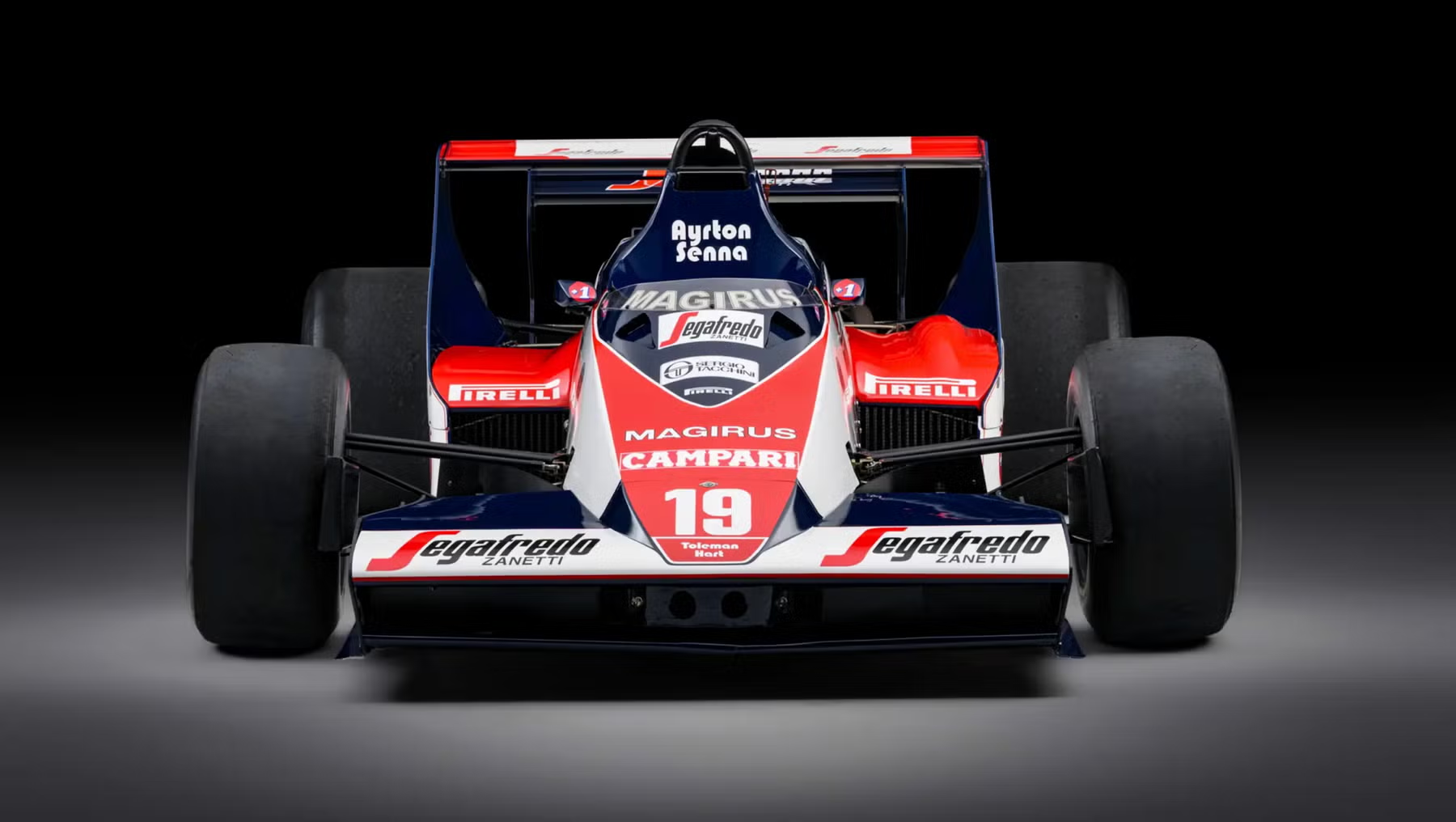
Ayrton Senna’s legacy usually lives in highlight reels, rain-soaked laps, and championship-winning machines. But this time, it’s something much earlier, something raw. The very first Formula 1 car he ever raced is about to go up for sale, and it’s not just another collectible. It’s the starting point of one of the most iconic careers motorsport has ever seen. And yeah, this is where things get interesting.
A Scrappy Toleman, Not a Title Contender
Because this isn’t a dominant McLaren or a title-winning car. It’s a Toleman. A scrappy, transitional machine built while the team was still figuring things out. Not glamorous, not dominant, but absolutely critical to the story.
The car in question is a Toleman TG183B, specifically chassis number 05. It was put together during the winter of 1983, right in that awkward gap where the team was developing its next car but didn’t have it ready yet. So instead of waiting, they rolled forward with what they had.
That decision matters more than it seems. Senna’s Formula 1 debut came in 1984, and this was the car he had to work with. Not the best on the grid, not even close. It carried older design elements while the newer TG184 was still in development and wouldn’t show up until a few races into the season.
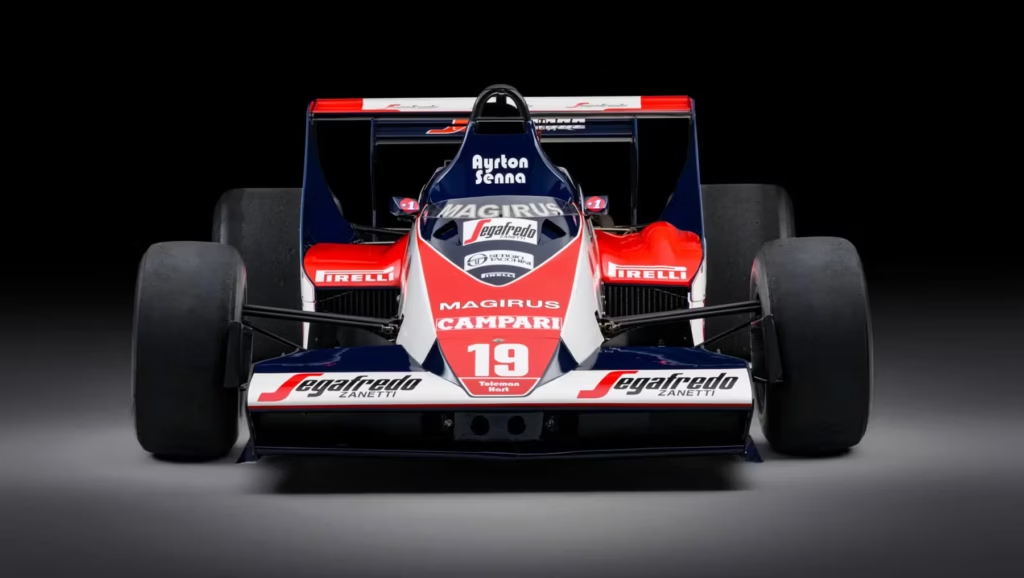
800 Horsepower From a Turbocharged Hart Four
Underneath, it was still serious hardware. The TG183B featured a turbocharged 1.5 liter four cylinder Hart engine that could push out around 800 horsepower in qualifying form. That’s a lot, especially for the time. The car also had a distinctive look, with front mounted intercoolers and a twin rear wing setup that stood out compared to its rivals.
But power doesn’t mean everything when the package isn’t fully sorted. Senna’s first race in Brazil didn’t exactly hint at what was coming. He qualified 16th, which is far from the pole positions he’d later make look routine. Then came the bigger problem. The car didn’t even make it to the end of the race. A turbo failure took him out early, ending his debut before it really had a chance to unfold.
Sixth Place Finishes That Hinted at What Was Coming
Here’s the part that matters. That rough start didn’t define anything. If anything, it made what came next more telling. At the following race in South Africa, Senna started to show signs of what he could do, even with limited machinery. He qualified 13th and managed to bring the car home in sixth place, scoring points in a car that wasn’t expected to be near the front. That’s where people started paying attention.
It wasn’t dominance. It was control, precision, and the ability to extract more than the car should have been capable of. He followed that up with another sixth place finish at Zolder. That result came after a rival team was disqualified for the season, which shuffled the standings, but the performance still counted. The consistency was there, even if the car wasn’t a contender.
And that’s where it gets complicated. Because when people think about Senna, they think about perfection. Pole positions, aggressive drives, unmatched feel in the rain. But this car represents something else entirely. It’s the version of Senna that had to fight through limitations, mechanical issues, and a team still trying to catch up.
A Survivor With Its Original Engine and Gearbox
That’s a different kind of story. Chassis number 05 didn’t go on to become a dominant force. It wasn’t built for that. After its time on track, it faded into the background, making occasional appearances but largely staying out of the spotlight. That’s pretty typical for cars like this. They don’t always get preserved as centerpieces.
But this one did survive, and it’s still in working condition. The car retains its correct Hart engine, and both the gearbox and turbocharger have been rebuilt recently. It hasn’t been heavily used in recent years, which means it’s more of a preserved artifact than a machine that’s been pushed hard on track. Still, it’s not just a static display piece. It’s capable of running, which adds another layer to its appeal.
An Estimate Between $3.2 and $4.3 Million
Now it’s heading to auction through RM Sotheby’s, and expectations are high. The estimated sale price sits somewhere between 3.2 and 4.3 million dollars. That’s serious money, even in the world of historic racing cars.
But honestly, it makes sense. You’re not just buying a car. You’re buying the first chapter of a career that changed Formula 1. The numbers alone are staggering. Sixty five pole positions, dozens of podiums, over forty race wins, and three world championships. All of that started here, in a car that couldn’t even finish its first race. That contrast is what drives the value.
Why Collectors Value the Origin Story, Not Just the Wins
There’s also something else at play here. Cars like this don’t come around often. Not just early career machines, but ones that are directly tied to a defining moment. This isn’t a backup chassis or a test mule. It’s the actual car Senna used at the very beginning. Collectors care about that level of authenticity.
And then there’s the bigger picture. Motorsport history isn’t just about the wins. It’s about the path that led there. The setbacks, the underpowered cars, the moments where talent had to carry more weight than the machine underneath. This car represents exactly that.
For whoever ends up buying it, the responsibility goes beyond ownership. It’s about preserving a piece of racing history that still tells a story every time it fires up. Hopefully, it doesn’t just sit in a climate controlled garage forever. Because machines like this were built to move.
At the end of the day, this isn’t just about an auction result or a headline price. It’s about where greatness begins. And in this case, it didn’t start with a win. It started with a flawed car, a blown turbo, and a driver who clearly wasn’t going to stay in the midfield for long. That’s the real value here.
Via RM Sotheby’s
About the Author