Cristiano Ronaldo owns one of the rarest cars on the planet, a machine so exclusive most people don’t even know who bought it. But here’s the twist that makes this story hit harder. The car might be worth over $16 million, and it barely gets driven at all.
That’s where things change. Because this isn’t just about wealth or flexing a collection. It’s about how hypercars at this level stop being cars and turn into something else entirely.
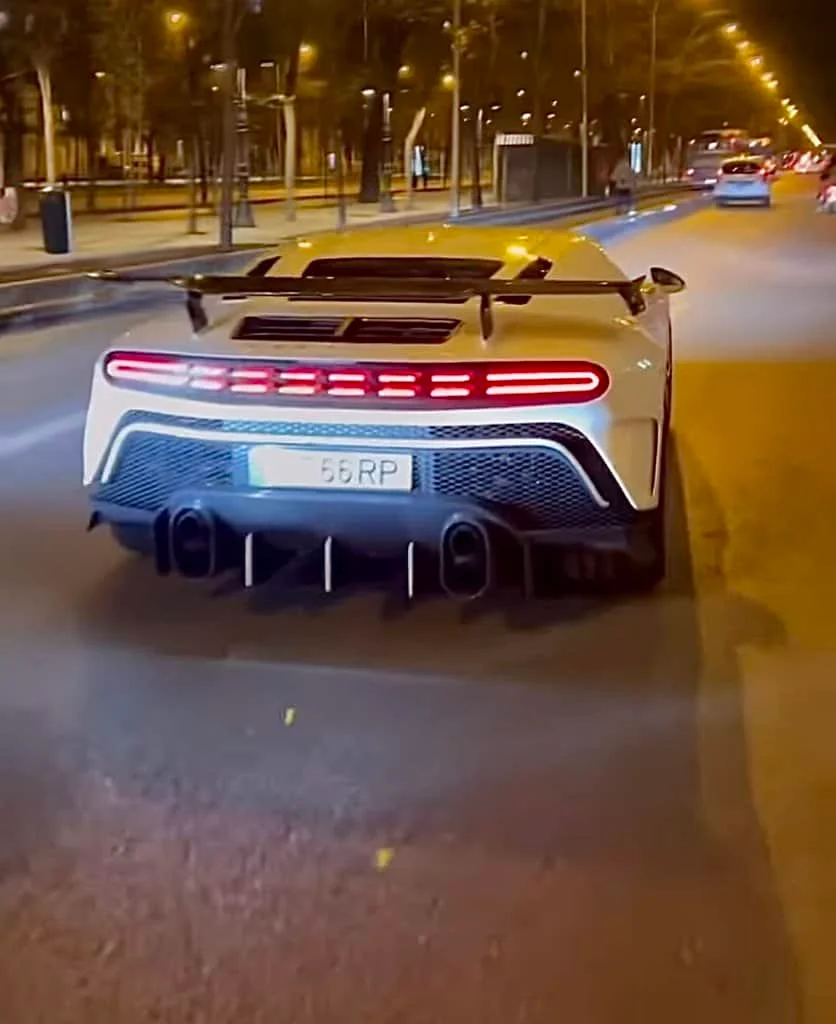
Ronaldo’s crown jewel is the Bugatti Centodieci, a hypercar limited to just ten units worldwide. Even among billionaires, that’s a short list. Ownership is usually kept quiet, and most of these cars exist behind closed doors, tucked away in private garages or collections. That matters because most of these ultra-limited cars are never photographed in the wild. They’re bought, stored, and quietly appreciated behind security gates. Ronaldo’s Centodieci broke that pattern, at least briefly.
The Ownership Mystery Isn’t an Accident
This isn’t unique to Bugatti. The ultra-luxury car world thrives on secrecy. Manufacturers regularly sell out limited models before the public even gets a full look. Buyers are carefully selected, identities are hidden, and speculation fills the gaps. It happened with Rolls-Royce and the Droptail, where only one owner became known long after delivery.
Same playbook here. Only ten Centodieci models exist, and most of their owners remain unknown. That exclusivity is part of the appeal. You’re not just buying a car. You’re buying access to something almost nobody else can have. Only a handful of buyers have ever been identified. Ronaldo is one of them, alongside real estate mogul Fritz Burkard and racing driver Francois Perrodo. But here’s the part that separates Ronaldo from the rest.
He’s actually been seen with it. That visibility is exactly why people like Ronaldo get in.
Does Ronaldo Even Drive It
Here’s where the story takes a turn. Ronaldo himself has admitted he barely drives anymore. Not occasionally. Barely at all.
That might sound strange at first, especially for someone with a collection stacked with hypercars, supercars, and everything in between. But when you step back, it starts to make sense. At that level of fame and wealth, driving becomes optional. Logistics, security, and convenience all get in the way. Even something as simple as taking a car out for a drive isn’t simple anymore. So the Centodieci, like many of his cars, likely spends most of its time parked.
The Real Cost Isn’t the Price Tag
Here’s the part that matters if you actually care about cars. The purchase price is just the beginning. Owning a Bugatti Centodieci isn’t like owning a normal exotic. Even if the car never moves, the costs keep coming. Annual servicing alone runs between $12,500 and $15,000. That’s just to keep it in proper condition while it sits.
Then there are the tires. Bugatti recommends replacing them every 18 months, and a set costs about $10,000. It doesn’t matter if you’ve driven it or not. Time alone is enough to trigger the replacement.
And that’s where it gets complicated. Every four years, the car requires a major service that can hit $35,000. On top of that, components like wheels and fuel systems need periodic replacement, adding up to as much as $100,000 combined over time. Add storage and insurance, which can easily range from $25,000 to over $50,000 annually, and the numbers start stacking quickly. Over a four-year period, you’re looking at roughly $180,000 to $220,000 just to maintain a car that might not even leave the garage.
Hypercars as Investments, Not Machines
This is the shift that’s quietly reshaping the top end of car culture. Cars like the Centodieci aren’t really meant to be driven the way enthusiasts think. They’re assets. That mindset isn’t rare among high-net-worth collectors. Limited production, brand heritage, and scarcity drive value more than miles ever could.
Driving the car might actually reduce its long-term worth. That flips the traditional enthusiast mindset on its head. For most car people, the whole point is to drive. To feel it. To experience it. But at this level, usage becomes a liability.
What This Means for Car Culture
It’s hard to ignore the divide this creates. On one side, you have enthusiasts who believe cars are meant to be driven, pushed, and enjoyed. On the other, you have a growing segment where the rarest machines are locked away, treated more like art pieces than vehicles.
Ronaldo’s Centodieci sits right in the middle of that tension. It’s an engineering masterpiece. It’s one of the rarest Bugattis ever built. And yet, its real role might be sitting still, quietly appreciating in value. None of that makes Ronaldo’s ownership wrong. But it does raise a question that keeps coming up more often.
The Bigger Question No One Wants to Answer
If the world’s most extreme cars are no longer being driven, what are they actually for?
Ronaldo’s Bugatti tells the story clearly. Massive price tag. Massive upkeep. Almost no road time. It’s a symbol of exclusivity more than performance.
And that’s where things leave car enthusiasts in a strange place. The machines keep getting more advanced, more expensive, and more rare. But the chances of actually seeing them, hearing them, or watching them being driven keep shrinking. At some point, the industry has to decide who these cars are really for. Because right now, the answer looks less like drivers and more like collectors with vaults on wheels.
Image via Alberam17
About the Author