Cold heaters, diesel fumes, and a ride that felt like punishment more than transportation. That’s what old Land Rovers used to be. They were tools, not toys. Workhorses that bounced across farms and job sites, not something you’d park outside a luxury hotel.
Now they’re six-figure status symbols with waiting lists stretching years. That shift didn’t happen overnight, and it didn’t happen by accident. It came from people who saw something in those rough, outdated machines that most others overlooked.
Killed Off in 2016, Then Demand Exploded
Here’s the part that matters. When Land Rover pulled the plug on the original Defender in 2016, it was supposed to be the end of the road. The reasoning made sense on paper. Safety issues, outdated engineering, and a driving experience that felt decades behind modern standards. The vehicle had lasted nearly 70 years, which is already more than most.
But killing it off didn’t erase demand. It actually made things worse. Because suddenly, what used to be everywhere became something people wanted more than ever. Not for practicality, not for daily use, but for what it represented. Simplicity, toughness, and a design that hadn’t been diluted over time.
A Lisbon Workshop Founded in 2012
That’s where things change. Instead of trying to modernize the original Defender through the factory, a different group stepped in. Independent builders. Specialists. People willing to take an old, worn-out Land Rover and completely reimagine it without losing its soul.
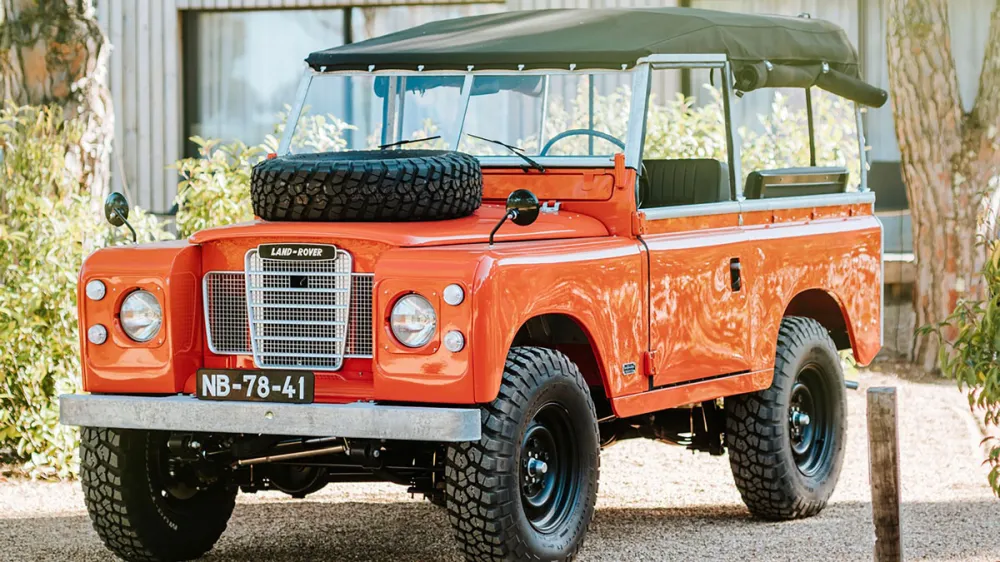
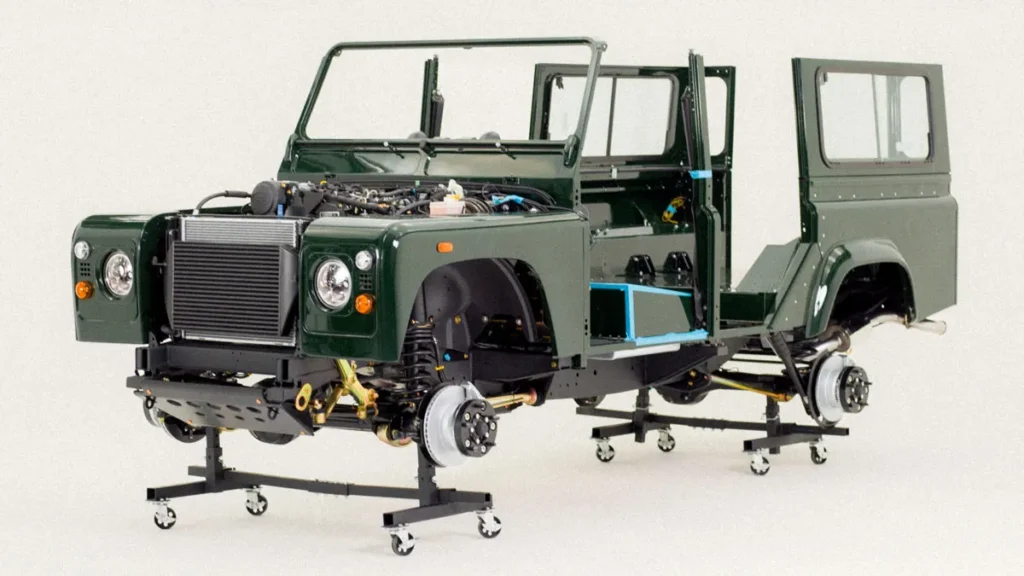
One of the earliest to go all-in on that idea was Ricardo Pessoa, who launched Coolnvintage back in 2012. Based in Lisbon, his company doesn’t just restore old Land Rovers. It rebuilds them from the ground up.
Three Years, Cataloged Down to the Bolt
The process starts with donor vehicles that, in many cases, barely resemble something worth saving. We’re talking about machines that might be worth a few thousand dollars in their original condition. Rust, wear, years of neglect. The kind of vehicle most people would walk away from without a second thought.
Then everything comes apart. Every bolt, every washer, every small piece gets removed, cataloged, photographed, and stored. Not roughly. Not quickly. Methodically. And that’s before the real work even begins.
Each component is either restored or replaced with original-spec parts. The goal isn’t to turn these into something unrecognizable. It’s to make them better than they ever were while still feeling like a true Land Rover.
That balance is where it gets complicated. Because it’s easy to overbuild something like this and lose what made it special. Pessoa doesn’t want that. Each build can take up to three years. That’s not a delay. That’s the timeline. And people are willing to wait.
$200,000 to Start, Custom Engines Included
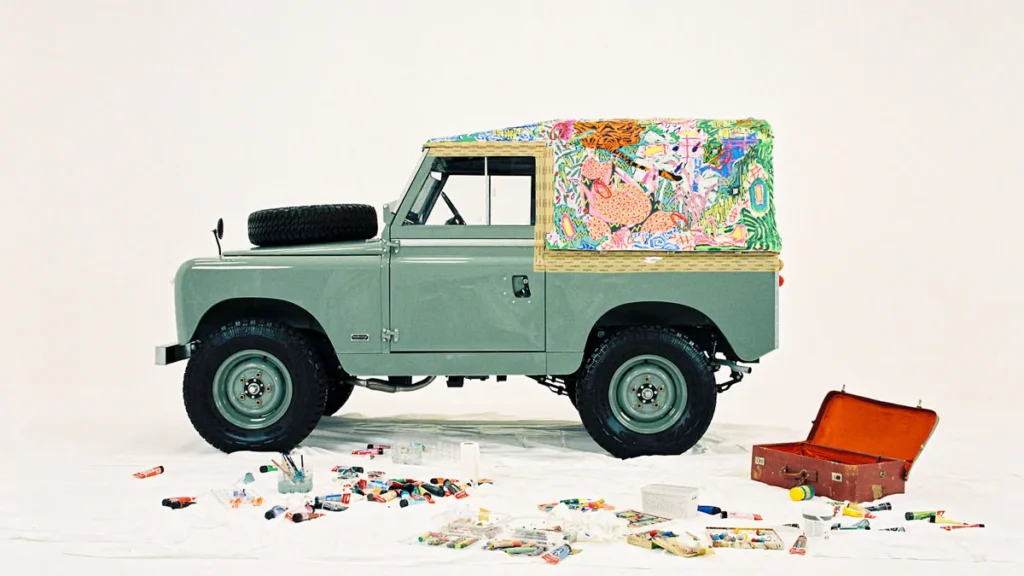
Because what comes out the other side isn’t just a restored SUV. It’s something closer to a rolling piece of art. Paintwork alone can cost more than the original vehicle itself. Interiors are tailored to the owner’s exact preferences, from materials to color choices.
You can even choose the engine, as long as it was originally offered by Land Rover. Manual or automatic. Subtle or bold. Every build is different.
And then there’s the price. Entry starts around $200,000, but it doesn’t stop there. Some builds climb to $350,000 or more depending on the level of customization. That’s serious money for a vehicle that started life as a basic utility machine.
Still, the demand is there. And not just from collectors. There’s a growing group of buyers who don’t have the time, skill, or patience to restore a classic themselves but want something truly unique. They’re not interested in mass-produced luxury SUVs. They want something with a story. Coolnvintage feeds that demand in ways that go beyond the car itself.
A Vinyl Record of the Engine’s First Startup
While owners wait for their builds, they’re sent artistic photographs of parts from their own vehicle. A worn key. A rusted cap. Pieces of history turned into something meaningful. When the vehicle is finally finished, even the engine’s first startup is recorded and pressed onto a vinyl record.
It sounds excessive. Maybe it is. But it works. Because this isn’t just about driving. It’s about ownership, identity, and the feeling that what you have can’t be duplicated.
The shop itself reflects that mindset. It doesn’t feel like a greasy garage. More like an industrial art space. Downstairs, rows of tired donor vehicles sit waiting. Upstairs, finished builds shine under clean lighting, showing exactly what the transformation looks like.
And sometimes, those donor cars are rare to begin with. Examples include limited-production Defenders built in South Africa with a BMW six-cylinder engine, or North American-spec Defender 110 models equipped with roll cages, air conditioning, and V-8 power. Those models were only sold in the U.S. for a short time in the 1990s before regulations shut that door. Seeing them brought back to life at this level adds another layer to the appeal.
What This Says About How People Value Cars Now
But zoom out for a second, and the bigger picture becomes clear. This isn’t just about one company or one type of vehicle. It’s about how people value cars now. There’s a growing push toward machines that feel personal, not disposable. Vehicles that carry history but don’t force you to deal with all the downsides of old engineering.
That’s exactly what these restomods deliver. You get the look, the presence, the raw appeal of a classic Land Rover. But without the freezing heater, the clunky gearbox, or the constant smell of oil and age.
And yes, it costs a lot. And yes, it takes years. But for the people buying them, that’s part of the point. Because in a world full of identical SUVs rolling off production lines, waiting three years for something built just for you doesn’t feel like a downside.
It feels like the whole reason to do it.
Via Coolnvintage
About the Author