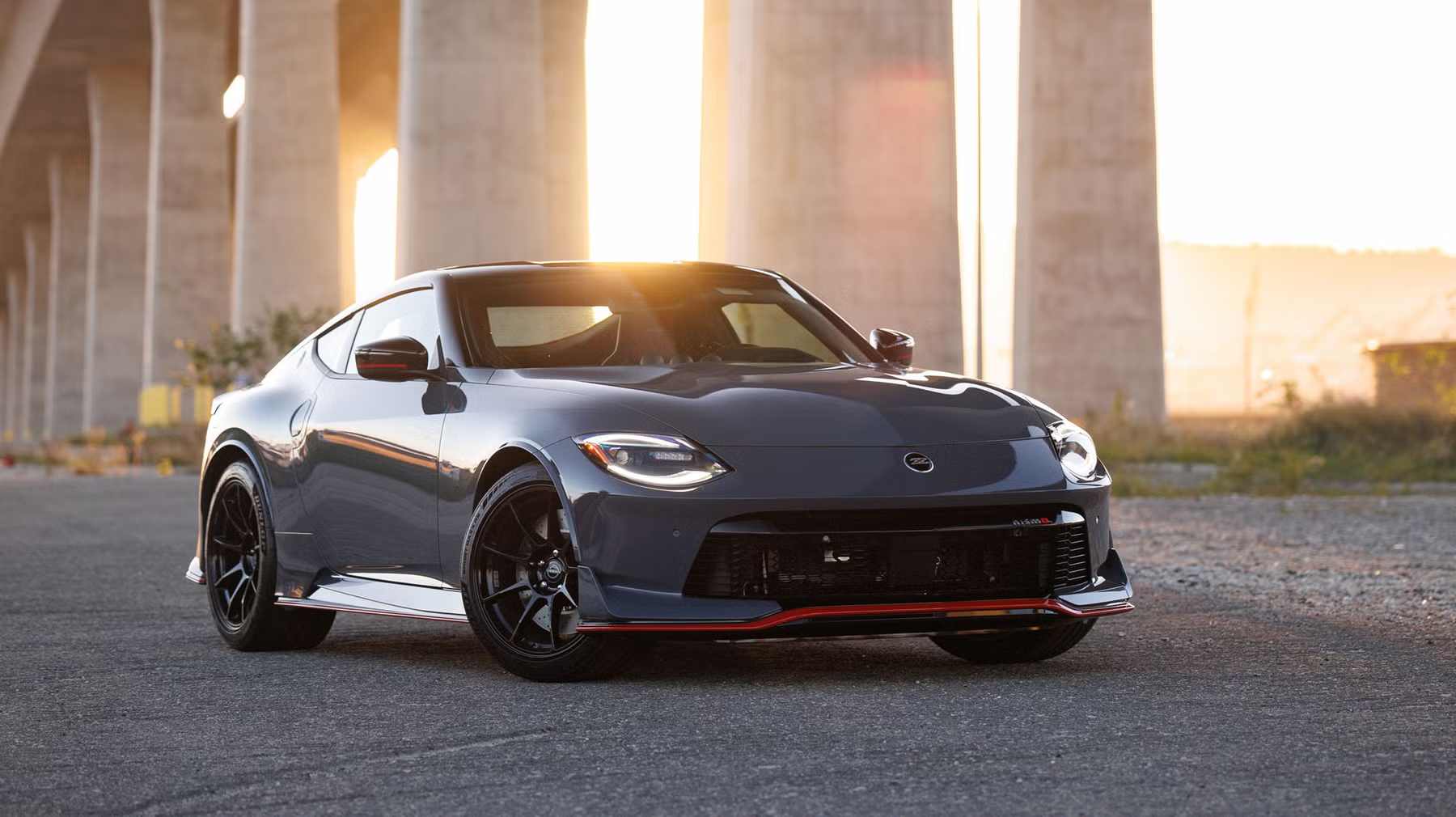
Nissan is doing something rare in today’s auto industry: quietly admitting it got something wrong. The 2027 Nissan Z NISMO is finally getting a manual transmission for the U.S. market, correcting what a lot of enthusiasts saw as a baffling decision when the previous NISMO launched without one. That earlier call didn’t just frustrate loyal Z fans — it raised genuine questions about whether Nissan still understood the audience that had kept the Z nameplate alive for decades. With the 2027 model now heading to the U.S., the company is clearly trying to win that trust back.
The Manual That Should Have Been There From the Start
The headline change isn’t subtle: the NISMO Z now comes with a six-speed manual, complete with a revised clutch and shorter shift throws. This isn’t a checkbox feature — it’s a direct response to one of the loudest and most consistent complaints from the enthusiast community. Previously, buyers who wanted the most aggressive version of the Z had no choice but to settle for an automatic, which created an odd disconnect: the NISMO badge has always stood for driver engagement, yet the lack of a manual made the range-topping Z feel like a compromised performance car. The standard Z Sport and Performance trims kept their manual options throughout, but the NISMO’s updated setup signals Nissan is finally taking driver feel seriously across the whole lineup again.
Performance Changes That Go Beyond the Gearbox
The manual isn’t the only update, just the one grabbing headlines. Under the hood, the NISMO’s twin-turbo 3.0-liter V6 keeps its 420-horsepower rating, but Nissan recalibrated how that power gets delivered — sharper throttle response and more consistent torque delivery under load, which matters both on track and on the street, where predictable power is often the difference between confidence and hesitation. Nissan also tuned the sensory side of the experience, retuning the Active Sound Enhancement and Noise Cancellation systems to amplify intake and exhaust sound specifically in Sport mode, a reminder that a modern performance car sells as much on how it feels and sounds as on raw output.
Borrowing From the GT-R Playbook
The 2027 Z NISMO also picks up hardware clearly inspired by Nissan’s flagship GT-R. The front braking system now uses Akebono components with a two-piece rotor design, pairing forged aluminum hats with cross-drilled iron rotors. That setup isn’t just about raw stopping power — it improves cooling and cuts unsprung weight, shaving 19 pounds off the front end. Less weight up front translates directly to better balance and quicker turn-in. Nissan complemented that with revised dampers and a reworked steering rack, cutting internal steering friction by roughly 20 percent for more precise feedback and fewer mid-corner corrections — a meaningful upgrade for anyone who actually pushes the car near its limits.
The Small Details Track Drivers Will Actually Notice
Beyond the headline upgrades, Nissan addressed smaller but genuinely important details. A redesigned fuel tank now helps maintain consistent fuel delivery during high-G cornering, directly benefiting track day drivers and autocross competitors who’ve dealt with fuel starvation cutting into lap times and confidence on repeated hard corners. The chassis also picks up larger monotube dampers, now 45mm in diameter, improving ride quality while keeping damping consistent under both daily driving and aggressive track use.
Heritage-Inspired Design, Not a Reinvention
Visually, the 2027 Z doesn’t reinvent itself, and it doesn’t need to. Nissan leaned further into heritage-inspired design elements, including new wheel designs influenced by earlier Z generations and a distinctive green paint option first shown in Tokyo. A reshaped front end improves cooling while cutting lift and drag, and a new grille bar along with updated badging give the car a slightly sharper visual identity. None of these changes are radical, and that’s the point — Nissan is refining a design that already resonates with its audience rather than rethinking it from scratch.
Pricing and Where the NISMO Fits
Nissan hasn’t officially confirmed pricing, but current expectations place the base Z Sport in the mid-$40,000 range, with the Performance trim climbing into the high-$50,000s. The NISMO variant is expected to land in the upper $60,000 range. That positioning keeps the overall Z lineup competitive, but it also puts real pressure on the NISMO specifically to deliver a complete experience — at that price point, buyers aren’t just shopping on performance numbers, they’re shopping on authenticity.
Why This Matters Beyond One Model Year
This update is about more than a single car. It’s about what Nissan represents to enthusiasts in a market increasingly dominated by crossovers, electrification, and automated driving technology. Adding a manual back to the NISMO Z sends a clear signal that Nissan is still willing to build for people who care about driving, not just commuting. It also raises a fair question: why did it take this long? Enthusiasts have watched plenty of automakers drift away from driver-focused decisions in recent years, and Nissan’s initial NISMO strategy looked like part of that same trend. This correction is welcome, but it also shows how close the brand came to losing real credibility with the exact buyers who’ve kept the Z relevant for half a century.
The Real Test Is Still Ahead
On paper, the 2027 Z NISMO looks like a stronger, more complete package — it fixes the loudest complaint, adds meaningful performance hardware, and leans into what made the Z name iconic in the first place. But correcting past mistakes is only half the job. The bigger challenge is proving this renewed focus on the driver isn’t a one-time course correction made under pressure, but an actual shift in how Nissan builds performance cars going forward. If Nissan wants to keep its footing with enthusiasts, it can’t afford to relearn this particular lesson twice.
About the Author