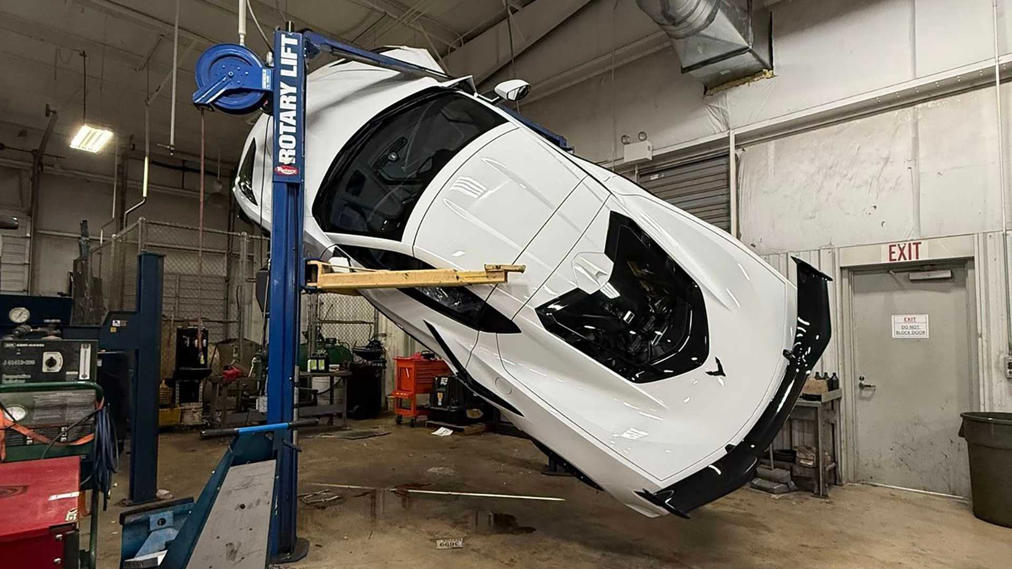
What should have been a simple oil change turned into a performance car owner’s nightmare. A nearly new 2024 Corvette Z06, with just over 3,000 miles on the odometer, was severely damaged after slipping off a lift inside a dealership service bay. The incident didn’t just leave a high-performance machine wounded — it exposed deeper concerns about dealership competence, accountability, and whether modern supercar-level vehicles are being handled with the care they actually demand.
The owner, Jared Adrian George, originally brought the car in for routine maintenance. After noticing an oil leak following that service, he returned to the dealership expecting a straightforward fix. Instead, the situation escalated dramatically when technicians attempted to re-inspect the car and lost control of it on the lift.
A Preventable Mistake With Expensive Consequences
During the inspection, the Corvette reportedly shifted on the lift and tilted nose-up, resulting in visible damage to the front fender and side skirt. More concerning is the likely unseen damage underneath, in the area where the car’s structural and performance-critical components live. For a car like the Z06, that’s not merely cosmetic — it could mean long-term issues affecting safety, performance, and resale value down the line. This isn’t a minor repair scenario. High-end performance cars rely on precise engineering tolerances, and even small structural damage can lead to costly complications later. Owners don’t buy a Z06 expecting to need repairs from a dealership mistake, especially not within the first few thousand miles of ownership.
Social Media Erupts as Enthusiasts Weigh In
Once images and video of the incident surfaced online, the reaction was immediate and intense. Within roughly 28 hours, thousands of comments flooded a Corvette-focused Facebook group, turning the incident into a viral flashpoint for enthusiast frustration. The conversation quickly split into camps: some argued the dealership should replace the vehicle outright, while others debated whether insurance would cover the repairs or whether the car could ever truly be “right” again. The sheer volume of responses eventually forced moderators to shut the discussion down entirely, which says a lot about how strongly the community reacted. This wasn’t just about one damaged car — it struck a nerve with owners who trust dealerships with expensive, highly specialized machines every day.
Experts Point to a Familiar Problem
Technicians and experienced enthusiasts quickly zeroed in on what likely went wrong. The C8 Corvette’s mid-engine layout creates a fundamentally different weight distribution compared to previous generations, requiring precise placement of lift arms and careful stabilization. Get it wrong, even slightly, and the risk of imbalance increases significantly. The general consensus points to operator error — improper positioning or a failure to secure the vehicle correctly can cause exactly the kind of shift that led to this fall. That’s especially troubling given that the C8 has now been on the market for several years, meaning dealerships should already be fully trained on the correct handling procedures for this platform.
Not an Isolated Incident
What makes this situation more concerning is that it’s not the first time a C8 Corvette has fallen off a lift. This marks at least the third documented case since the model’s introduction, with earlier incidents in 2020 and 2021 pointing to similar mistakes. While these cases remain rare relative to total production numbers, they reveal a pattern that shouldn’t still exist at this stage. By now, lifting procedures for the C8 platform are well established — these aren’t experimental vehicles anymore, they’re widely sold performance cars with known, documented service requirements. Yet the same type of error keeps happening.
Who Pays, and Who Really Loses?
In situations like this, dealership insurance typically covers the damage unless the vehicle is deemed a total loss. That doesn’t necessarily solve the problem for the owner, though. Even once repairs are completed, the car’s history is permanently altered in a way that can affect resale value and long-term owner confidence. There’s an emotional factor here too: buying a Z06 is a major investment, and part of that experience is trust — trust that professionals will treat the car with the same level of care the owner would themselves. Incidents like this break that trust in a way insurance checks can’t fully repair. Dealerships, meanwhile, face reputational damage that spreads well beyond a single customer; in the social media era, one mistake can quickly become a cautionary tale shared across enthusiast communities worldwide.
Bigger Questions for the Industry
This incident highlights a growing disconnect in the automotive world. As performance cars become more advanced and specialized, the reasonable expectation is that service departments evolve right alongside them. But repeated errors like this suggest training and accountability aren’t fully keeping pace with the technology. For enthusiasts, it raises an uncomfortable question: if dealerships can’t consistently handle a Corvette properly, what does that mean for even more complex vehicles now entering the market, with mid-engine layouts, hybrid systems, and increasingly sophisticated engineering? If the service infrastructure isn’t prepared to support those innovations, owners are the ones left carrying the risk.
The Real Issue Isn’t Just One Dropped Corvette
At its core, this isn’t just about a single accident in a service bay. It’s about whether the systems in place to support modern performance cars are actually meeting the standard those cars demand. Enthusiasts aren’t asking for perfection — they’re asking for basic competence. When a nearly new Z06 ends up damaged during what should have been a routine service visit, it’s fair to question whether that’s too much to expect. Because if this can happen to a flagship Corvette at a dealership, it leaves a bigger question hanging over the entire industry: who can owners actually trust with their cars?
About the Author