Every once in a while, a car shows up that makes you stop and think about what almost happened. Not what succeeded, not what dominated, but what came close and then disappeared. That’s exactly the case with the Spectre R42, a supercar from the 1990s that barely made it out alive.
Now one of just 23 ever built has resurfaced in the United Kingdom, and it’s the kind of machine that feels like it slipped through a crack in automotive history. Because it never got the chance most cars need to build a legacy. At a glance, the R42 looks like something you’d expect to have a bigger legacy. Mid-engine layout, aggressive stance, clear inspiration from one of the most legendary race cars ever built. It had the ingredients. It even had a plan.
But the story behind it doesn’t follow the usual path.
Born From a GT40 Homologation Dream
The R42 started life as a serious idea, not just a design exercise or a low-effort replica. GT Developments, a company already known for building detailed Ford GT40 recreations, wanted to go further. Under Ray Christopher’s direction, the goal was to create a modern interpretation of the GT40 that could exist on the road and eventually compete in racing.
That’s where things change. This wasn’t about nostalgia alone. The R42 was meant to meet homologation requirements, meaning it needed to be road legal to qualify for racing. That decision shaped everything. It looked like it might actually work. The timing, though, couldn’t have been worse. A global recession hit hard, and GT Developments didn’t survive it. The company collapsed, and just like that, the R42 was left hanging.
That could have been the end. But it wasn’t. In 1995, Spectre Motors Inc. stepped in and picked up the pieces. Production restarted, and the car itself saw further development with input from people who knew racing, not just styling. On paper, that should have been the turning point. And yet, it never fully recovered.
Only 23 units were completed in total. That’s not limited production in the usual sense. That’s survival-level output. Each car that exists today is basically a leftover from a fight the company didn’t win.
Genuinely Fast, Just Not Consistently Built
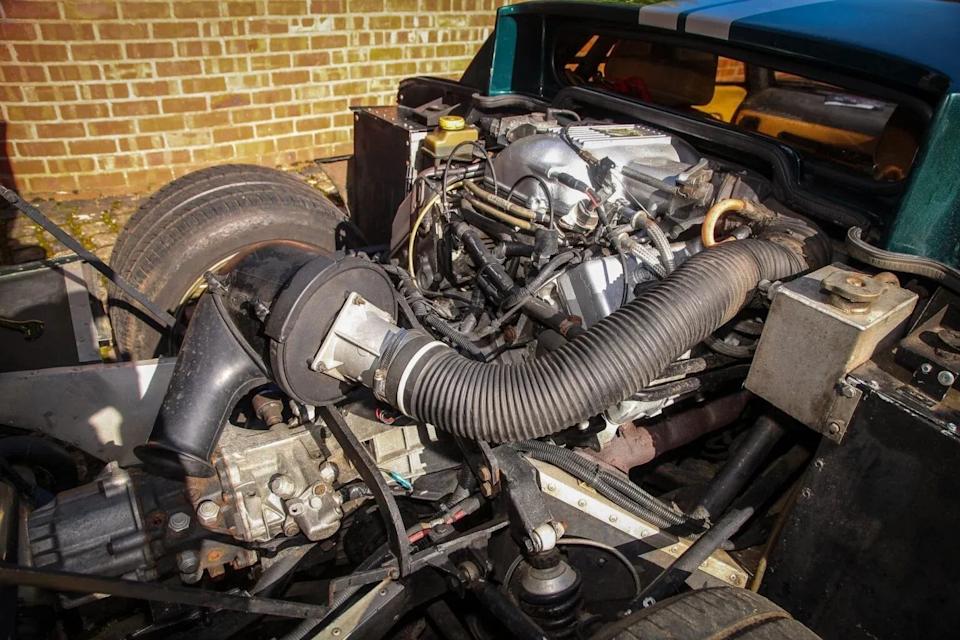
Here’s the part that matters. The R42 wasn’t slow. It wasn’t poorly conceived either. In fact, performance-wise, it sat right where a supercar of that era needed to be. The mid-mounted Ford-sourced V8 produced somewhere between 335 and 350 horsepower, depending on configuration.
That power went through a manual transaxle, with an optional six-speed setup for those who wanted more control. The result was a car capable of hitting 60 mph in around four seconds and pushing toward 175 mph at the top end. The engineering behind it wasn’t basic either. The car used an aluminum honeycomb monocoque chassis, which is the kind of construction you’d expect from serious performance machinery. Independent suspension and high-performance brakes backed it up.
So where did it go wrong? And that’s where it gets complicated. Because while the core engineering was strong, the execution didn’t always match. Cost-saving decisions started creeping in. Fiberglass body panels replaced more expensive materials. Certain components were borrowed from other production cars rather than developed specifically for the R42.
None of that automatically kills a car. Plenty of great vehicles use shared parts. But in this case, it led to inconsistencies. Build quality wasn’t always where it needed to be, especially when you’re trying to compete with established supercar brands. And that matters more than people like to admit. Because when you’re stepping into a space dominated by companies with decades of experience, you don’t get many chances to make a weak impression.
One of the Last Ones Built
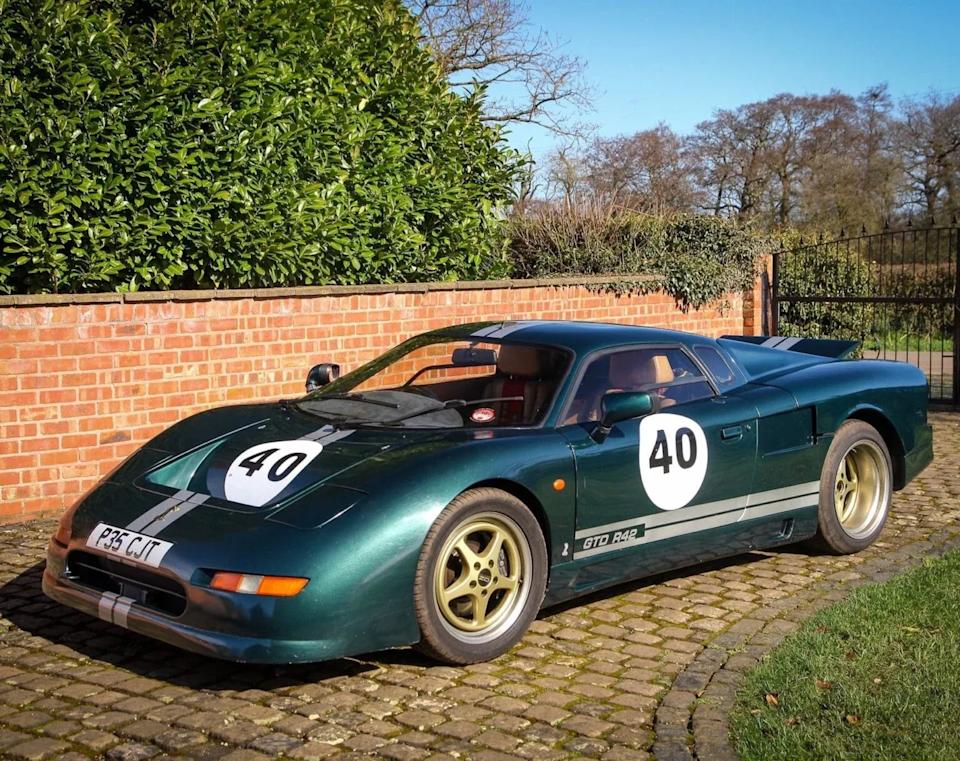
The example that’s surfaced now gives a clearer picture of what the R42 could be when things came together properly. This particular car is a 1997 model, one of the final ones built before everything shut down for good.
It’s equipped with a larger 4,942cc V8 and paired with the optional six-speed transmission. That combination alone makes it one of the more desirable versions. It’s also relatively low mileage, showing fewer than 15,000 miles.
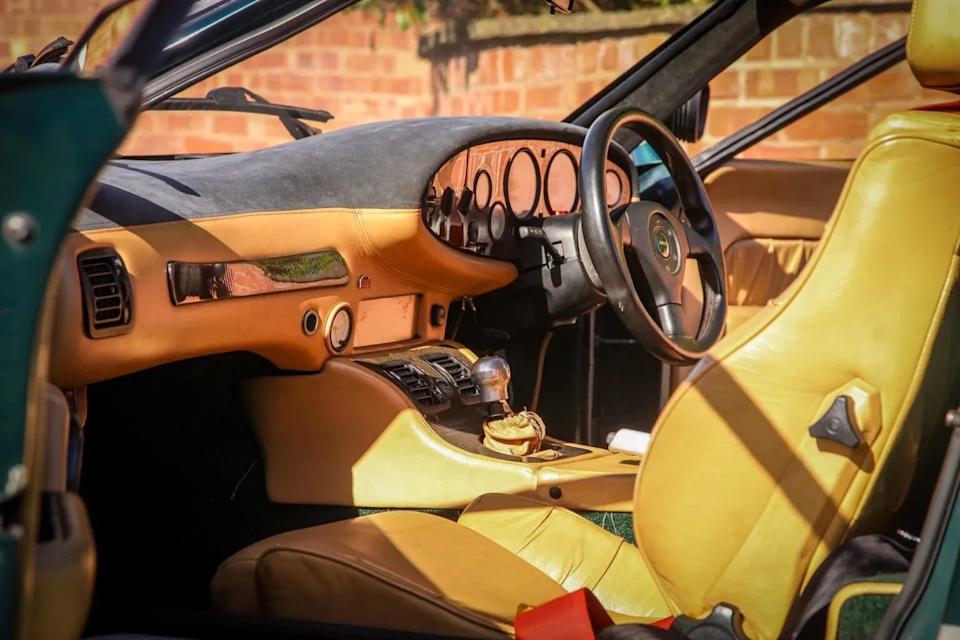
Visually, it stands out without trying too hard. Metallic green paint with white accents, paired with a beige leather interior. It feels very much like its era, but not in a dated way. More like a snapshot of a time when designers were still experimenting.
A Story That Almost Happened
And then there’s the bigger picture. Because the R42 didn’t fail because it was slow or completely flawed. It failed because building a low-volume supercar is brutally difficult, especially without the backing of a major manufacturer.
Financial pressure didn’t just slow things down. It stopped everything. Spectre Motors closed its doors in 1997, and whatever plans existed for a successor never materialized. That leaves the R42 in a strange position today. It’s rare, undeniably. Twenty-three units guarantees that. It’s also interesting, especially for anyone who appreciates cars that didn’t follow the typical path. But it’s not widely known, and that limits how it’s viewed in the market.
Some will see it as a hidden gem. Others will see it as an unfinished story. Both are true.
And that’s really what makes this car worth paying attention to now. Not because it’s trying to compete with modern supercars, and not because it rewrote performance history. It’s because it represents something that almost happened. A small company took a real shot at building a legitimate supercar, aimed at both the road and the track, inspired by one of the greatest race cars ever built. It got close enough to matter, but not far enough to survive.
Now one of those cars is back on the market, quietly reminding people that not every ambitious idea gets a second chance. Some just leave behind a handful of machines and a story that almost was.
Source
About the Author