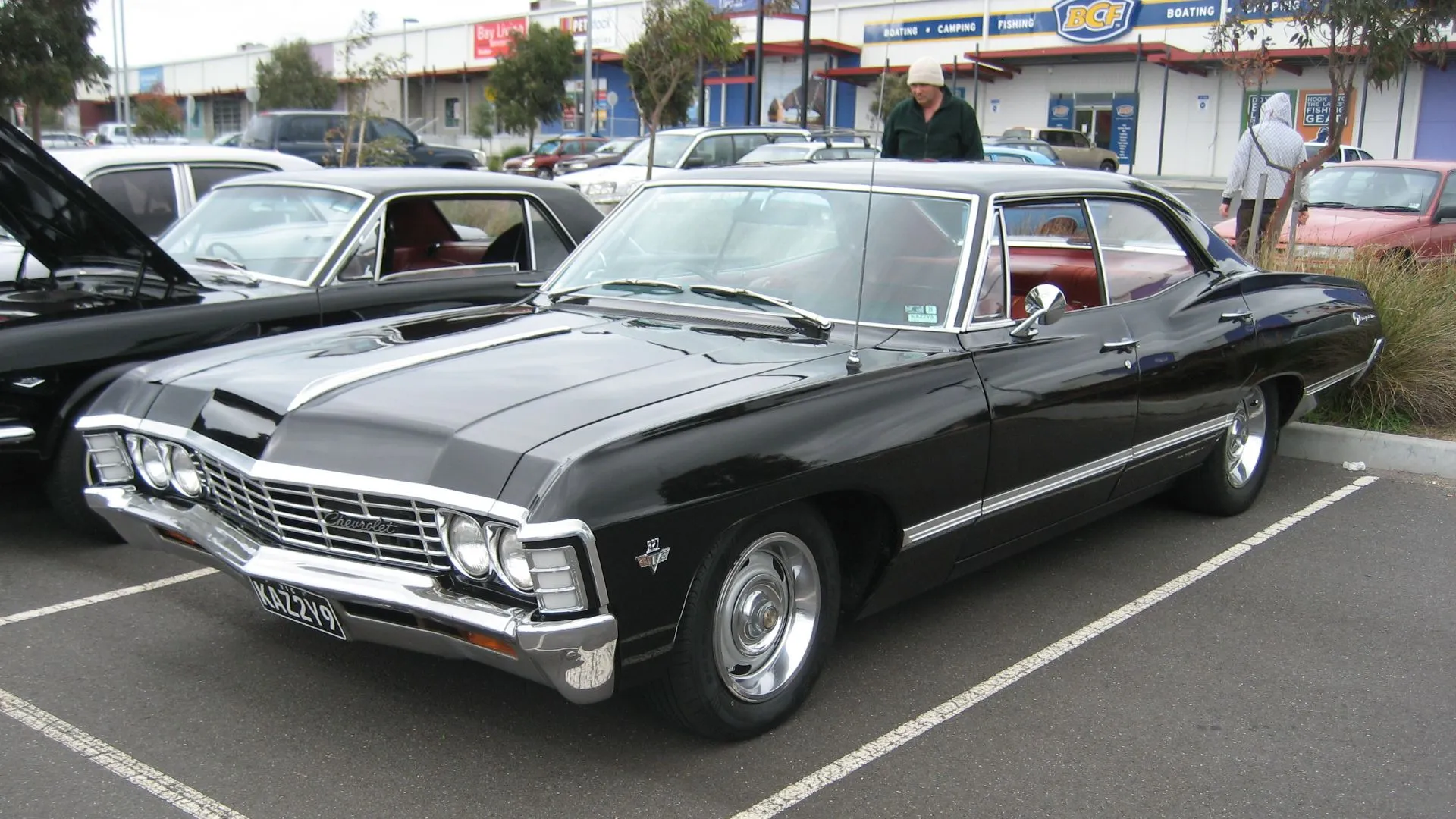
It starts like a bad joke, but it doesn’t land that way. A guy pours time, money, and obsession into restoring a 1967 Chevrolet Impala, piece by piece, bolt by bolt. Then he leaves town for a business trip. When he comes back, the car is gone. Not stolen by strangers, not misplaced, but deliberately hauled off and sold for scrap by someone he trusted. That’s where things change.
A Garage Full of a Long-Term Project
The story surfaced through a Reddit post, but the situation itself is painfully real. The Impala owner had been deep into a full restoration, the kind that takes over your life for a while. The car wasn’t just parked in the garage. It was taken apart, carefully stored, every component part of a long-term project. His new home had a 2.5-car garage, and he used it the way a lot of enthusiasts would. He filled it with the project.
That decision didn’t go over well. His girlfriend reportedly had a problem with the setup. Not just a minor annoyance, but a growing frustration with how much space the project consumed. A disassembled classic doesn’t look like progress to someone who isn’t into cars. It looks like a mess. It looks unfinished. And in this case, it became something more than an inconvenience. It became a point of resentment.
A Decision Described as an Act of Revenge
And that’s where it gets complicated. Instead of working it out, or even drawing a hard line about shared space, things escalated quietly. While he was away on a business trip, she made a decision that crossed into something else entirely. She arranged to have the entire project removed from the garage and taken to a local scrapyard. Not just the shell, but the parts. Everything he had been working on.
This wasn’t a misunderstanding. It wasn’t someone thinking the car was abandoned. It was described as an act of revenge. When he got back and saw the empty garage, the reality hit fast. Years of effort, gone in a matter of hours. Anyone who has worked on a classic car knows exactly what that means. You’re not just losing metal. You’re losing time you don’t get back. You’re losing parts you hunted down, details you dialed in, progress that doesn’t show up on a receipt.
Surveillance Footage Turned This Into a Criminal Matter
Here’s the part that matters. He didn’t let it slide. The owner contacted a lawyer and moved forward with legal action, treating the situation for what it was. Theft. There was surveillance footage showing the removal of the vehicle and its components, which immediately shifted this from a messy breakup into something much more serious. Once that kind of evidence enters the picture, it’s no longer a he said she said situation.
Police got involved, and that changed the trajectory again. Most of the Impala was eventually recovered from the scrapyard. Not all of it was gone, which is about the only good news in the entire situation. But even that comes with a catch. Once a car has been moved, handled, and partially processed in that environment, it’s never quite the same. Damage happens. Parts go missing. Organization disappears. For a restoration project, that kind of disruption can set everything back in a way that’s hard to measure.
The Relationship Didn’t Survive, and Neither Did the Trust
The relationship didn’t survive. That part is obvious. But the bigger issue here isn’t just about two people breaking up. It’s about how quickly something personal can turn into something destructive when there’s no respect for what the other person values. You don’t have to understand car culture to understand that selling someone else’s property out of spite crosses a line.
And yet, this kind of tension isn’t rare. Car projects take up space. They take time. They demand attention. For people outside that world, it can feel like they’re competing with a machine for priority. That doesn’t excuse what happened here, but it explains how things can build to a breaking point if no one addresses it early.
Still, there’s a difference between frustration and retaliation. Selling a classic car for scrap isn’t just extreme. It’s irreversible in most cases. Even when recovery is possible, like it was here, the damage is already done. The trust is gone. The project is compromised. And now, on top of everything else, there’s a legal battle unfolding.
A Legal Battle on Top of Everything Else
That adds another layer. Legal action means time, money, and stress on top of an already brutal situation. The owner is now dealing with attorneys, potential court proceedings, and the long process of sorting out responsibility. Even with evidence, these things don’t resolve overnight. And while that plays out, the car itself sits in limbo, somewhere between salvage and salvageable.
Step back for a second, and the whole situation feels avoidable. A conversation about garage space. A boundary set early. A compromise. Any of those could have changed the outcome. Instead, it turned into a chain reaction. Frustration turned into resentment. Resentment turned into action. And that action triggered consequences that neither side can walk back.
Why This Story Hits a Nerve
For car enthusiasts, this hits a nerve. Projects like a 1967 Impala restoration aren’t casual hobbies. They’re commitments. They’re long-term, often expensive, and deeply personal. People don’t just walk away from them, and they definitely don’t expect someone else to destroy them in their absence.
That’s why this story is sticking. Not because it’s dramatic, although it is. But because it exposes a hard truth. If the person you’re with doesn’t respect what matters to you, it’s not a small problem waiting to be solved later. It’s a problem that can blow up without warning. And in this case, it did.
A classic car got dragged to a scrapyard. A relationship collapsed. A lawsuit followed. All because one decision crossed a line that should have never been approached in the first place. There’s no clean ending here. Just consequences.
About the Author