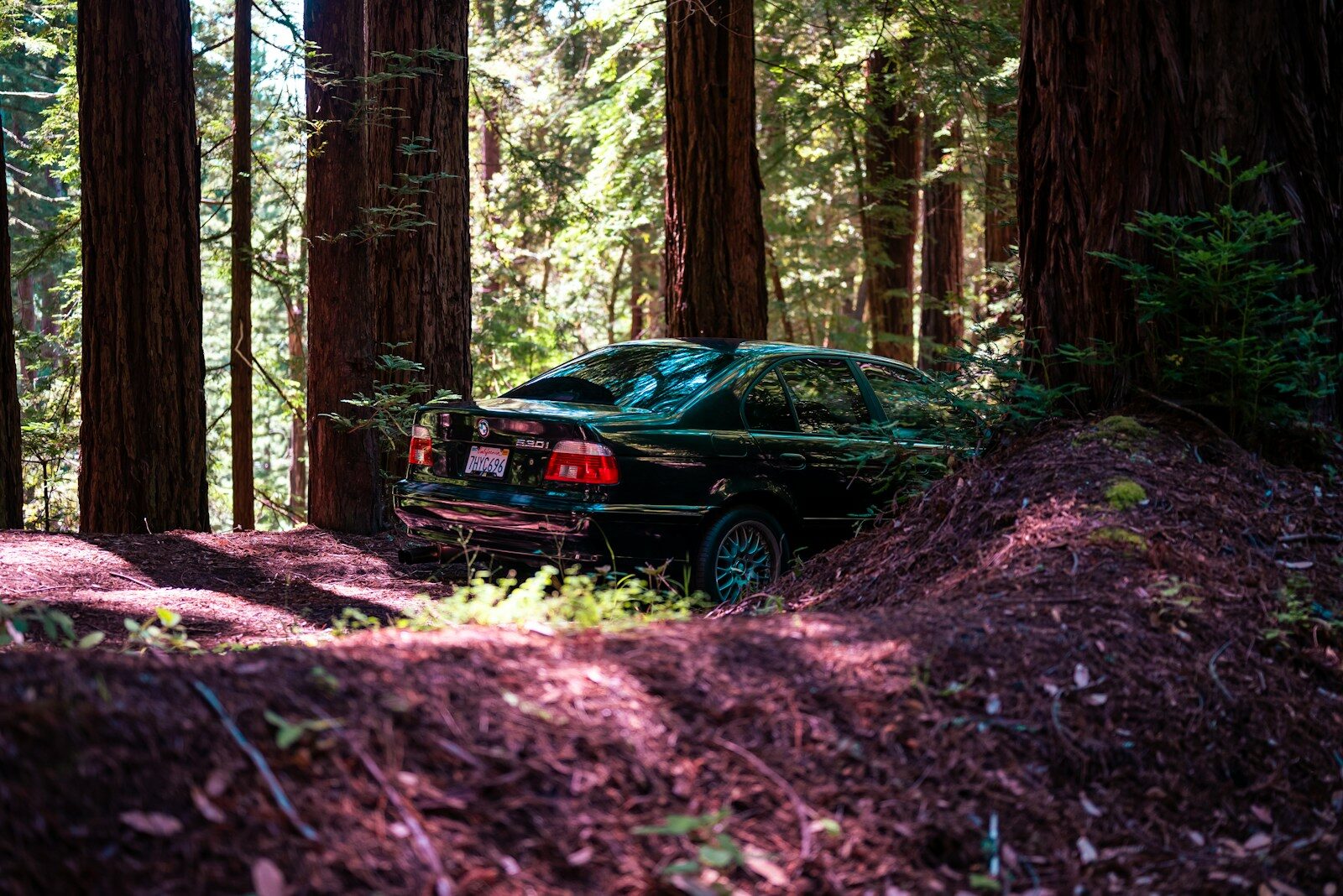
A late-night food delivery in Washington state turned into something far more serious than a wrong turn. A young Uber Eats driver ended up stranded deep in the woods after GPS directions sent him straight onto private land, far from anything resembling a real road. By the time he realized something was off, turning around wasn’t an option anymore, and a simple tow call became a search in the dark.
Trusting the App a Little Too Far
The driver, in his early 20s and unfamiliar with the area, had been relying on Waze to guide him to a delivery location. The app routed him down an unpaved road that eventually crossed into private property. He kept going, about a mile and a half in, until his car got stuck and wouldn’t move anymore. Late, isolated, no easy way out, the situation had gone from inconvenient to genuinely risky. That’s when Sam Cadle, a local tow operator, got the call.
When the Job Stopped Being About the Car
By around 10:30 that night, Cadle had already run into a wall. He couldn’t drive his truck onto the private property where the car was located, and that alone complicates things, but it didn’t stop there. He looked for another way in, hoping for an access road that might get him closer, usually that’s the fix. Except this one was blocked off, cutting off any chance of reaching the car by vehicle. At that point the job stopped being about the car at all. It became about the driver.
Cadle made a call not every tow operator would. Instead of waiting for daylight or telling the guy to sit tight, he went in on foot, around 2:00 in the morning, hiking roughly half a mile into the woods with no headlights, no easy path, just darkness and rough terrain. He found the driver stranded with no real way out, walked him back, and made sure he got home safely, dropping him off with his mother. And he didn’t charge him for the night. In an industry where time and effort almost always come with a price, Cadle simply ate it.
Getting the Car Out Took Even Longer
The car stayed behind. The next morning the recovery picked back up, and even that wasn’t a quick pull. He brought in a mini excavator to help get the car out, which tells you how stuck it really was. This wasn’t a minor slide off the road. It was buried enough to require heavy equipment to fix the problem. The job stretched into the next day, but by then the part that actually mattered was already handled.
What Navigation Apps Don’t Know
The situation leaves a bigger question hanging over it. Navigation apps are supposed to make driving easier, more efficient, more predictable. But they don’t always know the difference between a usable road and a track that hasn’t seen regular traffic in years, and they don’t account for private-property boundaries the way a local would. When you’re new to an area, it’s easy to trust the screen over your instincts, and that’s the real mistake here. Not reckless driving. Not speeding. Just following directions a little too far.
The driver admitted the night changed how he looks at navigation: when something feels off, it probably is. A dirt road that keeps narrowing, no houses, no lights anywhere, that’s usually the cue to stop and rethink, because once you’re deep enough in, turning around isn’t always possible. Cadle stands out for the opposite reason. He didn’t treat it as a routine call or limit his help to what fit the job description. He lost sleep, hiked into the woods in the dark, and got a stranger home, and honestly, not everyone would have.
In a situation like that, help isn’t guaranteed. This time it worked out: the driver made it home, the car came out, and nobody got hurt. But it’s a reminder that for all the tech we lean on, things still go sideways, and when they do, you’re not thinking about delivery times or apps anymore. You’re just hoping someone shows up.
About the Author