A completely battered and incomplete 1969 Dodge Charger has appeared for sale on Facebook Marketplace, offering a stark reminder of how far some classic cars can fall from their former glory. The vehicle, listed in Double Springs, Alabama, carries an asking price of $4,500 and is described as one of the roughest examples of the iconic muscle car still in existence.
The listing identifies the car as a four-door sedan equipped with an automatic transmission and powered by a gasoline engine. Both the exterior and interior are described as brown, though the current condition suggests originality and presentation are secondary concerns. The Charger is reported to have a clear title and visible vehicle identification number, two elements that often determine whether a severely damaged classic is viable as a restoration candidate.
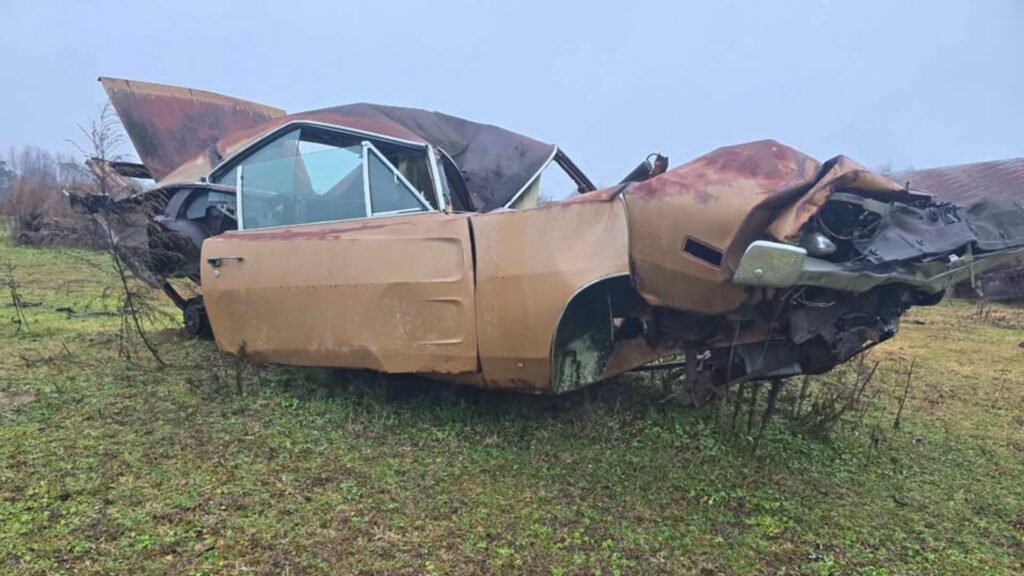
Beyond those basic assurances, little is offered in the way of optimism. The seller characterizes the car as extremely rough, acknowledging the extensive visible damage and incomplete condition. Photos accompanying the listing show a body that appears twisted and heavily worn, with major components missing or compromised. Time, exposure, and neglect seem to have taken a cumulative toll, leaving the Charger far removed from the sleek performance image associated with the model’s late-1960s heyday.
The 1969 Charger remains one of the most recognizable American muscle cars, celebrated for its aggressive styling and cultural impact. Even so, not every surviving example is destined for concours lawns or high-dollar auctions. Vehicles like this one often occupy a different corner of the collector market, appealing to buyers seeking parts, VIN documentation, or an extreme long-term project.
In recent years, social media and online marketplaces have increasingly become venues for distressed classics that might once have been quietly scrapped. Listings like this reflect both the enduring demand for vintage muscle car components and the reality that restoration costs can quickly exceed a finished car’s market value. For many enthusiasts, the presence of a clear title can be enough to justify a purchase, even when the physical condition is dire.
The Charger has been listed for approximately two weeks, suggesting limited but ongoing interest. Whether it becomes a donor car, a foundation for an ambitious rebuild, or simply a curiosity shared among enthusiasts, its appearance online highlights the wide spectrum of conditions in which classic American cars continue to surface.
As prices for restored Chargers remain strong, even severely damaged examples continue to find attention, reinforcing the lasting appeal—and challenges—of preserving Detroit’s muscle car legacy. You can see the listing here.
About the Author